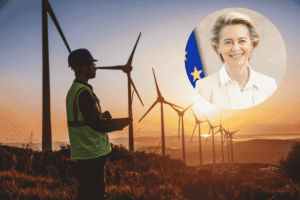
Perhaps healing the wounds caused by climate change would require a psychologist rather than a climatologist. The signals that ecosystems are sending us are converging and clearly pointing the way forward, which is very different from the path we have taken: we should be strengthening the Green Deal, yet instead we are debating cuts. It is as if the anxiety triggered by every single warning message adds up to an unbearable total and is therefore pushed aside. This is also because, instead of looking at solutions—technologically feasible, economically manageable, and socially beneficial— we give free rein to a flood of denials of the facts, lies rebranded as “fake news,” which fuels the fossil fuel industry, that is, those primarily responsible for the climate threat.
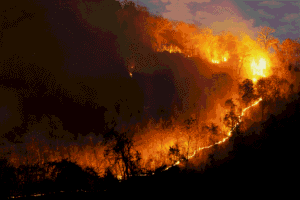
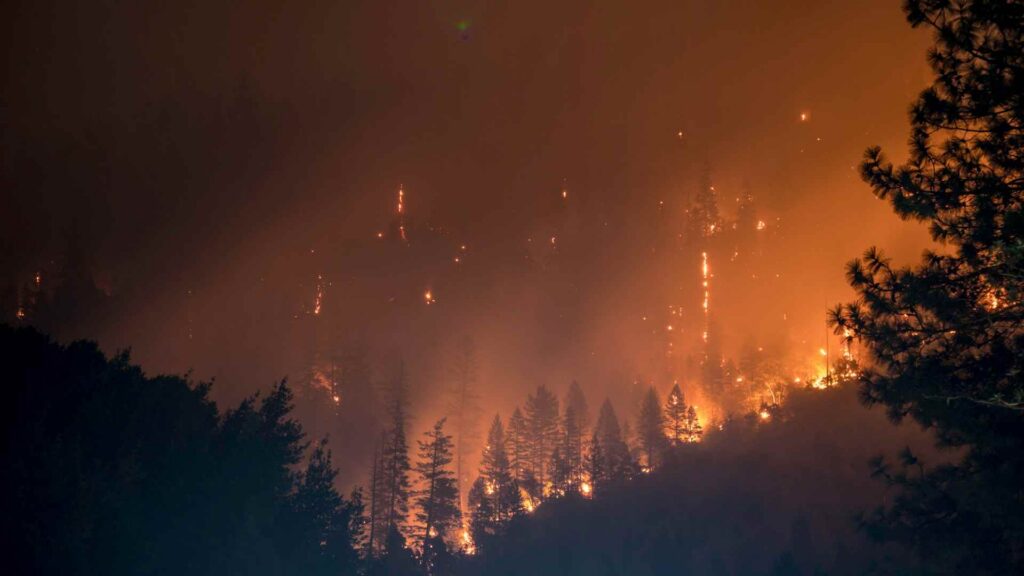
The latest warning pointing toward ways to reduce the risk came from ISPRA (the National Institute for Environmental Protection and Research). 2025 was a disastrous year for Italy’s forests. The total area burned by wildfires reached 965 square kilometers—an area comparable to the province of Pistoia— nearly double the estimates recorded in 2024. Only the peaks in 2007, 2017, 2021, and 2023 were more severe.
One of the most concerning statistics pertains to protected areas. Over 30% of the total area burned in 2025 and 38% of the affected forest ecosystems are located within the system of parks and nature reserves. That is, in places where biodiversity is richest, ecological balances are most delicate, and environmental damage is most severe.
The geography of the fires confirms a well-known historical trend: Southern Italy and the major islands remain the hardest-hit areas. Sicily, Calabria, and Campania together account for 71% of the total forest area burned nationwide. But there is a new development that deserves attention. There is an upward trend in the regions of Basilicata, Puglia, and Calabria, where the area burned annually is increasing compared to the recent past: the scope of the problem is expanding.
Preliminary data for 2026 also offer little cause for optimism. From January 1 to June 9, approximately 60 square kilometers of land have already been destroyed by fire—an area roughly the size of Lake Bracciano—including nearly 20 square kilometers of forest.
The issue of climate change is a constant backdrop to the entire report, even when it is not explicitly mentioned. Increasingly frequent heat waves, prolonged droughts, and drier winds: these are all factors that turn forests into highly flammable material and make wildfires faster, more widespread, and harder to contain.
Satellite monitoring allows us to measure damage with increasing precision. But measurement alone is not enough: the challenge is prevention, and to achieve that, we must invest in education, resources, and transparency of information. We must distance ourselves from climate disinformation centers and explain the benefits—including economic ones, as well as health and environmental ones—of the ecological transition. That is not what is happening.