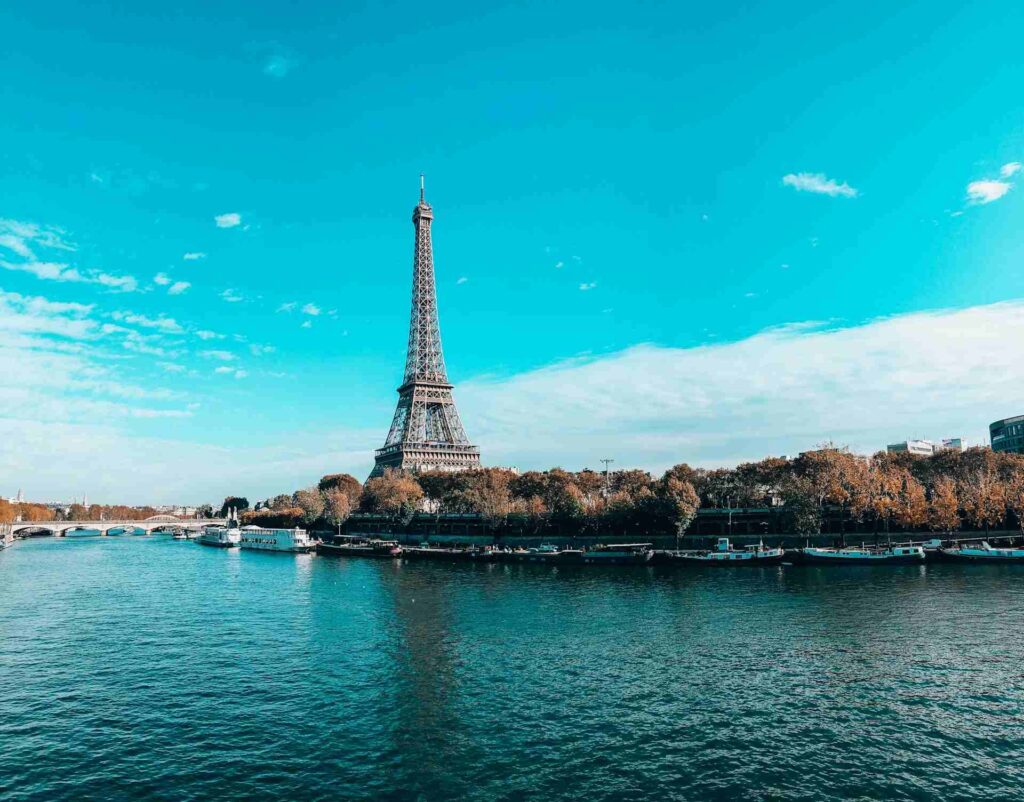
Paris is choosing its new mayor, but also what kind of city it wants to become. Indeed, the 2026 municipal elections come after more than a decade of urban transformation that has profoundly changed the face of the French capital: fewer cars and pollution, more bicycles, trees planted along the streets, and a new idea of urban mobility.
The environmental turn promoted in recent terms by the administration led by Anne Hidalgo has transformed the Ville Lumière into one of the most closely watched laboratories of urban ecological transition in Europe. This very transformation is now at the center of political confrontation.
According to the polls, the race for city hall has Socialist Emmanuel Grégoire (Hidalgo’s political heir) and conservative Rachida Dati in the lead, with nationalist Sarah Knafo growing in support. Behind the candidates’ programs lies a question: will the capital’s green revolution continue or slow down?
A redesigned city
In recent years Paris has undergone one of the most radical urban reconversions among major Western metropolises. The city has built some 1,000 kilometers of bicycle lanes, many of them along arteries historically dominated by car traffic.
According to city hall data, car traffic has decreased by more than 60 percent since 2002, while bicycle use has more than tripled. At the same time, 130,000 trees have been planted and some streets along the Seine have become pedestrian friendly.
These choices are part of the strategy of the so-called“15-minute city,” an urban planning model that aims to concentrate essential services-work, schooling, commerce-a short distance from home, facilitating the spread of “soft” (non-motorized) mobility.
The carbon knot
The hardest front of the Paris climate transition, however, concerns buildings. According to a study by the French firm Greenly, and published in Le Parisien, the capital’s emissions-about 4.72 million tons of CO₂ in 2022-are mainly dependent on the building stock, followed by transportation and waste management.
Energy retrofitting of homes is thus seen as the most powerful lever for reducing the city’s climate footprint. The most ambitious programs point to large-scale renovations that could cut up to 300,000 tons of CO₂ per year.
Enthusiasm and resistance
The green transformation has won accolades from urban planners and international observers, but it has also fueled mounting criticism. A section of Parisians complains of constant construction sites, difficulties for motorists, and problems with urban cleanliness.
Some motorist groups argue that anti-car policies have created a divide between the city center and the suburbs, where car use often remains essential. Municipal debt-which has exceeded 10 billion euros-has also entered the election debate.
That is why the elections take on the value of a political test: to understand whether the population sees the ecological transition as a necessary investment or too rapid a change.
A local vote with national weight
The Paris vote is part of a much larger electoral round. Some 48.7 million voters were called to the polls in the first round of the 2026 French municipal elections, turning the local poll into a nationwide political test, including ahead of the 2027 presidential election.
The most striking statistic is abstention. Estimates indicate that between 41 percent and 44 percent of voters did not vote, one of the highest levels in decades outside the pandemic period. Analysts and observers speak of growing distrust in politics and a more general “democratic fatigue,” particularly evident among the young and in the working classes.
In small municipalities, the game is often already closed: about two-thirds elected a mayor in the first round. In large cities, however, the picture remains open and polarized. In addition to the challenge in Paris, Marseille and Lyon also register close confrontations between opposing political blocs.
A laboratory for metropolises
Whatever the outcome, the choice of Parisian voters will have significance beyond the city’s borders. Many European metropolises are trying to reduce traffic, emissions and building energy consumption, but few have done so as intensively as the French capital.
The Parisian vote thus becomes (also) an urban referendum on sustainability and how the cities of the future should reconcile environment, mobility, and quality of life. If the green revolution continues, Paris could strengthen its role as a global model. If it slows down, it will be a sign that the urban green transition has yet to convince a significant portion of citizens.