This is already clear to most, but it’s one thing to know things by “gut feeling,” it’s another to have the certification stamped and official: 2025 energy in Italy has been on pause. Emissions and consumption stopped at the levels of the year before, as in the rest of the EU. But prices are not: compared to pre-2022, gas costs about 70 percent more, electricity twice as much. So says theENEA Analysis of the energy system, which records only a +1% increase in renewables. It is not enough: we are still far from the PNIEC targets, with a gap of about 20%. In Europe, final consumption is stable on 2023. In Italy slightly above. To hit the Energy Efficiency Directive would require a -3% per year in the EU27. The Italian PNIEC is less stringent, but would still require declines close to -2% per year. We are behind. Preliminary figures for the first quarter of 2026 see CO2 emissions and energy consumption both falling by 1%.
“EU final energy consumption is stuck at 2023 levels, while in Italy it is slightly higher. Now, to reach the Energy Efficiency Directive target in the Europe of 27, a decrease in consumption of 3 percent per year on average would be needed, while the PNIEC in Italy sets a less ‘ambitious’ EED target, which would need a decrease of less than 2 percent per year to be met,” explains Francesco Gracceva who edits the ENEA Analysis.
Slow growth
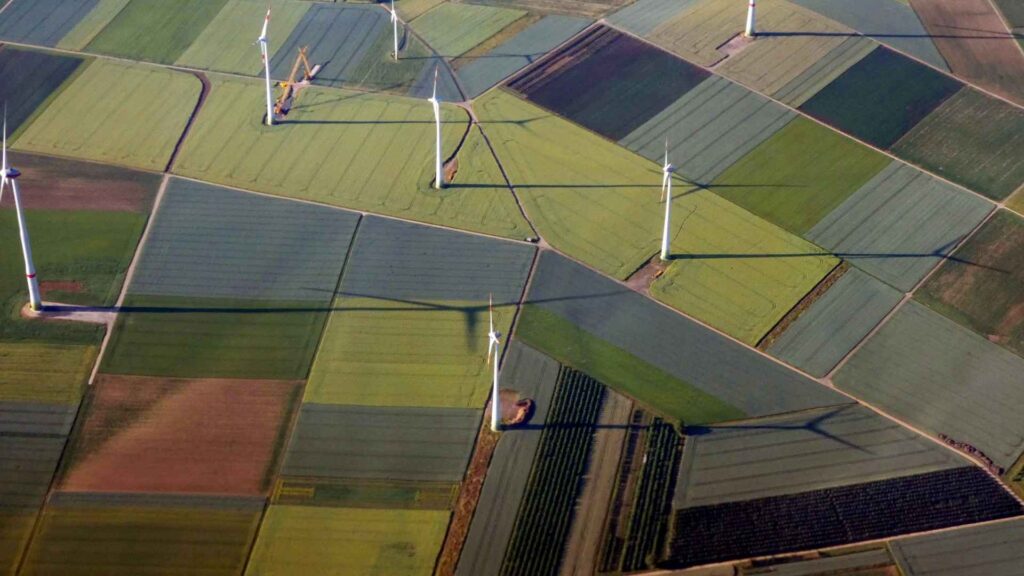
By primary sources, 2025 consumption sees gas consumption rising (+2%), due to colder temperatures and higher demand from power plants, although remaining 14% lower than the 2017-2022 average and in line with EU regulations. Unchanged oil consumption in transport, but declines in petrochemicals. Coal collapses (-16%), back to lows in electricity generation. Although up 1 percentage point, the share of renewables in final consumption stops at just over 20 percent, compared to the 25 percent predicted by the PNIEC. Growing most was photovoltaics (+25%), which generates more than 1/6 of total electricity generation.
Consumption by sector sees a slight increase in transport (+0.5 percent), while it remains stationary in civil. Electricity demand remains stationary at 2024 levels, confirming the stationary nature of the degree of electrification of consumption.
On the price front, the spread between the value of electricity on the Italian Power Exchange (116 €/MWh the annual average) and that of the main European markets (90 €/MWh in Germany, 65 €/MWh in Spain, 61 €/MWh in France) appears to be consolidated at historical highs, while the difference between the price of gas on the Italian market and the main European hub (TTF) has widened again.
The Blockade of Hormuz
“An energy scenario that is essentially immobile, but which today is once again troubled by a new energy crisis triggered by the war in Iran and in particular by the blockade of the Strait of Hormuz, through which more than one-fifth of the world’s oil and about 6 percent of crude oil and 9 percent of LNG bound for Europe transit, with heavy repercussions on prices,” Gracceva adds. “For the month of March alone,” he continues, “it is estimated that the cost of imported gas may well exceed 2 billion euros, at least half a billion more than the cost that would have been recorded at the average price of the previous twelve months. Even in the case of oil, a conservative estimate leads to an extra cost of imports of more than half a billion euros.”
The extreme difficulty of Italy’s energy transition is confirmed by the new all-time low of the ENEA ISPRED index, down 30 percent from 2024, with strong criticality on the decarbonization side. “To reach the 2030 target set by the PNIEC, it would be necessary to reduce emissions by 6 percent for each of the next five years,” Gracceva explains.“The Italian transition is off trajectory both for oil (+2% compared to -5% of the PNIEC targets) and for renewables, especially in the transport sector, where they have come to cover only 10% of consumption against the expected 15%,” Gracceva concludes.
Finally, the Analysis devotes a specific focus to low-carbon technologies, showing a reduction in the Italian trade deficit from more than 5 to minus 4 billion euros in 2025. The improvement was driven by strong growth in exports of plug-in hybrid vehicles, which more than doubled to non-European markets, first and foremost the United States, where imports sought to anticipate the announced duties. In contrast, the balance for PVs did not improve and the balance for pure electric vehicles worsened, for which the deficit exceeded 2.3 billion euros, making the improvement overall still fragile and concentrated in a few segments.