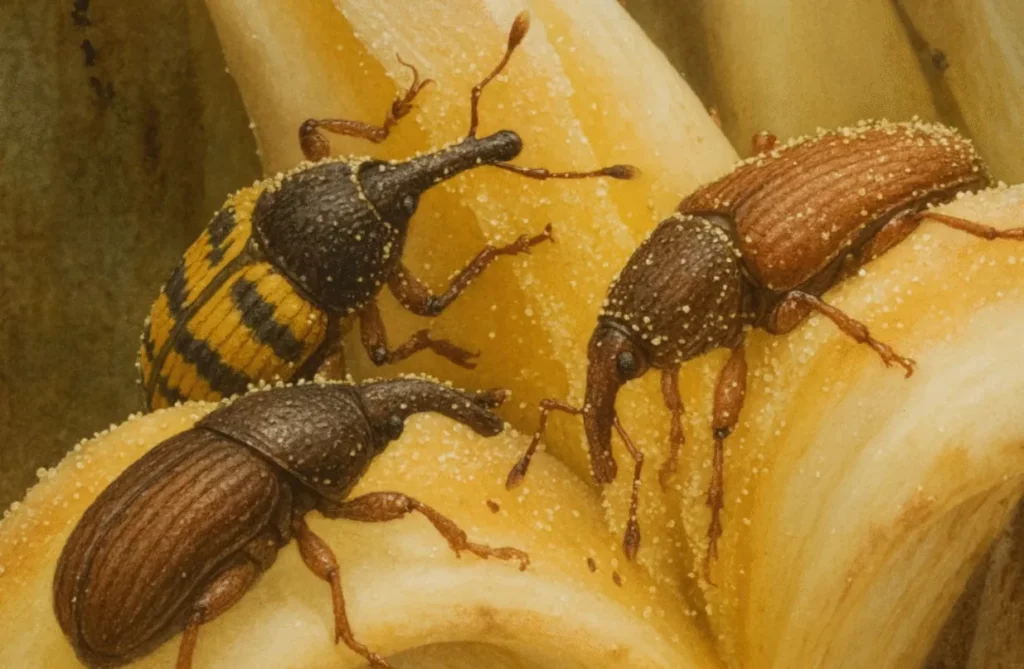
Thousands of tiny beetles from Africa have been released in an oil palm plantation on the northern island of Sumatra. It sounds like an absurd choice, but in reality it is an almost desperate move: Indonesia, the world’s leading producer, is aiming through the beetles to rekindle growth that has been trudging for years, stifled by the advanced age of the trees and reluctance to replant them because of long entry times.
One million insects against the crisis in production.
The first release, about 7,000 specimens on a plantation in state-owned PT Perkebunan Nusantara IV, is the inaugural step in a larger plan: to disseminate up to one million insects in different areas of the country to improve pollination and fruit development, with the goal of pushing yields. A similar program, on a smaller scale, had already yielded significant results in the 1980s.
The production stagnation of recent years has known roots: many oil palms are now old, and replacement requires investment and patience because it takes years for new ones to start fruiting. Introducing insects does not solve the issue of tree age, but it can buy time and margin, especially if accompanied by good agronomic practices.
The first experiment
About 6,000 beetles were collected in Tanzania early last year and transferred to a science center in North Sumatra to test their interaction with local insects and breed them in sufficient numbers. The oil palm is native to Africa, a detail that makes these pollinators particularly suited to the task. The first release took place in an 8,000-hectare plantation not far from the research center: the effect on yields is expected within 10 to 12 months, explains Agus Eko Prasetyo, a researcher at theIndonesian Oil Palm Research Institute and head of the initiative.
The program involves more than two dozen farms and groups of small growers, who will receive the insects in stages; a new release is planned as early as next week. Some of the larger producers, with their own laboratories, plan to breed and multiply the beetles themselves. “This is just the beginning,” says Prasetyo.
The biofuels program
The energy context adds urgency. Jakarta is expanding its biofuels program, diverting more oil to the domestic market. Tensions in the Middle East and high energy prices have accelerated the pace, and the industry is seeking every leverage to increase feedstock availability. According to Eddy Martono, president of the industry association Gapki, the introduction of beetles could boost production of fresh fruit bunches by 10-15 percent.