Ensuring rail mobility in a geographically compact country like Italy means managing passenger flows along a very narrow path. From 11:00 p.m. on Sunday, July 5, through the night of Friday, July 10, the closure of the Florence rail hub to replace the old Ponte al Pino railway overpass (with 140 years of history) demonstrated just how much the entire national network depends on individual key junctions. Despite the use of a 1,600-metric-ton crane to speed up the work, the construction site forced the suspension of service between Florence Campo di Marte, Rifredi, and Santa Maria Novella.
The impact on transportation is immediate: traffic volume in the area has been cut by 50%. To prevent the north and south from becoming isolated, RFI was forced to reschedule train schedules, rerouting two trains per hour on the Milan-Rome route to the Tyrrhenian line. As pointed out by Andrea Esposito, head of planning and industrial control at RFI, this alternative route via Pisa-Grosseto-Civitavecchia results in travel times increasing by up to three hours, bringing the total travel time for the Milan-Rome route to nearly six hours.
Full Rates and Alternative Network in Trouble
If the number of available trains is cut in half and travel times double, the economic aspect does not follow the same logic of compensation. Trenitalia has clarified that the new, extended travel times are already factored into the booking systems, confirming that ticket prices will remain unchanged. This is a business decision that penalizes those who must travel on the country’s main rail line, forcing them to pay standard fares for a degraded service.
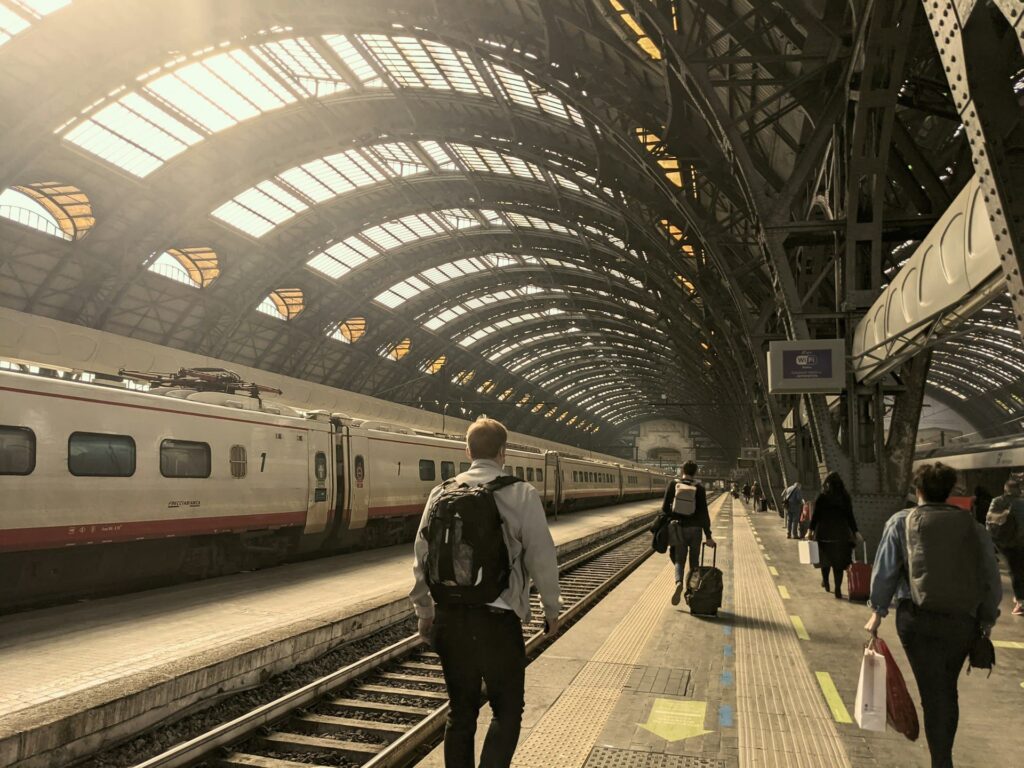
As proof of just how overloaded the system is, a difficult start to the week was all it took to throw the alternative routes into disarray: a technical malfunction at Milan Central Station and a line disruption near Follonica, right on the Tyrrhenian line, caused further delays on trains already severely affected by the detour through Tuscany.
This week’s disruptions foreshadow an even more challenging August, with scheduled service interruptions on the Milan–Genoa and Milan–Venice lines, as well as on the Florence–Rome “Direttissima” line itself.