In recent days, air conditioning seems to have moved beyond the home (for those who can afford it—according to ISTAT data, 1 in 2 Italians) to become a battleground between political parties and opposing views, including on climate adaptation.
According to a report by the British newspaper The Guardian, Germany’s far-right AfD party has accused the government of hindering the spread of air conditioning in the name of climate policies and energy efficiency. The party’s spokesperson on housing, Marc Bernhard, spoke of citizens being “sacrificed on the altar” of climate ideology, arguing that the rejection of mechanical cooling would contribute to an increase in heat-related deaths.
In France, too, air conditioning has become a contentious issue. Environment Minister Monique Barbut said she was “horrified” by the idea of widespread use of air conditioning, reigniting a debate involving schools, hospitals, nursing homes, and private residences. On the other side of the debate, the Rassemblement National has turned the issue into one of the main points of contention against the government’s environmental policies, proposing air conditioning as an immediate response to the effects of extreme heat.
What the Experts Say
The political divide, however, tells only part of the story. From a scientific perspective, the situation appears much less contentious. Hans Kluge, the World Health Organization’s Regional Director for Europe, notes that European investments in tree planting, shade structures, building insulation, and cooling centers were the right choice, but he emphasizes, as reported by the British newspaper, that “both solutions play an important role.”
The message is that air conditioning should not be demonized, but used where it is a health necessity. Hospitals, nursing homes, schools, public transportation, and the homes of the most vulnerable should be the priorities, while urban adaptation continues to rely on more trees, green roofs, heat-reflective materials, and urban design that limits the heat island effect (which is, in fact, also exacerbated by the use of air conditioning).
The numbers explain why this issue cannot be reduced to a slogan. According to the WHO, over the past four years, more than 200,000 people have died in Europe from heat-related causes. Although early warning systems and emergency plans have reduced mortality compared to the past, recent heat waves are likely to take a heavy toll once again.
No one-size-fits-all solution
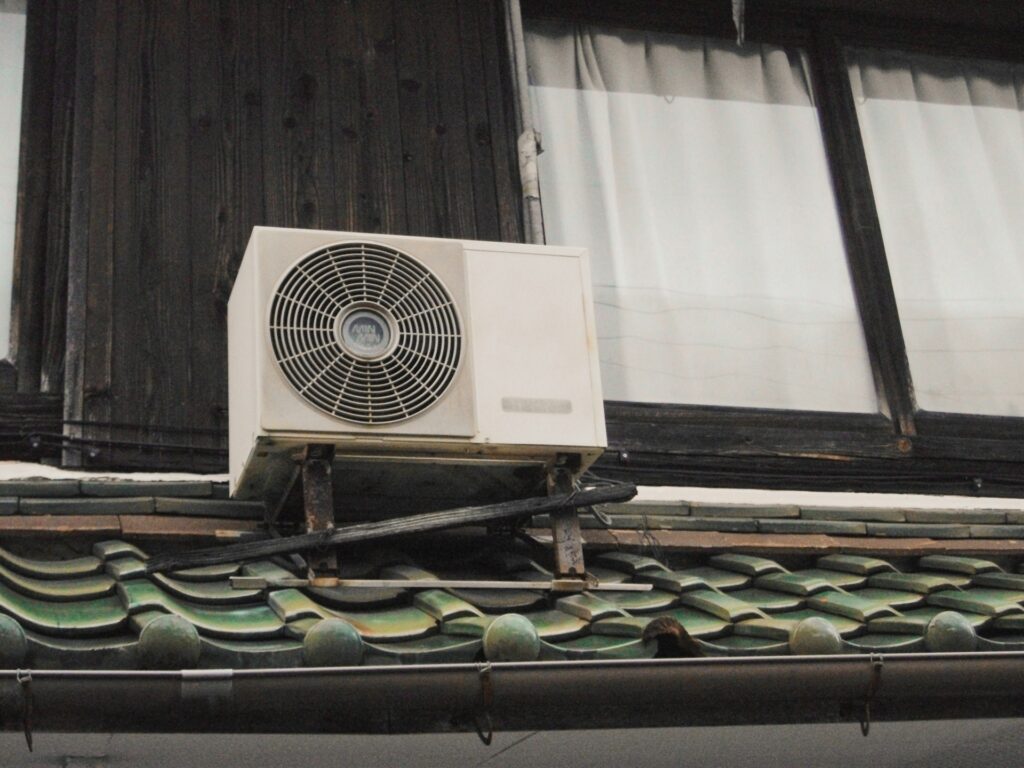
After all, air conditioning also has limitations that policymakers tend to ignore. The increase in electricity consumption, the heat dissipated outdoors that contributes to further warming urban areas, and the need to upgrade energy grids make it clear that mechanical cooling cannot replace adaptation strategies.
Chloe Brimicombe, a climatologist at the University of Oxford, also points this out, noting that during heat waves, an increasing amount of energy is used to cool data centers. “Human lives are more valuable than artificial intelligence—or at least they should be,” the researcher observed.
And this is probably the point that the political debate struggles to grasp. Climate change requires us to decide how to allocate resources, energy, and investments to protect public health. Turning air conditioning into a symbol of identity may fuel political debate, but it will not make European cities more resilient or reduce the number of casualties during future heat waves.