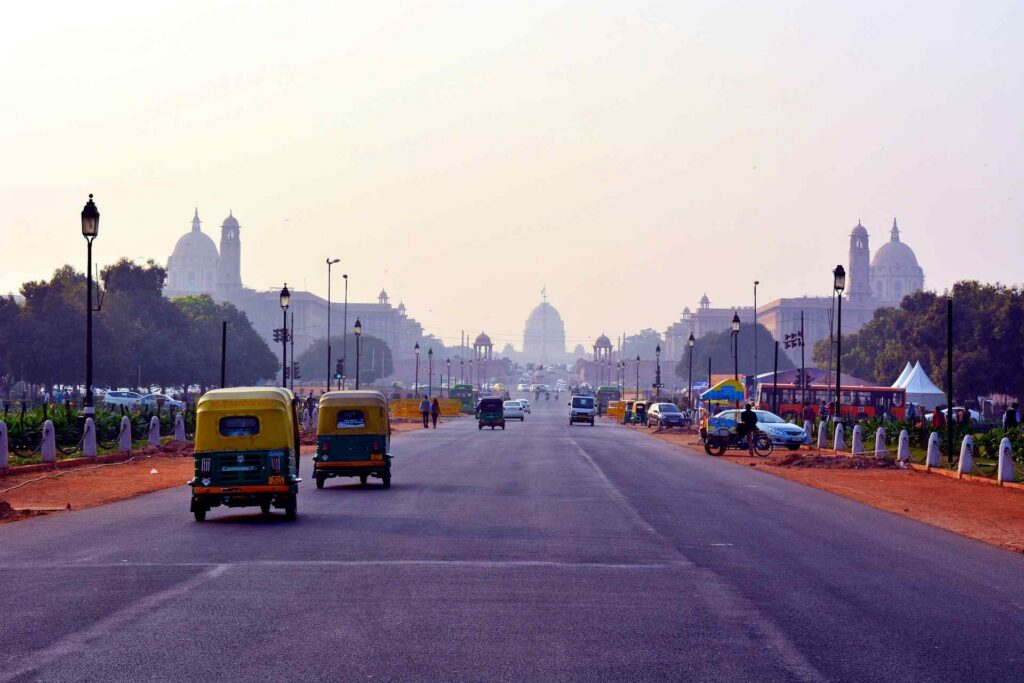
New Delhi did not have a single day of clean air in 2025, with air quality index readings consistently above the alert threshold. With a metropolitan population of about 30 million, the city has for years been grappling with some of the highest pollution levels in the world, exacerbated by a vast fleet of vehicles—largely scooters and rickshaws powered by gasoline or compressed natural gas, which alone account for more than two-thirds of the total. According to the Air Quality Management Commission, road transport is responsible for about 23% of the capital’s air pollution: smog causes thousands of premature deaths each year.
The Stages of the Ban
To reverse this trend, the executive led by local Prime Minister Rekha Gupta has approved a policy that will be phased in gradually through March 2030. Starting January 1, 2027, only electric rickshaws and zero-emission light commercial vehicles may be registered; gasoline- or LPG-powered vehicles already on the road may continue to operate, but replacements must be electric models. Starting April 1, 2028, the same ban will extend to scooters and motorcycles, which will no longer be eligible for registration unless they are electric. Hybrid cars, however, remain excluded from any incentives: the government has chosen to focus exclusively on fully electric vehicles.
Incentives and Infrastructure
To support the transition, New Delhi has allocated a package of approximately 150 billion rupees, or about 1.4 billion euros. Those who purchase an electric rickshaw will receive a staggered subsidy—up to 50,000 rupees in the first year, 40,000 in the second, and 30,000 in the third—while electric cars priced below 30 lakh (about 28,000 euros) will be completely exempt from registration and road tax. Incentives are also available for those who scrap an old gasoline-powered vehicle and switch to electric. The plan also aims to install 30,000 public charging stations in the city, where, according to authorities, the number of charging points has already more than doubled in the past year, exceeding 10,000.
The Reactions
Sustainable mobility experts welcome the measure, calling it a potential model for other Indian states grappling with the same smog crisis, but they stress that its success will depend on how quickly the charging network is expanded. Rickshaw drivers’ associations are more cautious, describing the transition as having been imposed without consultation: they fear that current incentives are insufficient to cover the cost of a new electric vehicle and are calling for an increase in state and central government subsidies. Furthermore, the issue of permits remains unresolved: in Delhi, the number of licenses for passenger rickshaws has long been capped, which has effectively halted new electric vehicle registrations over the past year.