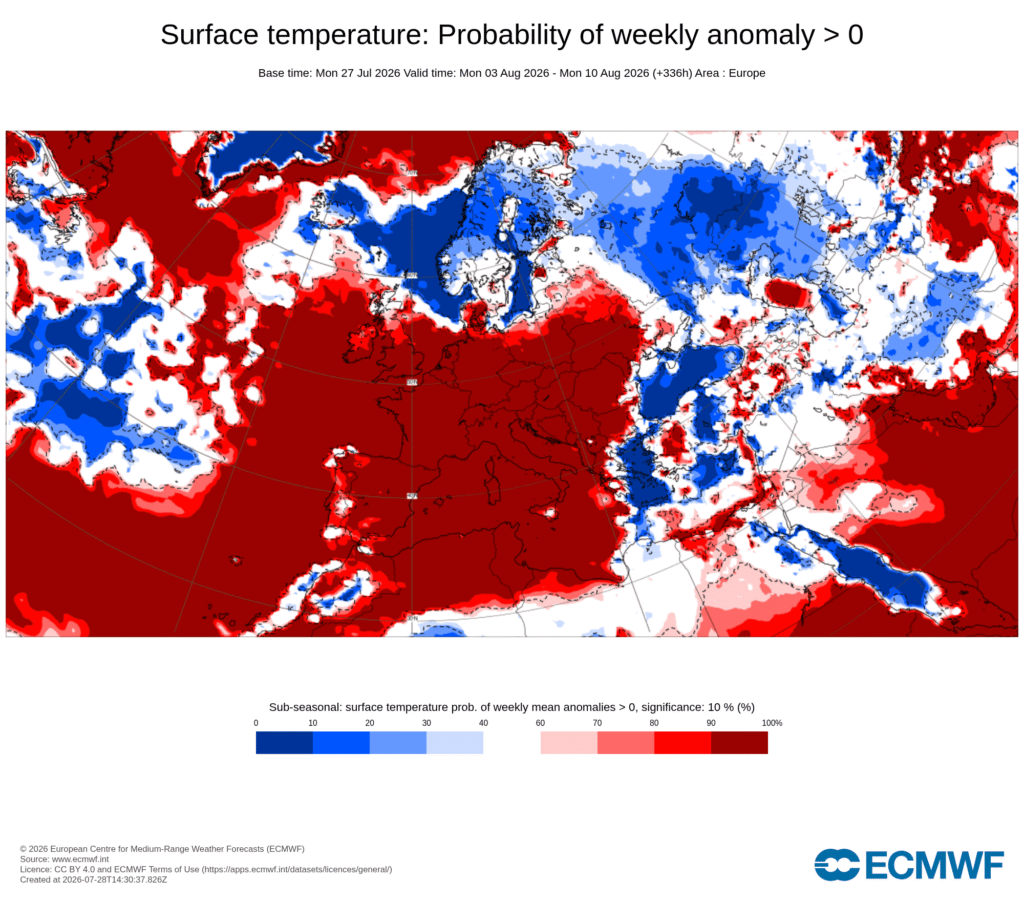
After a brief spell of unstable weather, summer is once again showing its most extreme side. Starting midweek, the African high-pressure system will regain control of Italy, pushing temperatures well above seasonal averages and ushering in a period of intense heat set to last at least until the first week of August. Forecasts indicate highs well above 35 degrees from north to south, but the defining feature of this new weather phase will bethe lack of relief at night andthe gradual rise in humidity.
The Heat Map
According to forecasts released by Sky TG24 based on data from iLMeteo.it, between July 29 and early August, high pressure will stabilize weather conditions across nearly the entire Italian Peninsula. In central and northern Italy, cities such as Milan, Turin, and Bologna will reach 37 degrees, while Florence and Rome will approach 38–39 degrees. Even higher temperatures are expected in the South and in the inland areas of Sicily and Sardinia, where the mercury will rise above 40 degrees, with peaks of up to 41 °C in the inland valleys of Tuscany and Umbria.
The most critical issue, however, concerns temperatures after sunset. Data from 3BMeteo show that in major urban centers, lows will not drop below 25 degrees, creating the conditions for so-called “tropical nights.” In Milan, lows are expected to range between 27 and 28 degrees, with stable lows of 26–27 degrees in Bologna and Rome. The same weather service emphasizes that “this means temperatures will peak at 30°C even after 9:00 or 10:00 p.m. in major cities, causing a high level of physical discomfort.”
This phenomenon is amplified by the mechanism of atmospheric subsidence: high pressure pushes air masses downward, compressing them. Due to the thermodynamic laws of adiabatic compression, the air’s temperature rises further without exchanging heat with the outside, causing the ground to overheat. At the same time, the freezing level will rise across the Alps to around 5,000 meters in elevation, eliminating nighttime frost even on the summit of Mont Blanc and accelerating the melting of the glaciers.
Urban Impact and Heat Stress Management
The situation will become even more concerning as humidity levels rise. In the early days, the heat will be scorching, but the prolonged stagnation of the high-pressure system over the Mediterranean basins—where surface water temperatures are already high, ranging from 27 °C to 29 °C—will saturate the air with water vapor. This shift will transform the heat into muggy conditions along the coasts and in the plains, significantly raising the perceived heat index.
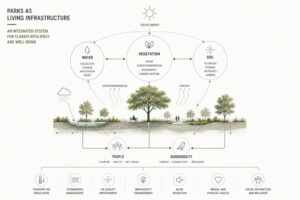
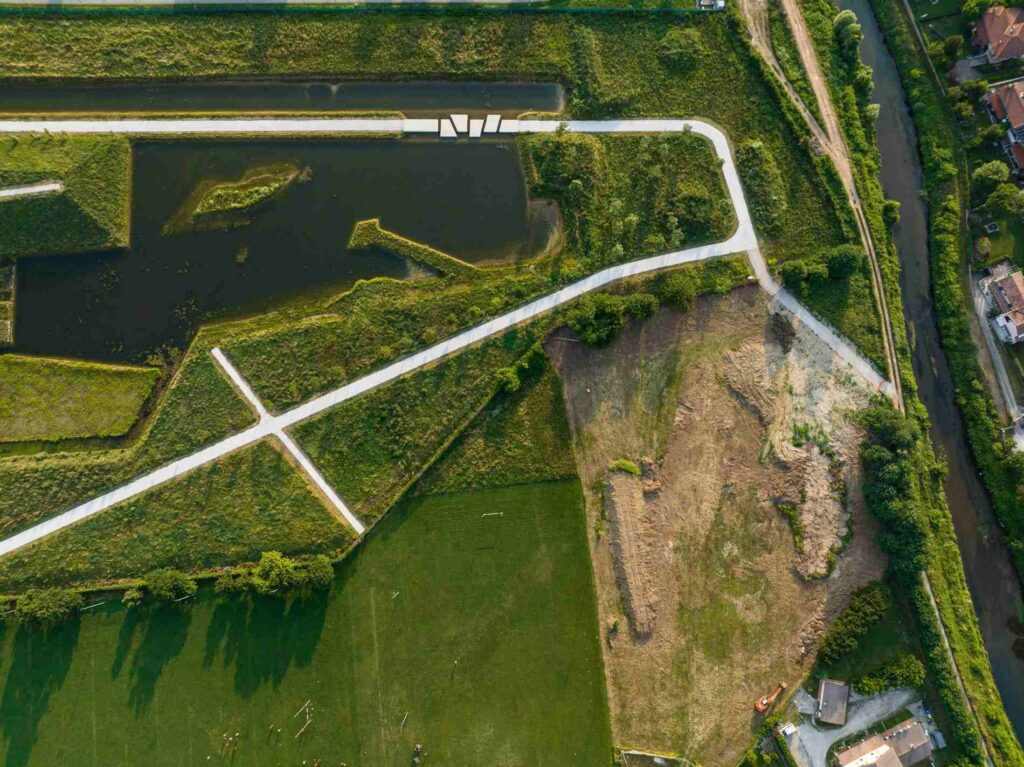
The combination of persistent hot air and rising humidity levels affects both the comfort of indoor spaces and the body’s ability to dissipate the heat accumulated during the day. The “heat island” effect, typical of densely built-up areas with little vegetation cover, traps solar radiation and releases it slowly throughout the night, eliminating the daily temperature range.
The Ministry of Health recommends the usual self-protection measures: limit time spent outdoors during peak sun hours (between 11 a.m. and 6 p.m.), stay hydrated frequently, eat light meals, and monitor the well-being of the elderly, children, and people with chronic conditions, as well as outdoor workers.