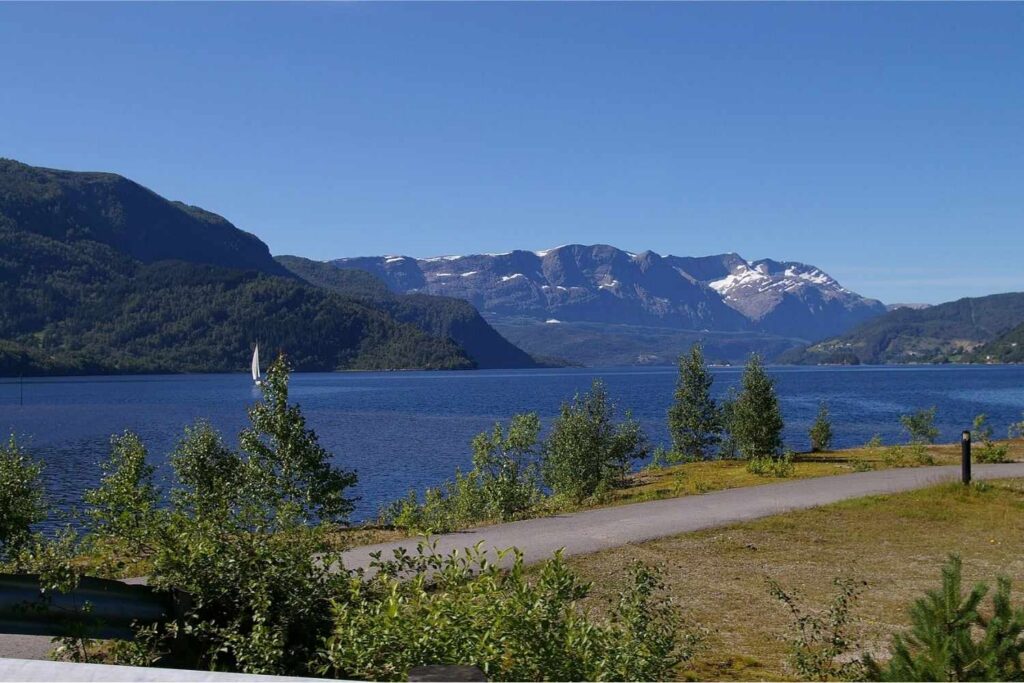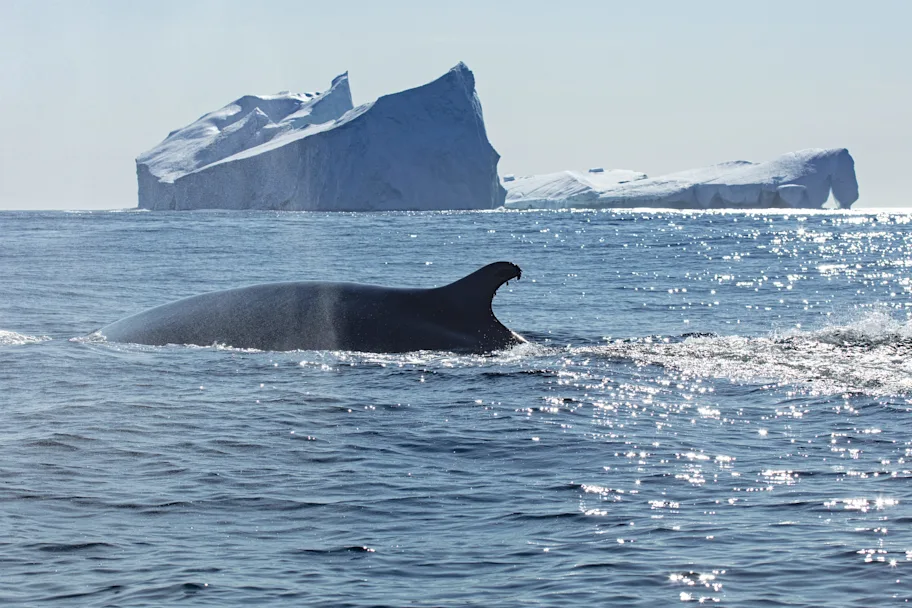
Until 2006, there had not been a single sighting of humpback whales. In 2007, seven humpback whales were sighted. In 2024, more than 150 were spotted, and they weren’t alone: they were accompanied by thousands of minke and fin whales in what researchers describe as a seasonal “feeding frenzy.” The eastern coast of Greenland, which for centuries had been difficult for large cetaceans to access due to the sea ice that accumulated along the coast in the summer, has gradually become more accessible.
The study, published in *Frontiers in Marine Science* and led by Mads Peter Heide-Jørgensen of the Greenland Institute of Natural Resources, compiled three decades of data: systematic aerial surveys conducted in 2015 and 2024, ship-based observations from the North Atlantic Sighting Surveys dating back to 1987, satellite tracks of 15 tagged individuals between 2019 and 2025, and accounts from Inuit hunters collected between 2023 and 2025. The result is a mathematical model that combines sea surface temperature, salinity, and ice concentration to explain a change the authors define as an ecological “regime shift.”
The figure that sums it all up is about 16,000: the estimated number of the three species of whales in the waters off eastern Greenland in the summer of 2024. The estimates reported in the study are approximately 6,000 fin whales, 6,000–6,400 minke whales, and about 4,000 humpback whales.
The heat is shifting the whales’ feeding grounds
Here, the study refutes the simplest interpretation—that the cetacean is simply chasing warmer water. The mechanism is a chain reaction that involves an intermediate link: the capelin, a small pelagic fish that prefers cold waters and is an important prey species for fin whales. Since the late 1990s, capelin have gradually become more abundant on the East Greenland shelf, and acoustic data indicate that, after 2003, foraging areas shifted from the waters north of Iceland toward Greenland. This shift may have been driven by warming and changes in ocean currents in the stretch between Iceland and Greenland.
The whales have thus found a new feeding ground. The sea east of Greenland has seen a rise in surface temperature of about 1 degree, with a particularly noticeable change between the late 1990s and the early 2000s. During the same period, the summer sea ice regime changed markedly, reducing the pack ice along the coast and making coastal waters more accessible to large cetaceans.
One detail worth noting: there is no commercial capelin fishery in that area, so for now, competition between human fishing fleets and whales remains a theoretical problem. That may not last.
Winners and Losers in the Same Sea
This new development does not mean that those waters were simply devoid of life before. Coastal pack ice severely limited their accessibility to right whales, while Arctic species such as narwhals and belugas were already adapted to that environment. Now that summer ice is shrinking, right whales can more easily exploit those same waters and find themselves sharing the habitat with Arctic species, which in some cases may be adversely affected by the change.
This is one of the most interesting aspects of the phenomenon: it involves a shift in ecological balances. Fin whales, which are more opportunistic species, seem to benefit from the opening up of new feeding grounds; for Arctic species such as narwhals and belugas, however, the loss of their habitat can pose a problem.
However, the study itself urges caution: it is unclear whether the observed increase reflects a real growth in fin whale populations or rather a redistribution of animals already present elsewhere. In fact, the authors consider it likely that the current abundance also reflects a shift and expansion of North Atlantic populations, possibly with an influx from western Greenland.
An Indicator
Whales arriving in areas where they were once rare are not necessarily good news in the strictest sense: they serve as a barometer. They signal that capelin are shifting their distribution, that sea ice is retreating, and that an entire food web is reorganizing itself on a regional scale. The study urges us to interpret these figures as the visible effect of a process that, beneath the surface, involves fish, plankton, currents, and temperatures long before the whales end up in photographs.