For nearly 4.9 million Italian households, getting around has become a financial burden. Gas, maintenance, andcar operating costs weigh heavily on household budgets, especially where buses and trains do not offer viable alternatives. This is a snapshot of Italy’s transportation poverty, as outlined in a report published on October 13, 2026, by Transport & Environment (T&E) and prepared by TESSA, a spin-off of the University of Tuscia.
18.46% of households (approximately 4.89 million) spend more than double the Italian average of their household budget on transportation, and are thus facing significant financial hardship.
When a Car Becomes a Necessary Expense
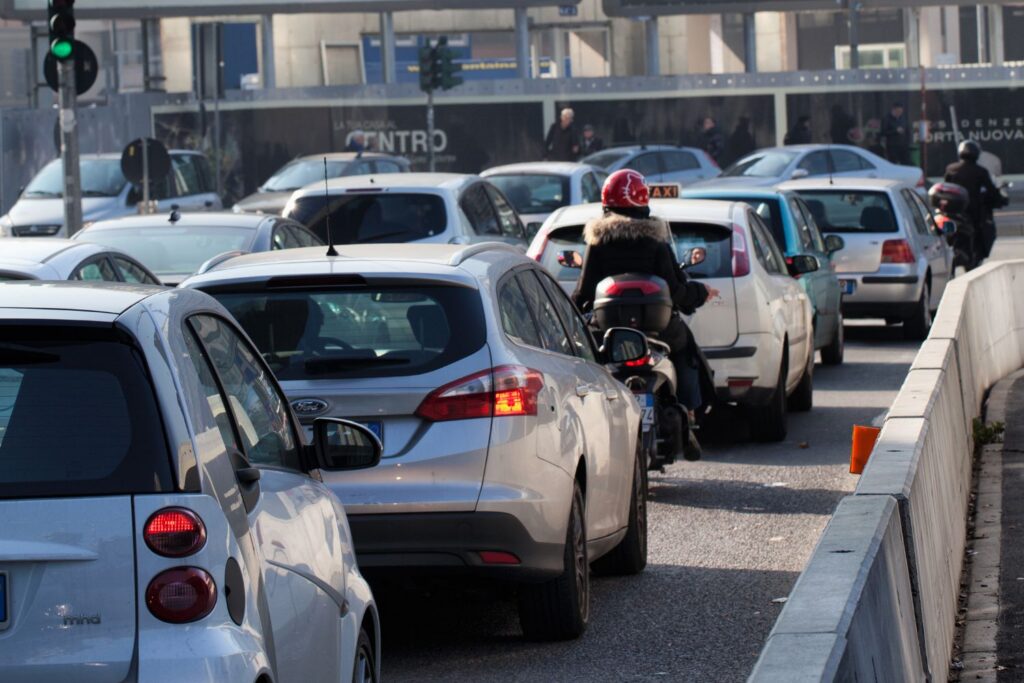
Italy has 701 cars per 1,000 inhabitants—the highest rate in the EU (the average is 578)—and 99.3% of the vehicle fleet runs on gasoline, diesel, or natural gas. Electric vehicles account for 0.7%. In many small towns, owning a car is essential precisely because of the lack of public transportation: researchers refer to this as “forced car ownership.” This dependence leaves people exposed to rising fuel prices. The report identifies 643,000 low-income households as particularly vulnerable, a condition defined as “fuel vulnerability”, and 57% of them live in Southern Italy.
Municipalities without adequate alternatives
There are 766 municipalities—9.7% of the total—that form clusters with high levels of vulnerability due to a lack of railways, major roads, and local public transportation stops. They are concentrated along the Alps and the Apennines, on the islands, and in the inland areas of Southern Italy. According to the model, the most significant factors are the remoteness of inland areas and an aging population, while higher income and an urban setting provide protection. In municipalities with fewer than 50,000 inhabitants, 1.72% of households suffer from both energy poverty and transportation poverty—more than five times the rate in metropolitan areas (0.32%).
Two-speed electric
In municipalities with the highest incomes, there are nearly 8 electric cars (7.76) per 1,000 residents—more than five times the figure recorded in the poorest areas. In Trento, there are more than 50 times as many as in Crotone. Charging infrastructure also plays a role: in 2025, 81% of the provinces with more than 1,000 public charging stations were located in the North. The PNRR bonus for electric vehicles expired on June 30, 2026, and industry associations fear a drop in sales.
The proposals
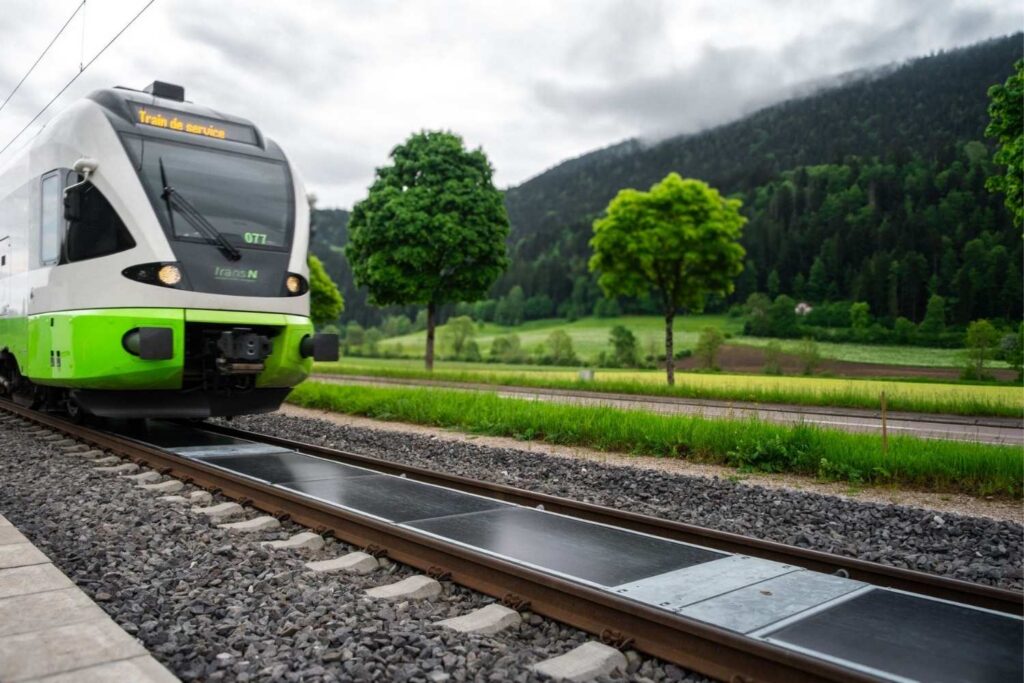
To overcome these inequalities and support the transition toward decarbonization, the Transport & Environment report outlines a multi-level strategy. First and foremost, the priority must be to revitalize local public transportation through structural and ongoing investments to modernize the fleet with environmentally friendly vehicles (starting with the purchase of electric buses) and the introduction of discounted fares to support commuters and those with lower incomes.
In inland areas and small municipalities, where demand is too low to justify traditional bus routes with fixed schedules, the solution lies in flexible mobility, such as the introduction of on-demand transportation services, the promotion of carpooling and shared mobility, along with an extensive network of charging stations.
To make zero-emission vehicles accessible even to those with lower incomes, T&E proposes targeted measures such as social leasing (a long-term lease with a government-subsidized, capped monthly payment for low-income individuals), the expansion of incentives for the purchase of used electric cars, and the development of a certified used-car market that guarantees the condition and lifespan of the batteries.
Even when it comes to measures to combat inflation, the analysis suggests a change of course: rather than resorting to across-the-board excise tax cuts (which benefit all citizens indiscriminately, including the wealthiest), preference should be given to temporary and targeted cash transfers, distributed based on household income and place of residence.
Finally, the report highlights the key role of the new European regulatory instruments. On the one hand, there isETS2, the European Union directive that will extend CO2 emissions trading to road transport fuels, discouraging the use of gasoline and diesel and inevitably leading to higher prices at the pump. On the other hand, the Social Climate Fund, established by the EU to collect the revenues generated by ETS2 taxes and redistribute them in the form of direct aid and funding for energy efficiency. The goal is to prevent the economic burden of the ecological transition from falling disproportionately on those with the fewest resources to cope with it.