“It’s a matter of survival,” said Nevada Governor Joe Lombardo, describing what is at stake. The state has filed a lawsuit against the Trump administration to stop a federal plan that, according to Las Vegas, would drastically cut its access to water from the Colorado River. It is the first lawsuit of its kind and could be just the beginning of a long season of legal battles among the seven states that share the great river of the Southwest.
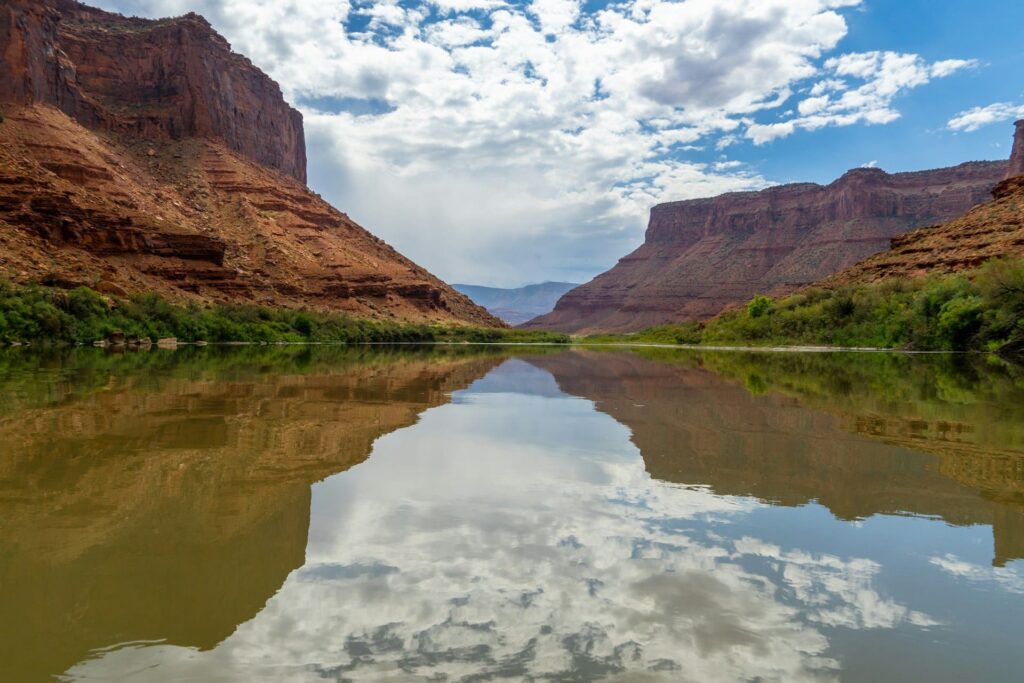
Born from the snows of the Rocky Mountains, the Colorado River is the lifeblood of a largely arid region. It provides water for about 40 million people, sustains agriculture, and supports cities that have sprung up in the desert, from Phoenix to Las Vegas. But decades of overuse and years of drought have depleted its reserves. The problem has its roots in a historic miscalculation: the 1922 treaty that allocated the water assumed a flow of about 17.5 million acre-feet per year, while the actual average turned out to be just 14.7 million. In essence, the river has always been managed as if it contained more water than actually flows through it.
This imbalance has Carson City up in arms.
The spark was ignited last week, when the Department of the Interior issued the new management rules. The plan requires the so-called “lower basin” states—Arizona, California, and Nevada—to reduce their water withdrawals by about 20% over the next two years, with even steeper cuts on the horizon through 2036. The “upper basin” states—Colorado, New Mexico, Utah, and Wyoming—are not affected by the measure.
It is precisely this imbalance that has Carson City up in arms. According to the complaint, filed in district court alongside the Colorado River Commission and the Southern Nevada Water Authority, the measure could strip the state of up to 71% of its allotted share. This would be a potentially fatal blow to Las Vegas, which derives 90% of its drinking water from the Colorado River. “This is not a political stance,” the governor reiterated. “It is a matter of survival for a community that accounts for two-thirds of the state’s population and the largest share of its economy.”
Not much time to reach an agreement
The paradox, environmentalists point out, is that Nevada uses very little water—just 1.8% of the river’s total flow—and boasts the most aggressive water conservation programs in the basin. The upstream states counter that drought has already reduced their supplies and that, as a result, the cuts should fall on those who use the most water.
Behind this legal standoff lies a broader issue that is bound to resurface everywhere on a warming planet: how to divide a dwindling resource among those who need it more and more. Nevada has asked the judges to overturn the plan and bring everyone back to the negotiating table. Arizona and California, which have so far remained on the sidelines, could soon join the case. Negotiations among the seven states remain at an impasse, while the water level of Lake Mead continues to drop—and with it, the window of time to reach an agreement.