It won’t be a total eclipse, but the spectacle that will unfold in the sky in late August is still worth setting your alarm early for. On Friday, August 28, the full Moon will partially pass through the Earth’s shadow, offering residents of Italy, the rest of Europe, the United Kingdom, and Africa one of the most-watched astronomical events of the year.
Times and Phases of the Event
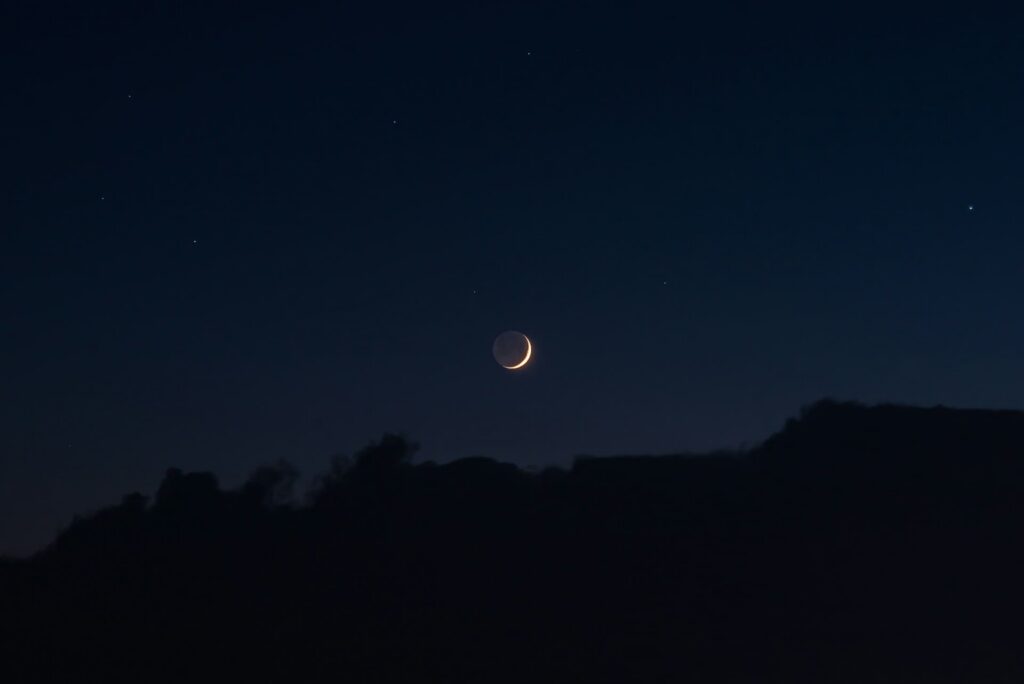
The eclipse will begin at 4:33 a.m. Italian time (3:33 a.m. in the United Kingdom), when the Moon’s disk begins to enter the Earth’s shadow. The peak of coverage will occur shortly after 6:10 a.m. (5:10 a.m. in the United Kingdom): at that moment, only a narrow portion of the Moon’s surface will remain directly illuminated by the Sun, while the rest will take on a copper-red hue. Since this is a partial eclipse—not a total one—the Moon will not take on the coppery hue characteristic of so-called “blood moons”; only part of the lunar disk will remain in shadow.
Why the Moon Changes Color
This color phenomenon is not an optical illusion but a precise physical effect: as sunlight passes through Earth’s atmosphere, its blue components are filtered out and scattered, while the red frequencies still reach the Moon. It is the same mechanism that turns sunsets red, replicated on a planetary scale and projected onto the Moon’s surface.
How and where to observe it
Experts recommend choosing a viewing spot with an unobstructed western horizon: during the central phase of the eclipse, the Moon will already be low in the sky and nearing sunset, while the first light of dawn will be breaking in the east. Unlike solar eclipses, a lunar eclipse poses no risk to your eyesight: it can be viewed with the naked eye, and binoculars help you better appreciate the nuances of color. As always, areas far from artificial city lights are where the contrast between shadow and direct light is most clearly visible.
An event spanning multiple continents
Visibility will not be limited to Europe. In the Americas, the eclipse will be visible in its entirety on the night of August 27–28, while in New Zealand, only the final phases will be visible. This serves as a reminder that the cycles of the Earth and the Moon remain the same everywhere in the world: what changes from time to time is only the time in the time zone from which they are observed, and the portion of the night sky that each continent still has available for viewing them.