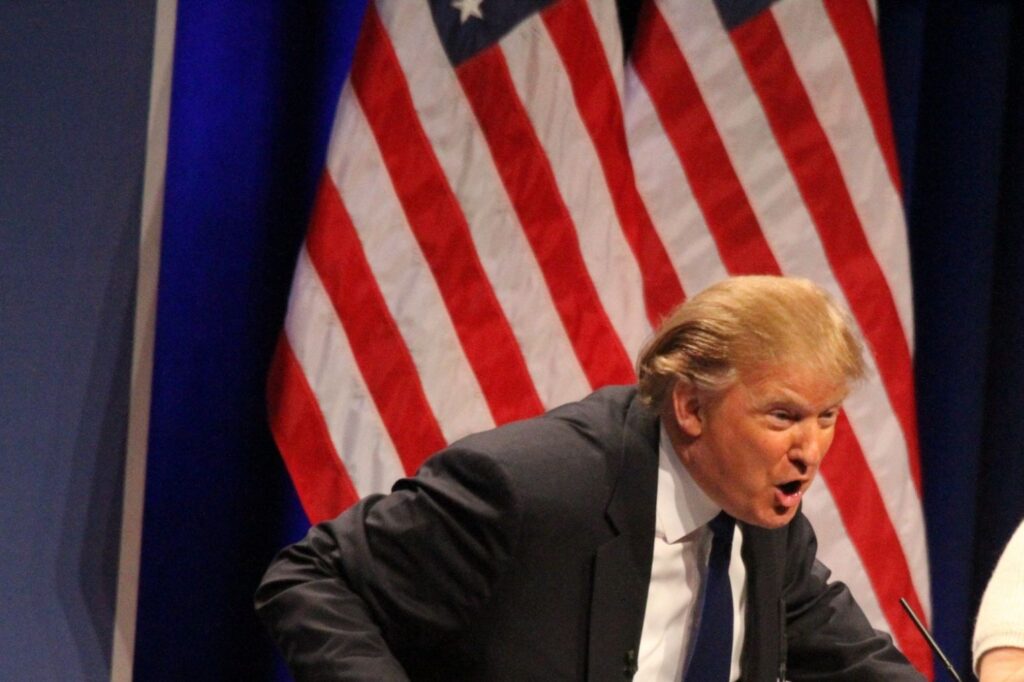
The blue wave swept across the United States, handing the Democrats control of Congress and dealing a heavy political defeat to Donald Trump. The November 3 midterm elections have shifted the balance of power in Washington: the House and Senate have passed into the hands of the opposition, which, starting in January 2027, will be able to influence the president’s agenda—including on environmental issues, starting with incentives for renewable energy and regulations on pollutant emissions.
The Democratic victory extended even to traditionally Republican states. In Texas, James Talarico, 37, defeated Republican Ken Paxton, bringing the Democrats back to victory in a Senate race after nearly forty years. In the same state, Gina Hinojosa defeated incumbent Governor Greg Abbott, becoming the first woman of Latin American descent to lead Texas.
The election also set several historic records. In New Mexico, Deb Haaland, who previously served as Secretary of the Interior under Joe Biden, became the first Native American woman elected governor. In Minnesota, Peggy Flanagan is the first Indigenous woman elected to the Senate, where she will be joined by Chris Pappas—the first openly gay man to win a Senate seat—and Abdul El-Sayed, the first Muslim senator in American history. In Georgia, Keisha Lance Bottoms became the first African American woman elected governor of a state.
The high cost of living is taking its toll on Trump
Prices were the main factor influencing voters’ choices. According to surveys cited by the Associated Press, dissatisfaction with the cost of living, the war with Iran, and concerns about corruption contributed to the outcome. About 70% of voters would like a Congress capable of exercising greater oversight over the president.
Energy costs are among the expenses that concern families. A briefing released by the Global Strategic Communications Council ahead of the elections highlights increases in fuel and electricity prices, along with insurance and housing costs.
The document also cites an analysis by Energy Innovation suggesting that changes to federal energy policies introduced starting in 2025 could result in $920 billion in additional expenses for American households between 2026 and 2040. This forward-looking estimate takes into account the effects of regulatory decisions and investments in the sector.
Renewables and Oil: What’s Changing
The new Democratic majority will take office in January 2027 and will be able to influence the Trump administration’s decisions. Among the priorities outlined in the briefing are the restoration of tax incentives for clean energy, the revival of wind and solar projects, and investments in the power grid.
Congress will also be able to launch investigations into decisions made by the Environmental Protection Agency (EPA), including reviews of pollution emission standards, and subject the relationship between the government and the fossil fuel industry to greater scrutiny.
However, the scope for action remains limited. Trump retains the power to veto laws passed by Congress and broad executive authority. Furthermore, in the Senate, many proposals require 60 votes to overcome a filibuster. Democrats will therefore be able to block new changes to environmental regulations and negotiate funding, while a comprehensive reform of climate policy appears more difficult.
Data centers are also becoming a political issue
Another issue concerns the expansion of artificial intelligence. Large data centers consume increasing amounts of electricity and require new investments in energy infrastructure, which could affect utility bills.
According to a PBS News/NPR/Marist poll cited in the briefing, 65% of respondents oppose the construction of data centers in their communities. In Georgia, one of the states affected by the sector’s growth, concerns also center on the costs of expanding the power grid.
The Democrats are proposing stronger consumer protections and calling on large tech companies to directly cover the energy costs associated with their facilities. This position has some common ground with that of several Republicans.
The new Congress will have to address these issues while the Trump administration continues to support the expansion of domestic oil and gas production. A period of institutional debate is beginning for U.S. climate policy, with implications for the United States’ international commitments as well.