More than one in four 15-year-olds spends more than four hours a day on social media. This is the threshold researchers use to define “hyperconnectivity,” and over the course of a year, that percentage has risen from 20.7% to 26.8%. Among girls, the figure reaches 35%. This is one of the findings from the second survey of the “Interactional Changes and Well-being” (MiB) project, presented on November 5 to the National Research Council. Starting in 2025, and for five years, the MUSA group at the Institute for Research on Population and Social Policies (CNR-IRPPs) will track approximately 3,000 adolescents in Rome.
Social Media and Artificial Intelligence
As hyperconnectivity grows, so does “phubbing”—that is, the annoyance of being interrupted while online or chatting—according to 55% of teens. 73.1% use artificial intelligence, mainly for homework, to clarify academic questions, and out of curiosity. And for 16.2%, the use is dysfunctional: there is emotional involvement, blind trust, and dependence.
“The virtual world and AI are quietly propelling us into a new dimension of communication that, for now, is causing more problems than benefits.” This is explained by Antonio Tintori, a researcher at CNR-IRPPs and head of the MUSA group.
Anxiety, low self-esteem, and isolation
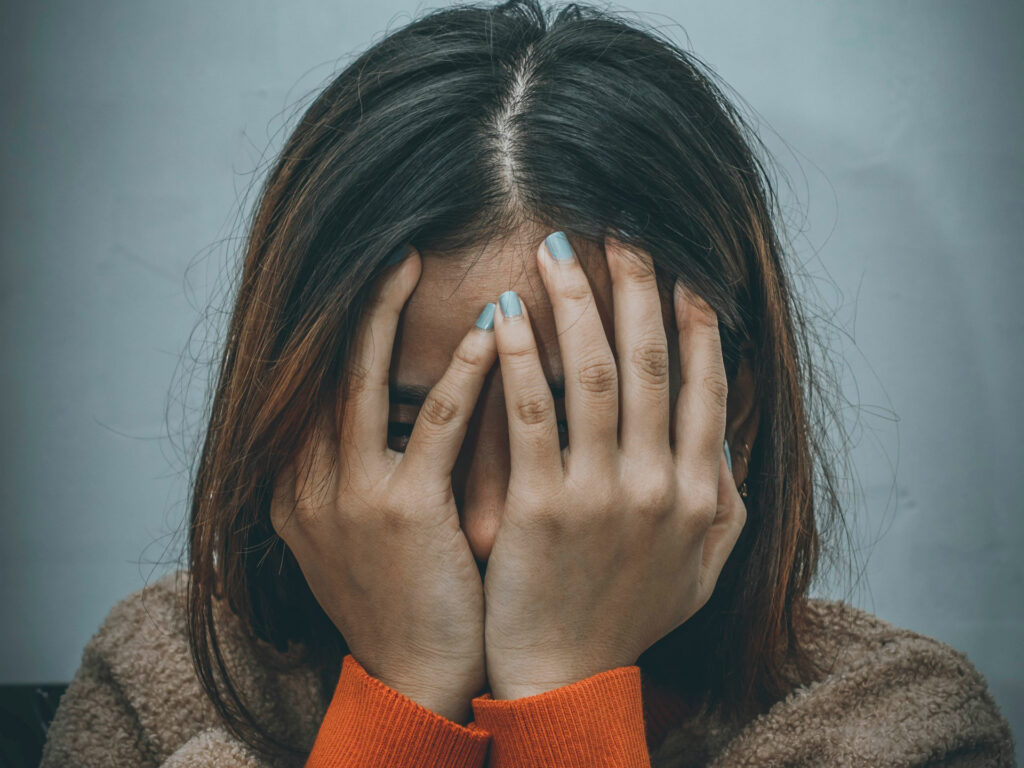
Psychological well-being is deteriorating. Distress, which includes symptoms of anxiety and depression, affects 20.7% of the sample. Low self-esteem has risen by more than three percentage points, reaching 37.3%. Both conditions affect girls more severely. 26.2% exhibit high levels of aggression, and 16.9% suffer from alexithymia—that is, they are unable to recognize and express their emotions. 14.5% are morally disengaged—that is, they tend to downplay the seriousness of harmful behaviors. In this case, it is primarily boys.
Isolation remains stable, but at very high levels. 49.9% of adolescents go out only to attend school and spend the rest of their time at home. Among them, 6.6% have been in isolation for six months or more.
Prejudice Is on the Rise
The signs regarding stereotypes are mixed. Gender stereotypes are declining slightly, especially among girls, but 17.6% still strongly hold these views. According to the researchers, this belief is linked to daily exposure to online pornography, which affects 15.1% of 15-year-olds. Prejudices toward migrants, on the other hand, are on the rise: 34.1% express strong support for such views, an increase of 11 percentage points compared to 2025. Homophobic and transphobic attitudes are also on the rise, reaching 35.3%, with a significant gap between boys (49.7%) and girls (16.4%).
School Violence and Alcohol
The situation at school is dire. According to students, homophobia is the most common form of discrimination (45%), followed by transphobia (41.1%), bullying (35.6%), racism (33.4%), and cyberbullying (25.7%). 55.5% say they have been victims of bullying. 39.9% do not recognize violence—whether physical or psychological—because they consider it normal. Regarding cyberbullying, 47.5% regularly participate as perpetrators, 23% as victims, and 16.2% in both roles.
Finally, alcohol consumption is on the rise. 59.9% believe that alcohol is very or fairly common among their peers. 53.5% report widespread consumption of hard liquor, an increase of 25.2% compared to 2025. Binge drinking is rising sharply, especially among girls.
The researchers conclude that the picture that emerges is one of an increasingly fragile adolescence, marked by addictions and antisocial behavior.