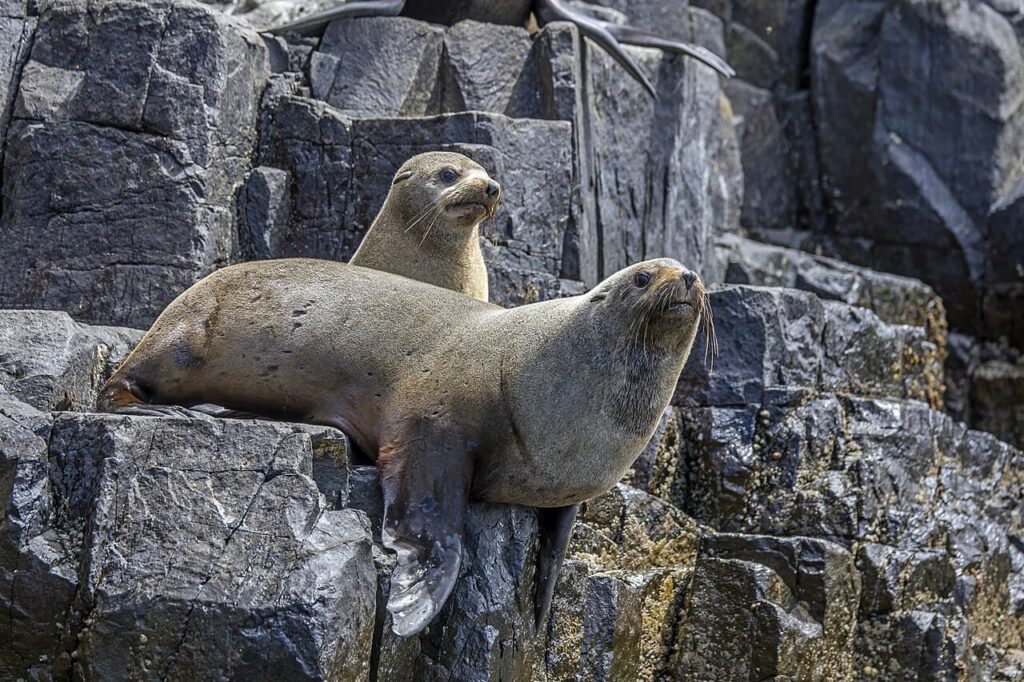
Twenty years ago, every summer, at least 2,000 southern sea lion pups were born on Deen Maar Island. In February 2026, a census counted 700. This sharp decline is the most measurable symptom of something that scientists are still struggling to name precisely.
A Colony That’s Emptying Out
Deen Maar, also known as Lady Julia Percy Island, is a small volcanic island eight kilometers off the southwestern coast of Victoria, near Port Fairy. Access is restricted to those with a permit, but this isolation has not protected it. According to data collected by the traditional custodians of the Eastern Maar Aboriginal Corporation, the pup population has declined by more than 40% since 2017 and by more than 65% since 2007. David Williams, Sea Country coordinator for Eastern Maar, told ABC News that he began to worry after noticing “large patches of missing fur” on the animals.
Fur That No Longer Provides Protection
The Australian sea lion’s fur is a double-layered thermal system, with a water-repellent outer coat that traps air and protects the undercoat from water. When this special barrier breaks down, the animal loses heat rapidly and must expend more energy to survive. Williams described the ripple effect this way: “When they can’t get enough food, everything suffers—it’s a domino effect.”
What the Studies Say
The research published so far does not close the loop, but it narrows the field. A study in the Journal of Mammalogy found higher concentrations of heavy metals and persistent organic pollutants in specimens with alopecia compared to healthy animals, a finding consistent with the hypothesis that these individuals forage in more contaminated areas. A second study, published in *Science of the Total Environment*, used the fur itself as a biomarker, comparing concentrations of PCBs—polychlorinated biphenyls, industrial chemicals now banned but still persistent in the marine environment, where they accumulate in the fatty tissues of animals—among specimens with and without the syndrome: the differences, for some congeners, were found to be statistically significant.
A problem with a specific geographic scope
The most interesting finding, from a scientific standpoint, is that alopecia is not widespread. Rebecca McIntosh, a researcher at Phillip Island Nature Parks, explained to ABC News that the phenomenon remains concentrated almost exclusively in Deen Maar and nearby Cape Bridgewater: “At Seal Rocks, where 8,000 animals live, you might see one with alopecia maybe once a year.” Such a localized distribution suggests a specific environmental cause unique to that stretch of coastline, rather than a genetic factor or a widespread disease within the species.
A study published in PLOS One, authored by McIntosh herself along with other researchers, confirms the uniqueness of Deen Maar by comparing it with other colonies in Victoria. While in the western region pup production has halved precisely where alopecia syndrome is present, in the central part of Bass Strait the Seal Rocks colony has lost a third of its population, yet the adjacent colony on Kanowna Island remains stable or is even growing. Two neighboring colonies, exposed to the same currents and climatic variations, yet following opposite trajectories: further evidence that the cause is not a general factor affecting the species as a whole, but rather something concentrated at specific points along the coast.
The industrial theory, which has yet to be proven
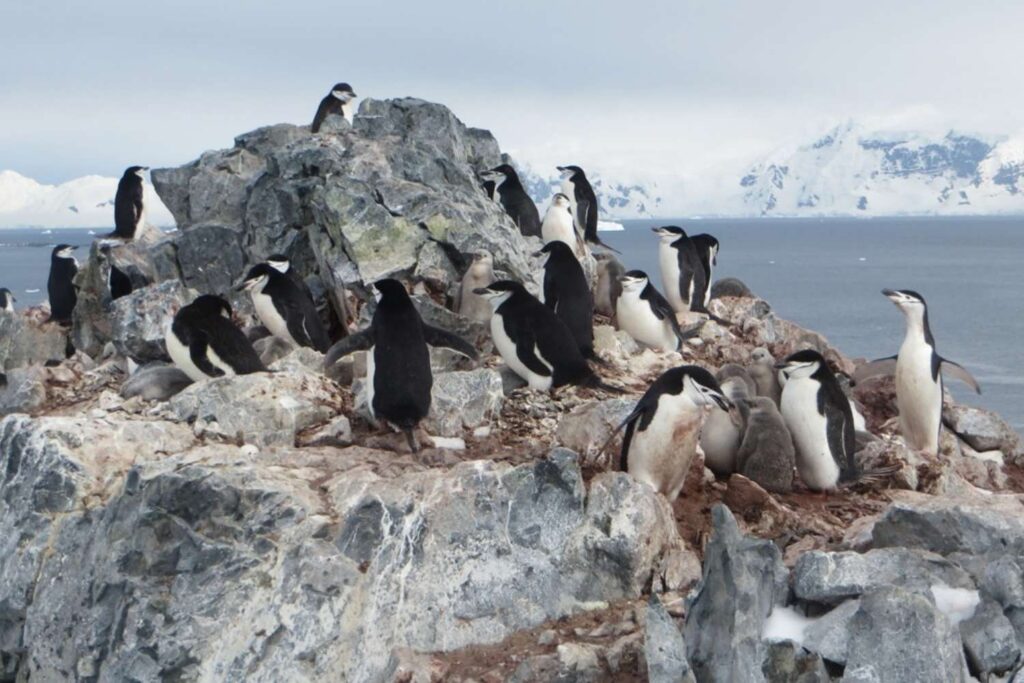
High concentrations of aluminum and titanium have been found in the feathers of the island’s penguins, a finding that McIntosh links to the proximity of Portland’s industrial areas, about 25 kilometers away. Mandy Watson, Sea Country manager at Eastern Maar, pointed out, however, that the missing link is still missing: “We need to find out, if we can, exactly what the source of this pollution is.”
The Next Phase
The new research program, conducted in collaboration with the Eastern Maar and Gunditj Mirring communities, will aim to track the animals’ movements and reconstruct their diet in order to understand in which areas of the ocean the sea lions come into contact with contaminants. Meanwhile, another factor comes into play: the H5N1 avian flu, recently detected in Portland, could find a more vulnerable target than expected in a population already weakened by alopecia.