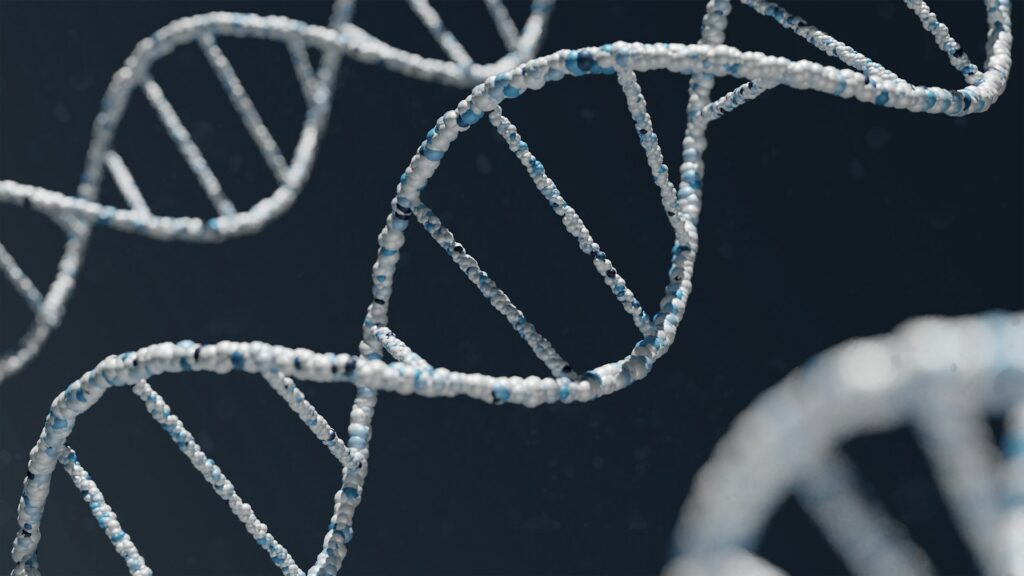
Why is one person extroverted and another shy, one organized and another chaotic? A study published in *Nature*, conducted by the Revived Genomics of Personality Consortium on over one million people across 46 research groups worldwide, identified 1,260 DNA variants linked to the Big Five personality traits: extraversion, agreeableness, conscientiousness, neuroticism, and openness.
The team is led by Ted Schwaba (Michigan State University), with Michel Nivard, a behavioral geneticist at the University of Bristol, and Elliot Tucker-Drob among the principal coordinators. “Researchers in the field have long been waiting for a sufficiently large-scale genomic association study on personality,” Aysu Okbay, a behavioral geneticist at the Amsterdam University Medical Center who did not participate in the study, told Ewen Callaway of Nature.
Is there a gene for personality?
The 1,260 variants found have, taken individually, an almost imperceptible effect: on average, it takes more than 16,000 different variants to account for the differences in a single trait. For extroversion, for example, having the “right” version of a single variant shifts a person from the 50th to the 50.35th percentile of the trait—a minimal difference, almost irrelevant on an individual scale. Common genetic variants account for between 4.8% (friendliness) and 9.3% (extraversion) of personality differences among people—percentages far below the 40–60% suggested by classic twin studies. The message, reiterated in the study, is that personality remains substantially influenced by the environment in which a person grows up and lives.
Family doesn’t skew the results
The researchers feared that genetic similarities among relatives might make what is actually the result of a shared family environment appear to be “genetic.” By comparing siblings and children with their parents, they isolated direct DNA transmission, which accounts for 96.2% of the overall predictive power of genetic scores on personality—a figure nearly identical to that observed among twins. “I thought there might be some indirect genetic effect—that the early childhood environment, shaped by the parents’ genes, would influence the children’s personalities,” said Nivard. “We simply did not find this type of gene-environment correlation.” The study also found no solid evidence that people choose partners with personalities similar to their own, thus disproving a widely held belief, even in common sense.