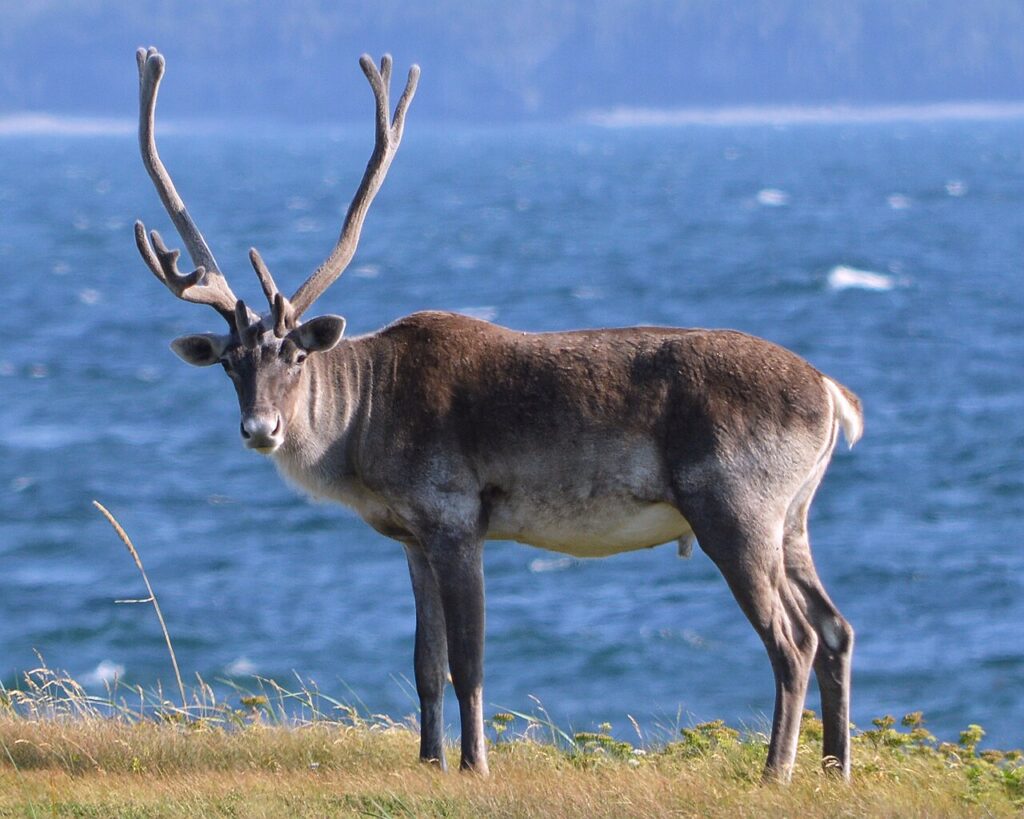
Quebec is home to 15% of Canada’s forest caribou population, but over the past decade, that percentage has been cut in half. On June 30, the federal government and the Quebec government announced an agreement to protect the species. Ottawa will provide 25 million Canadian dollars over five years, earmarked for habitat management and herd management. In addition, the federal government will provide another 15 million for Indigenous communities (First Nations) living in caribou habitats, to monitor populations and manage their habitats. Quebec, for its part, had already independently allocated 59.5 million dollars for the period 2024–2028: the new federal agreement therefore supplements a pre-existing provincial commitment. On paper, this is the largest amount ever allocated for this initiative. But the conservation strategy promised ten years ago still does not exist, and the funds are primarily used to finance a measure that biologists describe as a stopgap: maternity enclosures.
Enclosures That Do Not Replace the Habitat
In Quebec, there are 13 herds of woodland caribou, totaling between 6,800 and 8,900 animals. A female gives birth to only one calf per year, and less than half of them survive to their first birthday. The new agreement focuses on the three herds most at risk of extinction: Val-d’Or, Charlevoix, and Gaspésie. The Val-d’Or herd, which has been confined to a protected enclosure since 2020 with just six surviving animals, had grown by only one individual by the summer of 2026. Charlevoix, fenced since 2022, now has 48 animals; Gaspésie, fenced since 2023, has 20, and this year, seven were released into the wild for the first time.
Daniel Fortin, a biologist at Laval University, explains to The Guardian what it means to release an animal raised in captivity into a forest that has changed in the meantime: it loses the landmarks it needs to survive and is at greater risk. But keeping it fenced in a degraded habitat poses the same risk if that habitat is not restored. “Putting individuals in enclosures is a last resort, something you do just before extinction,” says Fortin. “Any other solution, aside from habitat restoration, is merely a stopgap measure.”
Justina Ray, of the Wildlife Conservation Society Canada, gets straight to the weak point of the agreement: there are no details on how and when the habitat will actually be restored, and there is no accountability mechanism to hold Quebec responsible for the results.
The problem is the roads
To thrive, forest caribou need about 65% of their range to remain free of human disturbance. In most areas occupied by Quebec herds, that threshold falls below 40%. The cause is not a single factor but a chain reaction: over 500,000 kilometers of dirt roads, built to provide access to logging sites, crisscross the province’s forests. These roads facilitate the expansion of moose populations, which in turn attract wolves, the caribou’s main predator. The government is trying to compensate by selectively culling wolves, but according to ecologist Martin-Hugues St-Laurent of the University of Quebec at Rimouski, these remain “temporary” measures, hampered by local opposition to closing the roads used by hunters and fishermen.
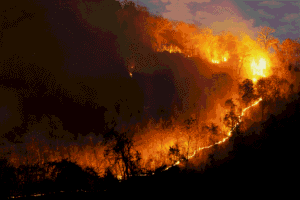
St-Laurent also notes that easily harvestable timber in Quebec is running out, while climate change-related fires are further reducing the exploitable forest area: this is driving logging companies right toward the last remaining protected areas for caribou. An alternative model already exists in British Columbia, where fencing has been complemented from the outset by predator control, habitat restoration, and the full participation of First Nations. Alain Branchaud of SNAP Québec observes that the results in Quebec remain uncertain: the Charlevoix herd is growing, but in Gaspésie two females died during the release operation, and in Val-d’Or, after five years of fencing, virtually nothing has happened.