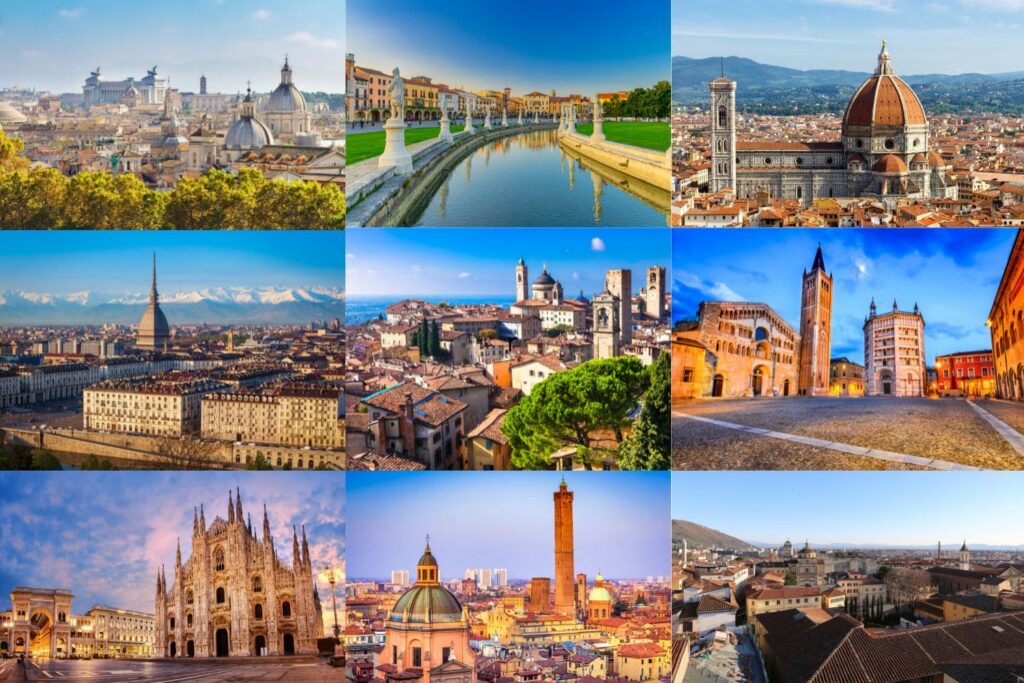
Nine Italian cities have set themselves a goal that, until just a few years ago, would have seemed out of reach: to become climate-neutral by 2030. They are Bergamo, Bologna, Florence, Milan, Padua, Parma, Prato, Rome, and Turin, selected by the European Commission forthe “100 Climate-Neutral and Smart Cities”Mission. The fifteenth ASviS Report, “Mission: Climate Neutrality—Innovations from Nine Italian Cities,” compiles the experiences of administrators and technical experts who are leading the transition.
A Contract with the City
The common tool is the Climate City Contract, the plan through which each municipality sets out actions, investments, and partners. In 2024, several cities received the Commission’s Mission Label, which facilitates access to funding. In Bergamo, a city of 120,000 residents in the heart of the Po Valley, emissions had already fallen by 37% between 2005 and 2021, but buildings still account for about 80% of total emissions. In Padua, the building sector accounts for 76% of emissions, and the city has identified 12 strategic actions, starting with a one-stop shop for those who want to renovate their homes.
Rome: 16 billion to cut emissions
Emissions in the capital are already declining: by 2019, they had fallen by 35% compared to 2003. 94% of emissions come from buildings and transportation, accounting for nearly 60% and 34%, respectively. The Sustainable Energy and Climate Action Plan, approved in November 2023, aims for a 66% reduction by 2030 compared to 2003. The Climate City Contract has secured 16 billion euros in investments and has involved 80 entities—including public agencies, businesses, foundations, and universities—which have proposed 493 actions. According to the document, using technologies already available, Rome could reduce climate-changing emissions by 86%.
When Citizens Make the Decisions
Bologna has embraced deliberative democracy. The Citizens’ Climate Assembly, incorporated into the municipal charter in 2021 and the first of its kind in Italy, brought together 100 people selected by lottery who, between May and November 2023, participated in nine meetings, with an average attendance rate of 80%. The result is six recommendations and 24 proposals, which were incorporated into the first Climate Contract. Florence, too, has embraced participatory governance through the “Florence for the Climate” initiative, which involved thousands of citizens and over 180 organizations. Turin, on the other hand, has created a recognition system—the “Greenlight” label—for businesses and organizations committed to reducing emissions.
Shared Energy and Industrial Clusters
In July 2024, Parma established the CER Parma 2030 Foundation, sponsored by the City, the University, the Health Authority, and the National Research Council, to coordinate renewable energy communities: it has been operating throughout the province since October 2025. Milan is experimenting with “urban molecules”—laboratory neighborhoods where replicable solutions can be tested: in 2025, the CLIMB project, funded by the European NetZeroCities program, began simulating decarbonization scenarios in these areas. Prato, the world’s leading textile district with over 7,000 companies, started with 915,150 metric tons of CO₂ emissions in 2019 and aims to reduce them by 93%. Private and commercial transportation accounts for 31.9% of the total, the residential sector for 24.5%, and industry for 24%. The remaining 7% will be offset through reforestation and carbon capture.
The challenge remains difficult and requires resources, administrative continuity, and stable collaboration among municipalities, businesses, and citizens. But these nine cities demonstrate that the transition can become an opportunity to rethink services, governance, and quality of life.