The heat on public transportation on the way to work, the struggle to concentrate at the office or while studying, and rising costs to keep the home cool. For those who responded to the survey“The Climate Crisis Is Already Here: What’s Changing for You?”, extreme weather events are now part of everyday life: 89% of the 2,423 adults who participated say they’ve experienced at least one such event in their area over the past five years.
The survey, sponsored by WWF Italy and the Laudato Si’ Movement along with other civic organizations and conducted with the scientific support of the REMHI division of the Euro-Mediterranean Center on Climate Change (CMCC), was administered between June 5 and September 15, 2026. This is a participatory survey, open to anyone who chose to respond: the results describe the experiences of those who participated and cannot be generalized to the entire population.
The heat sets in as the day begins
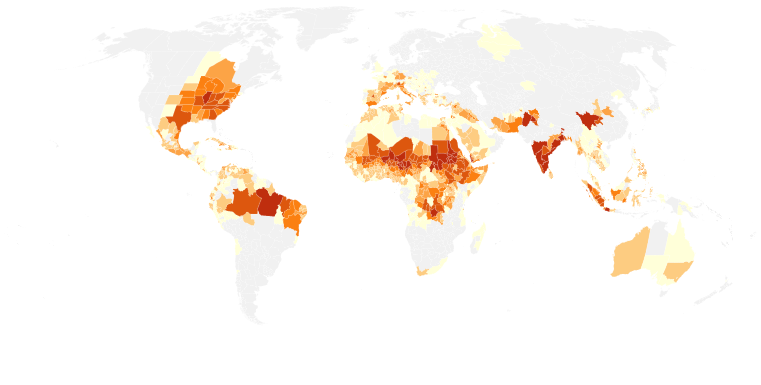
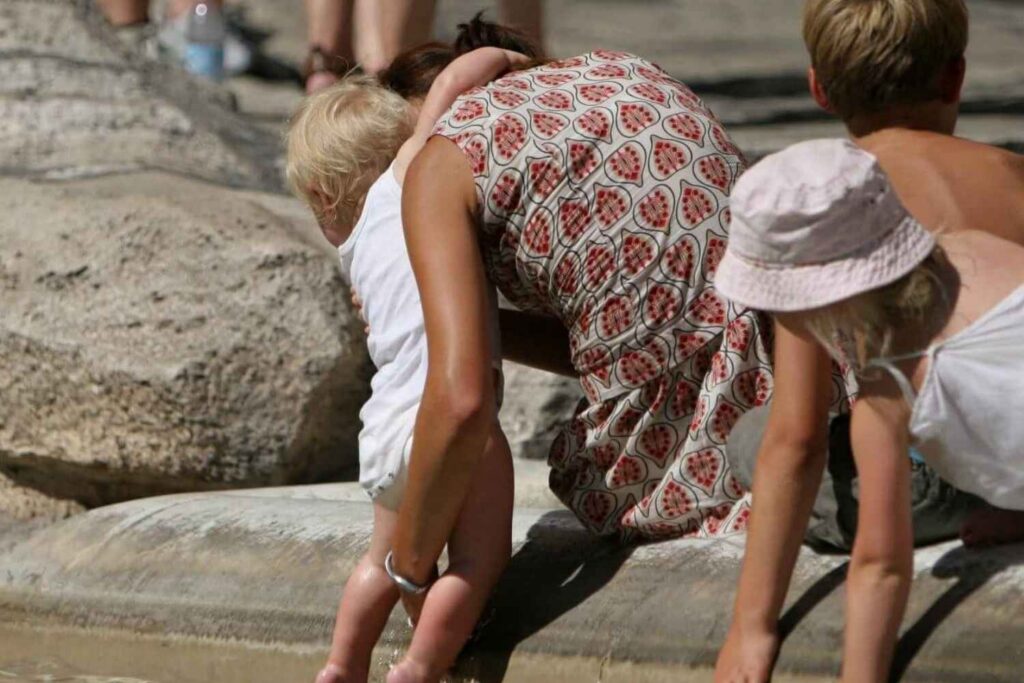
The heat is particularly noticeable: nearly all participants (97%) report frequent heat waves, followed by heavy rains (83%) and droughts (74%). People suffer from this during their daily commutes; it makes working or studying tiring, and for about two out of three people, it causes respiratory problems or fatigue. More than half also report problems with energy supply or power outages.
Nearly all (95%) believe that extreme events have increased in their area—a perception rather than a measured fact. And 93% consider it necessary to strengthen prevention and adaptation—that is, measures that enable cities, infrastructure, the economy, and services to cope with existing climate risks.
Everyone does what they can
The responses, however, are primarily individual. 92% have changed how they organize their day to avoid the heat, and 88% have taken steps to protect their homes. The more involved the measure, the less common it is: half have upgraded their air conditioning or ventilation, just over one in four have installed sunshades, and one in seven has planted new trees. And only one in ten has participated in neighborhood or community support networks.
The bill comes home
The climate crisis comes at a cost. Eighty-five percent report having spent more on cooling, and one in three says they have suffered property damage or financial losses: the most common range is between 1,000 and 5,000 euros. More than a third have no insurance coverage for these events. Among those who filed a claim, less than half received full reimbursement (48% received only partial reimbursement), and two out of three waited between one and six months. Furthermore, one in two people is not entirely sure they have the resources to invest in prevention.
The local governments rarely meet
In their local communities, citizens primarily notice emergency and communication measures, such as pest control and alerts sent via text message, phone, or the media. Much less visible are emergency plans, nature restoration efforts to prevent flooding, and infrastructure projects that make emergency services accessible to people with disabilities. The promoters themselves note that respondents tend to rate their own actions more highly than those of institutions, perhaps because the latter are not always well known.
The WWF also links this situation to delays in implementing the National Climate Change Adaptation Plan. Urban green spaces can help by mitigating heat waves and reducing the effects of flooding. This is the focus of Urban Nature, a national WWF initiative that will set up booths in over 100 Italian town squares on October 3 and 4, 2026.