The legal debate sparked by the climate crisis has now reached the highest levels. At stake is no longer just the harm inflicted on individuals or specific regions. Now, nations are taking action to demand accountability for dramatic devastation such as those suffered by Nepal due to the collapse of a glacier tongue, or to assert their right to exist even if their territory has been submerged by rising sea levels. And their efforts to assert these rights have garnered the support of the United Nations.
With the Declaration on Sea-Level Rise, adopted by the recent General Assembly, the UN has put in writing a principle that, until recently, seemed like a paradox: a state can lose land and still remain a state. It is the legal response to a climate crisis that is changing the landscape.
The definition of a state has always been tied to a physical foundation that seemed unshakable: a state—it was said—is a territory, a population, a government, and the ability to establish relations with other states. But what happens when that territory ends up underwater?
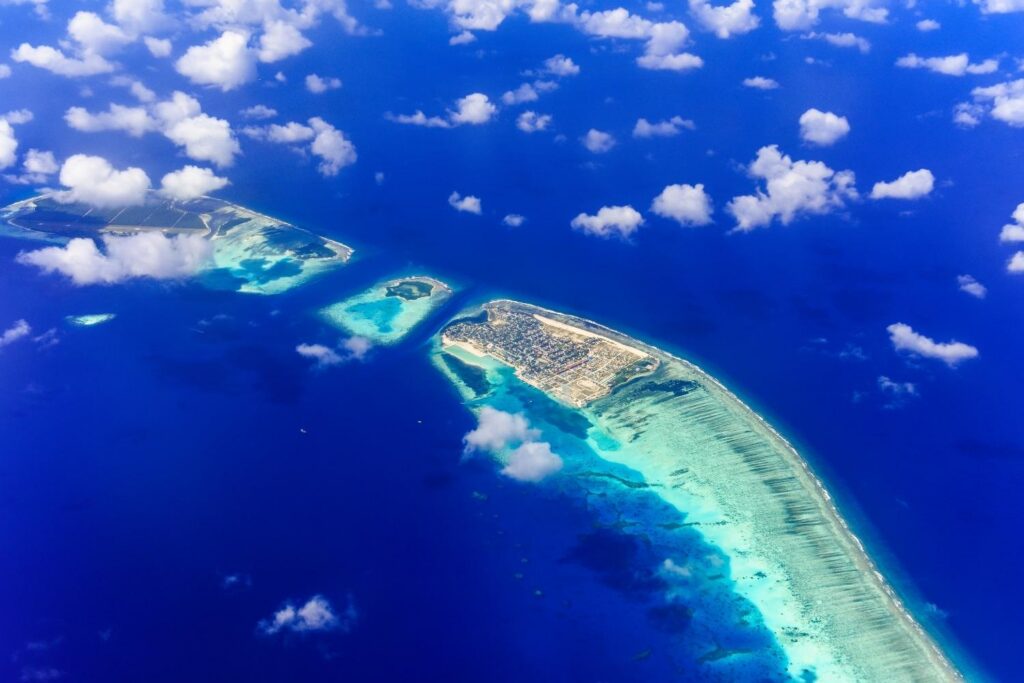
In Tuvalu, a group of nine coral islands in the Pacific where the highest point is just over four meters, this question is no academic exercise. Half of the 12,000 residents live on a strip of sand and coral that is being eroded by storm surges season after season. The government has already begun the transition to becoming the world’s first “digital nation”: archives, land records, and cultural heritage have been backed up in the cloud to ensure the country’s survival beyond its physical disappearance.
Now, in New York, the international community has endorsed Tuvalu’s decision: a country is an identity that can survive in the hearts of its people, in the collective memory, and in a digital twin—even if its territory is swallowed up by the sea. And it did so by consensus, without any government calling for a vote.
Paragraph 21
The United Nations Declaration on Sea-Level Rise was proclaimed by the heads of state and government gathered for the opening of the 81st session of the General Assembly. Twenty-four paragraphs, four pillars: science and data, adaptation and finance, livelihoods and culture, and the legal dimension. The first three follow the now-familiar terminology of climate documents. The fourth—paragraph 21—contains the new element.
Governments point out that, once established, a state does not necessarily lose its right to exist if one of its constituent elements ceases to exist. And they affirm a “presumption in favor of the continuity of statehood” in the face of rising sea levels: continuity that pertains to sovereignty, responsibilities, and even a seat at the United Nations. But that’s not all. The international community is committed to supporting states whose territory is changing so that they can continue to keep their institutions functioning.
The previous paragraph, paragraph 20, secures the sea after securing the flag. The maritime zones delineated under the United Nations Convention on the Law of the Sea (UNCLOS) may be retained even as the coastline recedes. This is anything but a technical issue. For a Pacific atoll, the exclusive economic zone is worth more than the mainland: it encompasses tuna fishing rights, licenses, and a crucial portion of government revenue. If the baselines were to shift along with the shoreline, the ocean would wash away not only the homes but also the state’s budget.
Six millimeters per year
The rest of the text sets the scene. Sea levels are rising and accelerating, driven by ocean warming and melting ice. In 2024, the rise was nearly 6 millimeters—the highest figure since regular measurements began. And this rate is continuing to accelerate, with the possibility that the breakdown of a precarious balance could lead to very rapid spikes.
About 770 million people live in vulnerable coastal areas: with a rise of half a meter by the end of the century, between 150 and 300 million people could be forced to leave their homes. For these populations, the declaration calls for “mobility with dignity,” voluntary choices, and respect for human rights, as well as the protection of cultural heritage (from cemeteries to sacred sites) that risks being submerged along with the maps.
The International Law Commission, the UN’s technical body that has been studying the relationship between rising sea levels and international law since 2019, has also envisioned how a landless state might function in practice: the transfer of a portion of territory by another country; forms of association or federation; hybrid solutions, to be evaluated on a case-by-case basis and always in consultation with the affected populations. A precedent already exists. Under the Falepili Treaty, signed in 2023, Australia recognized Tuvalu’s state continuity “despite the impact of rising sea levels.” It is the first legally binding agreement of its kind.
From Everest to the Ocean: The Toll of the Damage
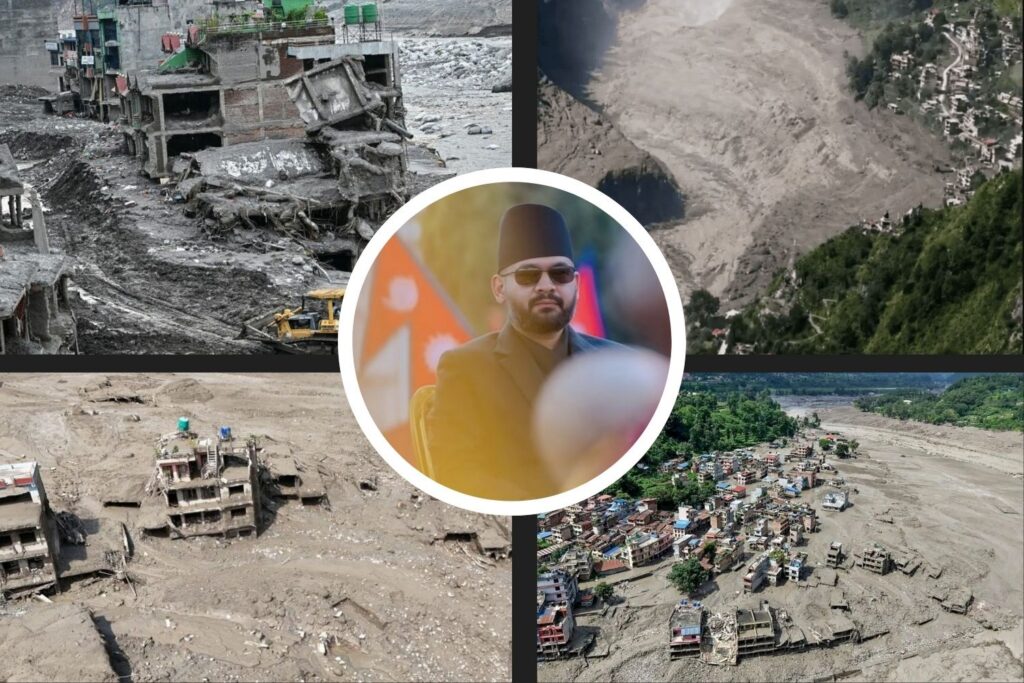
And there is a coincidence in the timing that speaks to the depth of the legal change currently underway. On the very same day, September 24, that the Assembly approved the declaration on the ocean, Nepal’s Prime Minister, Balendra Shah, was speaking from the UN podium. A landlocked country, sandwiched between India and China, Nepal has been hit hard by the climate crisis. On August 26, a glacial collapse triggered flooding along the Bhotekoshi River: at least 1,400 people died, thousands more are still missing, and the damage is estimated at around 10% of GDP.
Shah called for climate justice, a Himalayan mechanism shared with India and China to monitor glacial lakes, and more grant funding. He described the Loss and Damage Fund and other existing instruments as severely inadequate. General Assembly President Khalilur Rahman noted that for adaptation alone, developing countries will need 310–365 billion per year by 2035; in 2023, international public funding stood at just 26 billion.
The melting ice in the Himalayas and the water submerging the atolls are two sides of the same process. The perspective changes, but the math remains the same: on one hand, those who have emitted few greenhouse gases are paying a high price; on the other, a compensation system that moves at a snail’s pace. Guterres, at his final General Assembly as secretary-general, called for a tripling of funds for adaptation and reiterated that polluters must pay.
The New York Declaration now guarantees that a state will not be erased from the political map even after it has disappeared from the physical one. It is an achievement built over nearly four decades of diplomacy by small island nations. But it is a guarantee that comes after the fact. It saves the flag, the seat at the table, and the fishing grounds. It does not save the homes, the cemeteries, or the languages spoken on those beaches.
That’s why we need other decisions—ones that are less ceremonial and more practical: cutting greenhouse gas emissions and revitalizing a healthy, sustainable economy. The legal system has done its part, giving legal standing to an idea that, until just a few years ago, seemed like legal science fiction. Now it’s up to policymakers to prevent the worst-case scenarios from becoming reality and to launch an effective ecological transition.