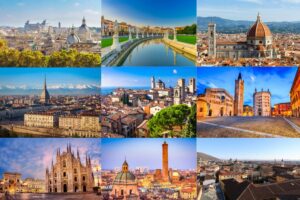
On October 10 and 11 , Italy will open the doors to 700 sites—often inaccessible to the public—spread across 350 cities. These are the FAI Fall Open House Days, now in their 15th year, one of the largest events dedicated to raising awareness of and preserving Italy’s cultural heritage. For 2026, the Italian Environment Fund has chosen to focus particularly on craftsmanship and “saper fare”(traditional know-how), with over 75 sites open to the public and tours centered on manufacturing traditions.
When Assets Are Contributed to a Company
Among the sites open to the public are also manufacturing facilities, workshops, and corporate museums. According to FAI President Marco Magnifico, more than 10% of the 700 open sites fall into this category. “Great Italian craftsmanship and small businesses are, just like Italy’s monuments, a rich repository of our country’s culture,” he explained.
The idea is to broaden the very concept of heritage. Francesco Somma, vice president of Confindustria for Corporate Culture and Legal Certainty, emphasized that behind a company there may lie “expertise, research, reliability, and the ability to innovate.” For this reason, according to Somma, industrial heritage should also be recognized and promoted.
Some of the tours will be led by 9,000 “Ciceroni Apprentices”—students recruited by the FAI to guide the public on tours of these sites. The Foundation’s goal is to bring young people into direct contact with monuments, nature, and local industries.
The FAI is investing, but climate change is taking its toll
Behind these openings lies less visible conservation work. In 2026, the FAI plans to allocate over 12 million euros to restoration and extraordinary maintenance—nearly triple the amount from four years ago. This year, the Foundation oversaw 150 construction sites, involving over 20 specialized architects, 150 suppliers, and 200 technical consultants.
However, heritage preservation must contend with a factor that is becoming increasingly difficult to ignore: extreme weather events. Two weeks before the presentation of the FAI Days, a violent storm caused severe damage to the Kolymbethra Garden in Agrigento. This is an example of how increasing climate risks can also become a problem for the preservation of cultural heritage.
For this reason, the FAI has allocated approximately 1.5 million euros for 2027 exclusively for projects related to the ecological transition and climate adaptation—an amount equal to 12% of the budget set aside for restoration work.
The Autumn Days thus become an opportunity to reflect on what it means to preserve our heritage in the present. Alongside palaces, monuments, and historic sites, the narrative also encompasses artisanal skills, businesses, and local communities. And as our understanding grows, so does the need to protect them from environmental changes that are already having tangible effects.
The 2026 edition also reaffirms the partnership with Rai, which has been the initiative’s main media partner for over ten years. From October 5 to 11, RaiPlay Sound’s television, radio, and digital programming will feature segments on FAI’s sites and activities.