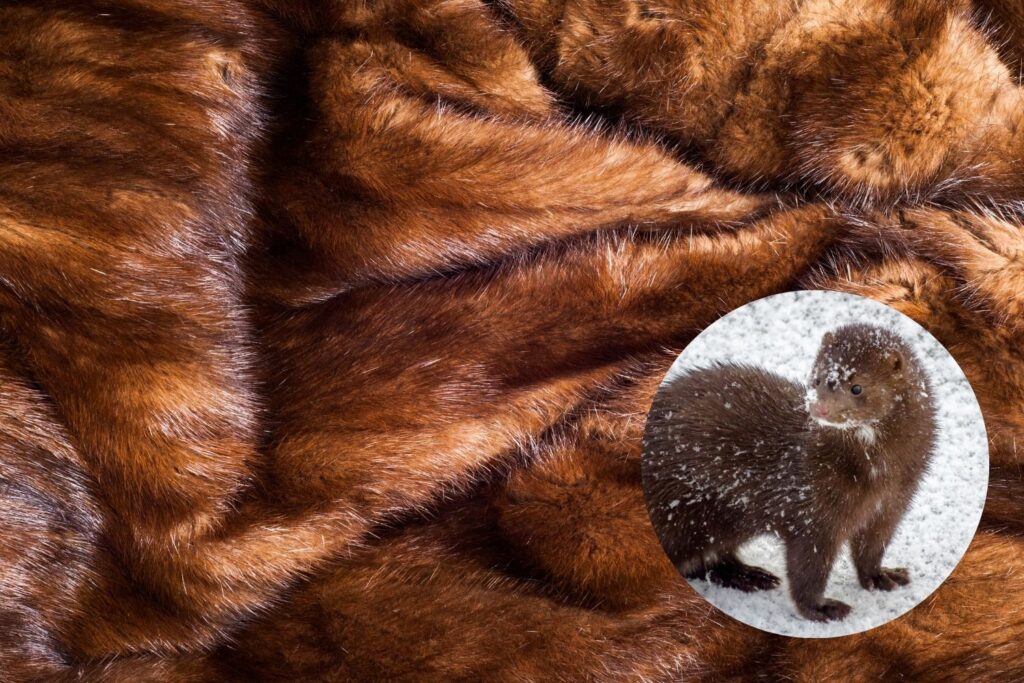
Denmark, which has been a world leader in mink fur production for decades, is preparing to permanently shut down its last fur farms. The Copenhagen government announced on October 23 that it will not request any exemption from the European Commission to continue operations beyond the effective date of the European ban, scheduled for August 7, 2027. This decision marks the end of an industry already severely impacted by the pandemic and reignites the debate over the future of fur in the European Union.
“A business should not continue simply because it has been around for a long time. It should also serve a purpose for society, the economy, and animals,” said Christian Rabjerg Madsen, Denmark’s Minister for Nature and Animal Welfare, explaining the government’s decision.
From 17 million mink to seven farms
Before the pandemic, there were 1,147 active farms in Denmark, with approximately 17 million mink raised for fur production. In 2020, the discovery of SARS-CoV-2 outbreaks at 290 facilities and of virus variants transmitted from animals to humans prompted authorities to order the culling of all farmed mink in the country.
According to Humane World for Animals, the compensation awarded to farmers exceeded three billion euros. After the temporary suspension was lifted, only a small fraction of the farms resumed operations. In August 2026, according to the Danish Central Livestock Register, only seven farms were still in operation.
European legislation on invasive alien species now formalizes the closure of the industry. In June 2025, the American mink—raised for its fur—was added to the list of species that threaten European biodiversity. Effective August 7, 2027, a ban on keeping and breeding them will take effect, with a two-year transition period lasting until August 2029.
The regulation allows individual countries to request exceptional authorizations for compelling reasons of general interest, including economic ones. Denmark has decided not to do so. Finland, on the other hand, has already submitted a request to the European Commission.
Why Livestock Farms Are Under Fire
The Danish decision was also influenced by the scientific opinion published in July 2025 by the European Food Safety Authority (EFSA), which examined the welfare conditions of animals raised for fur production.
The Authority’s assessments indicate the need for major changes to farming systems. Mink are active predators, with behavioral needs that are difficult to reconcile with confinement in the small metal cages used on these farms.
Humane World for Animals, an international animal protection organization, considers the Danish decision an important precedent for the entire European Union.
“This is a historic decision,” said Joanna Swabe, the organization’s director of institutional relations, calling on the European Commission to ban the farming of animals for fur production in all member states.
A Declining Market
The European fur industry has been experiencing a sharp decline for years. According to the report“A Full-Cost Account of the EU Fur Industry,”cited by Humane World for Animals, the number of animals killed for their fur has decreased by 86% over the past decade, falling to 6.3 million in 2024. During the same period, the value of fur sales fell by 92%, reaching approximately 183 million euros.
Fur farming is already banned in 24 European countries, 18 of which are members of the European Union. Yet, according to the organization, there are still about 1,200 fur farms in the EU, housing more than six million animals, including minks, foxes, and raccoon dogs.
The Fur Free Europe campaign, supported by more than 1.5 million citizens, is calling on the Commission to ban both fur farming and the sale of products from this industry.
The ban, which will take effect in 2027, specifically targets American mink. A general ban on fur farming, however, would require further action at the European level. Even in Denmark, after all, there are still some facilities that raise chinchillas for their fur.