These are the crucial days of COP 31, taking place from November 9 to 20 in Antalya, Turkey, under dual leadership—a Turkish presidency led by Murat Kurum and negotiations headed by Chris Bowen of Australia. The world is arriving at this COP having already missed the opportunity to limit the rise in temperatures to 1.5 degrees above pre-industrial levels.
So what needs to be renegotiated? In the book *Who Pays the Climate Bill?*, recently published by Einaudi, Ferdinando Cotugno, a journalist and environmental activist, addresses the issue of the social, economic, and environmental inequalities caused by the climate crisis.
A precise, often surgical analysis, backed by hard data, that reveals who is already paying the price today for ruthless and short-sighted policies—policies that have led to the depletion of the planet’s resources each year at an ever-faster rate: in 2026, the Earth’s resources were completely used up on July 27, without sufficient measures having been put in place to compensate for and restore them—above all, to address the mortgaged future that the world is bequeathing to future generations.
Cotugno frames his discussion around three key questions: Who is paying the climate bill today? Who is ensuring that the crisis doesn’t stop by continuing to invest in fossil fuels? Who will be required to pay the costs, in what forums, and how might this happen?
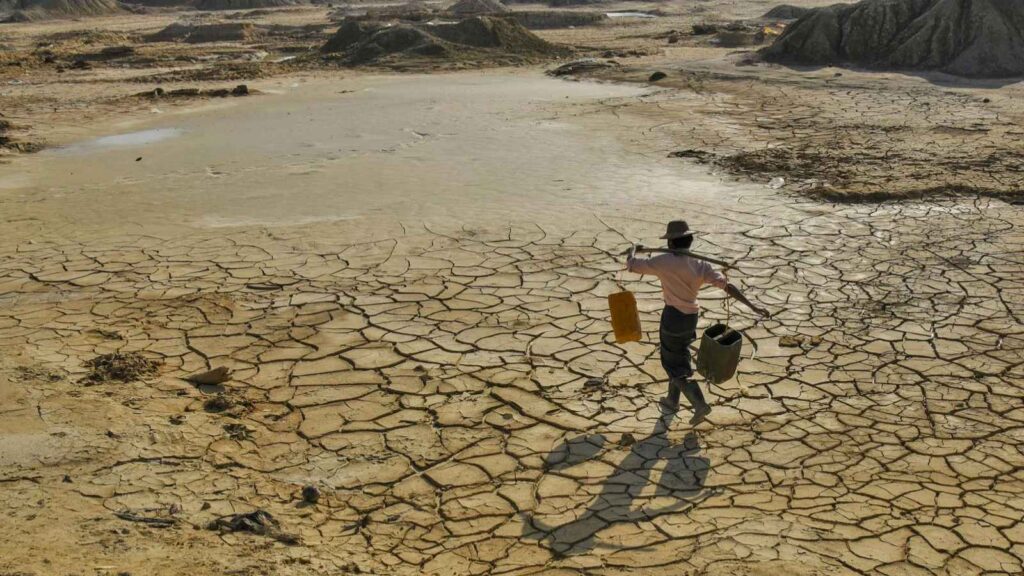
It is clear that the most vulnerable groups—those who are most exposed both socially and environmentally—are already paying the price today. The Global South is not among the leading emitters, yet it is the region of the planet that suffers the most severe consequences in terms of desertification, the savannization of ecosystems, drought, and extreme weather events. In this dramatic context, three interdependent elements are intertwined: the geopolitical dominance of part of the industrialized world over developing countries, the financial flows that shape decision-making, and the extraterritoriality of responsibility. There are places, such as Peru, that have become examples of “Last Chance Tourism”: a sad farewell to the landscapes, places, and nature that, within a few decades, will no longer be the same or may even cease to exist. The damage is elsewhere— “not in my backyard,” “not in my time, ” to use an old adage.
In this scenario of an energy Cold War—a new Middle Ages in which the weak succumb and the strong clash using hybrid weapons—the climate proletariat becomes a political actor, confronting a predatory capitalism that is, in effect, an ally of the climate crisis in cementing social class divisions. The targets are clear: women, children, migrants, the poor, and those born in vulnerable countries. And along with them, the social and ecological environment where they were born, and the cultural heritage forged over millennia of history. Languages and cultures that will disappear due to the massive climate-driven migrations expected in the coming decades. Material, physical, and moral damage—but also intangible damage, linked to the disappearance of traditions, cultures, and popular and indigenous practices.
But there are those who continue to invest, writes Cotugno, in an irresponsible manner—yet fully aware of the consequences—so that fossil fuels will continue to dominate the global economy: there are countries—including the United States, Israel, Saudi Arabia, Russia, and Iran—that opposed Vanuatu’s resolution, which would have imposed a legal obligation on states to combat the climate crisis. Many words have been written on paper, including the establishment of a Loss and Damage fund to compensate affected populations—a tool that is as just as it is fragile and underutilized.
Predatory capitalism has those responsible who should truly pay the price—both economically and legally—by compensating for the damage caused to millions of people. Cotugno speaks of a “moral elevator”—that is, the process that fosters a global collective awareness of the impossibility of ignoring how the climate crisis will affect everyone’s lives in the immediate future.
However, as Cotugno writes, dark times are not always fruitless, and the pain caused by a dying planet can catalyze the collective strength needed to demand that governments take the right actions to ensure the future of the next generations and the planet. It can still be done. And this book, which stems from anger over climate injustice, sends a message of possibility, if not of hope.