The update released on September 3by the World Meteorological Organization (WMO) makes one thing clear: El Niño is now well established, and the probability that it will remain active through February 2027 is nearly 100%. The most recent analyses, also reported by The Guardian and ANSA, add a detail that changes the significance of the news: the current event could be the most intense ever recorded in the last thousand years.
Numbers that are rising week by week
The Niño 3.4 index, which measures temperature anomalies in the central-eastern Pacific, rose from +1.5 degrees in the May–July quarter to +2.0 degrees in July, and then reached between +2.2 degrees and +2.6 degrees in the first half of August. The most recent data, from early September, indicates an anomaly of 2.6 degrees, already close to the all-time record for the satellite era set in 2015 at 3.1 degrees. The average of 14 forecast models places the peak in November at around 4 degrees—a value that no event in the last thousand years appears to have reached. Beneath the surface, between July and the first few days of August, temperature anomalies locally exceeded 8 degrees—a sign that, according to the WMO, strongly supports the hypothesis of a further intensification.
An effect that compounds global warming
El Niño is a natural phenomenon, not caused by climate change, but recent studies show that global warming is in turn amplifying the intensity of these oceanic cycles (the natural alternation between El Niño and La Niña, known as ENSO), which then amplify the effects of the climate crisis in the atmosphere. UN Secretary-General António Guterres summed up the situation by saying that El Niño “is taking on enormous proportions right before our eyes.” The combination of this event and the underlying warming trend means that 2027 is already being cited as the year most likely to break the record for global average temperature.
Harvests, Hunger, and Food Prices
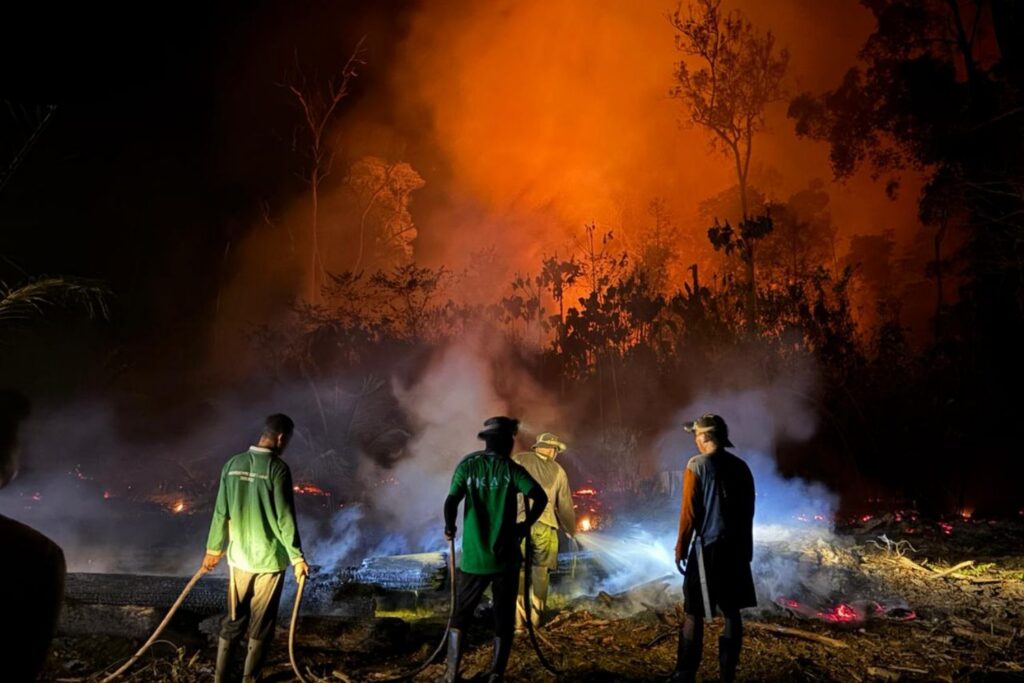
The effects are no longer just predictions. In Indonesia, wildfires have worsened; in India, the monsoon is showing signs of weakening; in Australia, the risk of wildfires is rising; and in South America, the risk of more severe flooding is increasing. The World Food Program has estimated that El Niño could push about 50 million people into a state of acute hunger. In Europe, after five heat waves and widespread drought this past summer, British farmers are bracing for the worst harvest on record: a case cited by analysts at the Energy and Climate Intelligence Unit as an example of how extreme events ultimately drive up food prices, affecting the poorest segments of the population first and foremost.
Impacts Vary from Region to Region
The WMO reiterates a technical point that is often overlooked: the intensity of El Niño does not automatically equate to the severity of damage in a single area. The effects depend on the season, latitude, and other competing climatic factors, including conditions in the Indian and Atlantic Oceans. On the operational front, the WMO is undertaking an unprecedented mobilization in its 50-year history to strengthen early warnings in sectors such as agriculture, energy, health, and water management, in coordination with national meteorological services around the world.