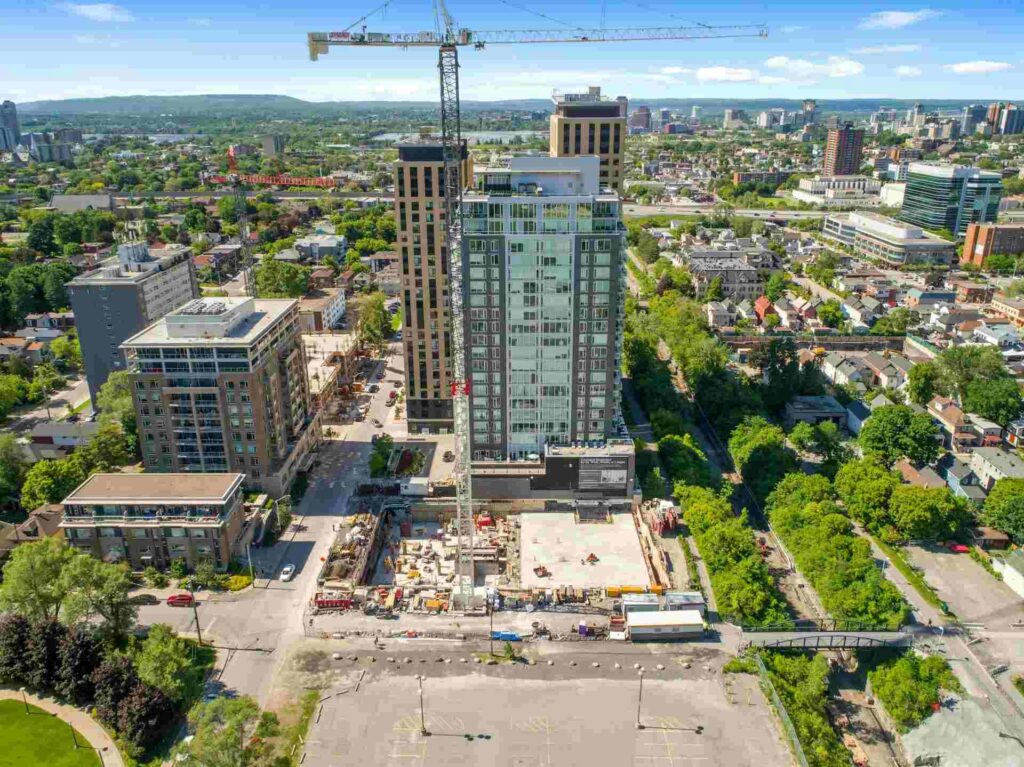
For years, the signs that affluent residents were moving into a working-class neighborhood have always been the same: trendy spots, old artisans’ shops turning into bars, and old roll-up shutters replaced by stylish signs. And the direction of this trend has always been the same: toward taking over the city center. Today, the climate crisis has changed the picture: protection from the heat has become a key factor in choosing where to live. And these new trends are less clearly defined in terms of urban direction.
Scholars call this new trend “climate gentrification.” The reasoning is straightforward: extreme heat, flooding, and coastal erosion make certain areas uncomfortable or risky, while others remain cool and reliable. Those with the means move to areas where life is better; real estate values rise; and those with less money are slowly pushed to the margins. It’s a new urban divide between those who can afford the cooler climate and those who cannot.
The Barcelona Study
A Spanish study published in the *Journal of City Climate Policy and Economy* sheds light on this phenomenon. The project, called ClimateJusticeReady and ledby the Autonomous University of Barcelona (ICTA-UAB), has created an online map that classifies neighborhoods based on risk.
To do this, the researchers weighed several factors together: the social vulnerability of an area’s residents, the quality of the housing stock, the availability of services, the amount of green space, and exposure to heat. The result is a surprising picture. The most sought-after locations are not historic centers, as one might expect from classic gentrification, but—according to this study—the exact opposite. Central neighborhoods remain popular due to their proximity to transportation and shops, but they are also densely populated, built-up, and sweltering; certain suburbs, on the other hand, are greener, more spacious, and—at least so far—more affordable. “With heat waves growing longer and more intense in homes ill-equipped to handle them, people’s priorities are shifting,” explains Amalia Calderón Argelich, who co-led the study.
In Italy, the situation gets more complicated
However, the Barcelona model cannot be mechanically replicated in Italy. Much of our suburban areas grew haphazardly during the economic boom years, often lacking trees and shade, with buildings that have poor thermal performance: it’s hard to imagine these homes as climate-friendly refuges. If anything, the opposite is true: it is precisely these neighborhoods that suffer the most when temperatures soar and air quality deteriorates.
Yet some elements of climate gentrification already exist in Italy, albeit in different forms. Along the coast, erosion and storm surges are beginning to reshape property values based on a home’s elevation above sea level. In cities, the few tree-lined and well-maintained neighborhoods are becoming increasingly sought-after as summers grow longer, while those living in sweltering neighborhoods often have no choice but to stay where they are. And when redevelopment projects are undertaken—a new park, a revitalized riverfront, a plaza freed from asphalt—there is a risk that rents and property prices will rise, driving out long-time residents.
It’s the most difficult paradox to resolve: making a place more livable can also make it more exclusive. In a country where finding a home is already an obstacle course, the climate risks becoming yet another factor that widens inequality, rewarding those who have the freedom to choose and penalizing those who can only endure it.
We Need Rules for Climate Justice
The point is not to slow down environmental initiatives, but to manage them while taking social aspects into account. Without tools designed to protect those at risk of being displaced—rent protections, public housing, and adaptation measures that are distributed rather than concentrated in already affluent neighborhoods—the ecological transition ends up rewarding those who are better off and leaving everyone else behind. With the political consequences we’re beginning to see. Making the ecological transition fair isn’t just an ethical choice: it’s also the only way to make it possible.