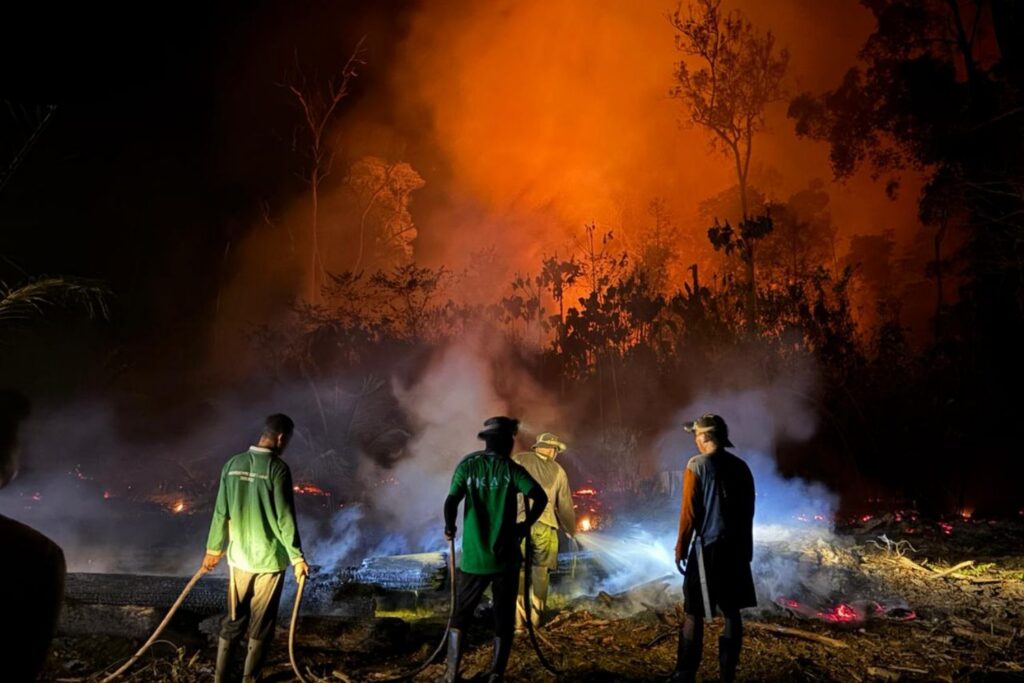
Two continents grappling with the same emergency in the same week. While Sicily recorded over 100 fire department responses in a single day on Tuesday—with Palermo left without power for hours and a section of the Palermo-Catania highway closed due to smoke— in Canada, Ontario saw wildfires spread to 735,000 hectares, up from 650,000 the previous weekend.
Extensive wildfires in Ontario (Canada), have caused extremely poor air quality along the U.S.–Canada border over the past five days. 🧐 The smoke plume is now moving out over the Atlantic and may later reach Europe. 🌬️
— Ventusky (@Ventuskycom) July 19, 2026
⚠️Fine particulate matter (PM2.5) concentrations along the… pic.twitter.com/cWkXDf5I39
The Italian Front
The fires affected all of Sicily’s provinces, with the most severe incident occurring in Castronovo di Sicilia, where Mayor Vitale Gattuso reported that nearly one square kilometer of vegetation had been burned right next to residential areas. Two firefighters working to extinguish a fire at a logistics warehouse in Catania’s industrial zone were taken to the hospital after feeling ill. In Calabria, the fires reached Morano Calabro, San Basile, Saracena, Castrovillari, and Frascineto; in Sardinia, between the Nuoro and Oristano areas, more than 500 hectares went up in smoke.
❗In corso grave incendio a Castronovo di Sicilia (PA).
— Italia 24H Live 🔴 – Notizie dall'Italia (@Italia24HLive) July 20, 2026
In fase di evacuazione di alcune zone del comune siciliano. Video dal Gruppo segnalazioni incendi sicilia. «Siamo in piena emergenza». Lo dice il sindaco di Castronovo di Sicilia Vitale Gattuso pic.twitter.com/qzCDFh26xx
Economically speaking, Coldiretti estimates damages in the hundreds of millions of euros, combining the effects of the fires in the South with the 192 hailstorms that struck the North during the same period, with hailstones up to 10 centimeters in diameter. Since the beginning of the year, nearly 22,000 hectares of forests and land have burned, according to Coldiretti’s analysis of data from Effis, the European system for monitoring large-scale fires. In Sardinia, the preliminary estimate of damages is around 10 million euros.
⚠️Incendi, tanti i fronti di fuoco attivi in Sicilia. In Calabria roghi dal Parco del Pollino, dove ettari di vegetazione sono andati in cenere, al Catanzarese. A Squillace fiamme vicine ad un villaggio turistico, domate nella notte. @TgrRaiCalabria https://t.co/a1nxocaz8b pic.twitter.com/DHXje1AXdL
— Tgr Rai (@TgrRai) July 21, 2026
On the political front, Giuseppino Santoianni, president of the Italian Farmers’ Association, called for a state of disaster to be declared for the affected regions, along with compensation, a suspension of tax deadlines for damaged businesses, and funds for reforestation. Santoianni also echoed the words of the bishop of Cassano all’Ionio, Monsignor Francesco Savino, who suggested that a criminal plot might be behind some of the fires.
Europe in Flames, from Scotland to Spain
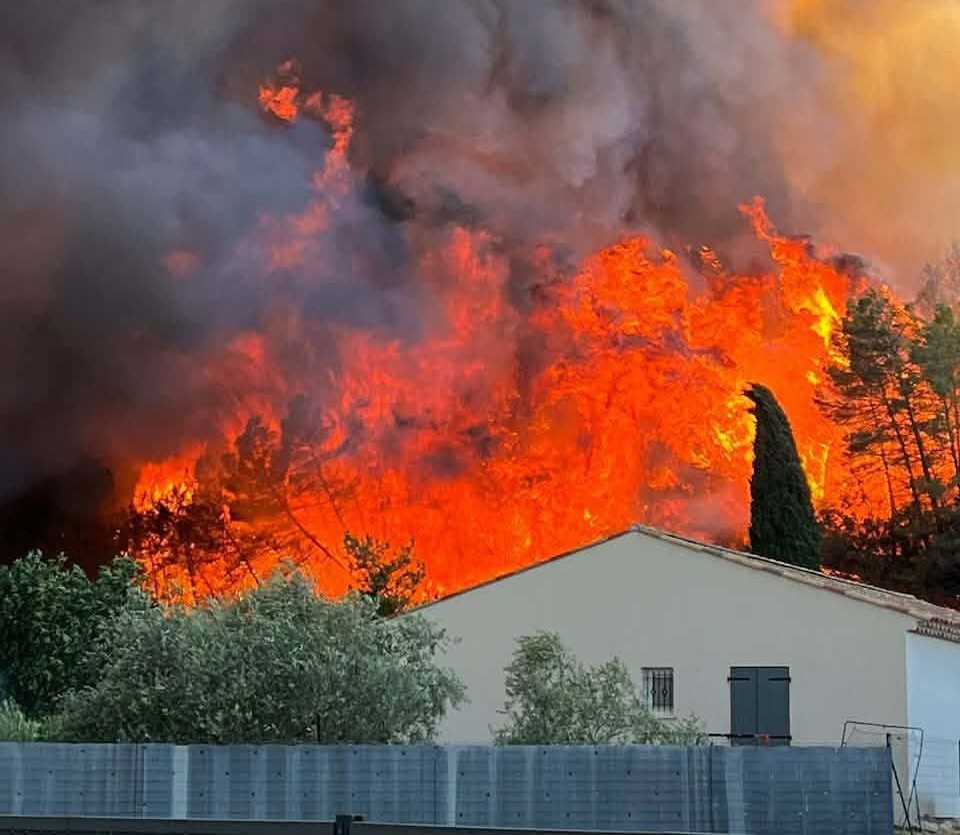
The Scottish Fire Service has been battling two wildfires for days—one in the Cairngorms National Park and the other at Arthur’s Seat in Edinburgh—with a “very high” risk alert extended through July 24. In Spain, the La Mierla fire in the province of Guadalajara has spread across more than 26,000 hectares and has become the largest of the year, less than two weeks after a fire in the province of Almería claimed 13 lives. The meteorological agency AEMET forecasts temperatures as high as 44 degrees by Thursday. In France, a fire near Fréjus has forced the suspension of train service between Toulon and Les Arcs.
The Canada Case and the Clash with Trump
In Ontario, Premier Doug Ford announced that the province is dealing with 190 active wildfires and that approximately 1,800 residents have been evacuated from communities in the northwest. The smoke has made Toronto the city with the worst air quality in the world, and it has reached as far as New York and Washington. U.S. President Donald Trump has called on Canadian Prime Minister Mark Carney to step up efforts to manage the fires, threatening tariffs on Canadian products. Ford called Trump’s stance “unacceptable,” recalling the assistance Ontario provided to the United States during Hurricane Helene in 2024 and the California wildfires of 2025.
Experts Sound the Alarm
Jane Burston, CEO of the Clean Air Fund, pointed out that wildfires release large amounts of black carbon into the atmosphere, which contributes to both respiratory and cardiovascular diseases as well as global warming, in what she described as a vicious cycle that can only be broken through stricter regulations and early-warning systems.