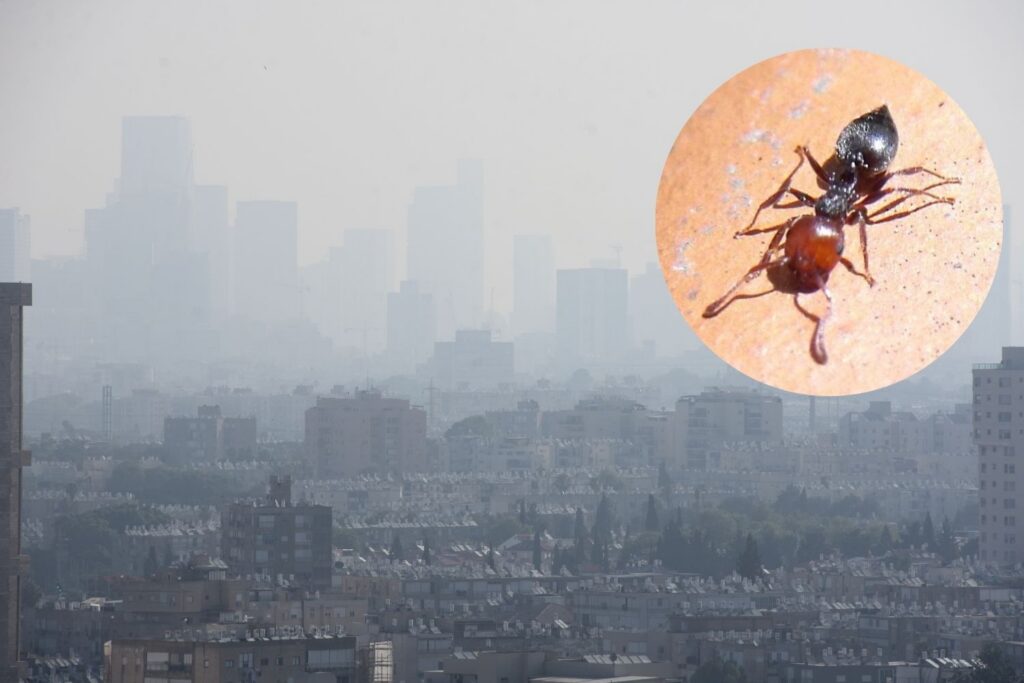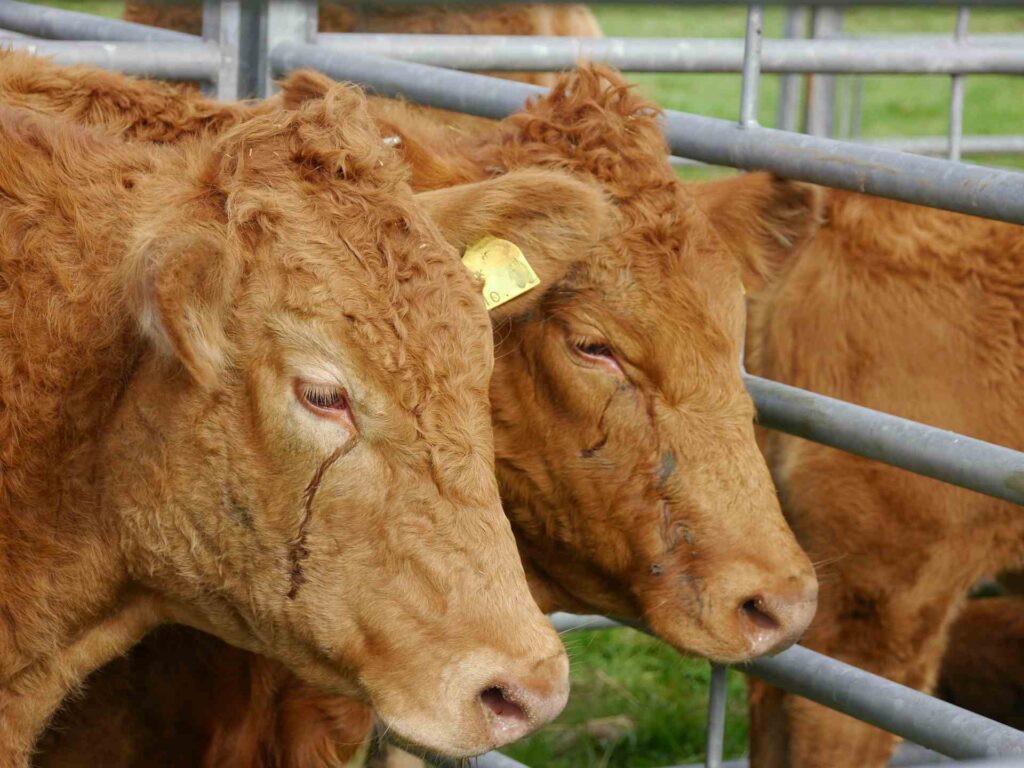
Ninety-five million raised animals compressed in one of the territories with the worst air in Europe. The Po Valley is the richest agribusiness district in the country and also the place where the industrial livestock model shows its highest environmental cost. Cattle, pigs and poultry annually produce millions of tons of greenhouse gases and more than 162,000 tons of ammonia, one of the substances that feed fine particulate matter, PM 2.5, responsible for thousands of premature deaths.
The numbers emerge from the report“Poisoned Padania,” produced by Greenpeace with scientific support from University of Siena researchers Valentina Niccolucci and Michela Marchi. Between 2017 and 2023, the number of animals raised in the Po Valley eco-region increased from 88.4 to 95.2 million: a 7.7 percent increase in just six years. It is here, between Lombardy, Emilia-Romagna, Veneto and Piedmont, that more than 80 percent of Italy’s pigs and about 60 percent of the country’s cattle and poultry are concentrated.
In 2023 alone, intensive livestock farms in the Po Valley produced 162.7 thousand tons of ammonia and more than 12.7 million tons of greenhouse gas equivalent. An emissive load that adds up to traffic, domestic heating and industrial activities in an area that, by geographic conformation, struggles to disperse air pollutants.
Where pollution is concentrated
The geography of livestock pollution coincides almost perfectly with the productive heartland of the Po Valley. Lombardy, Emilia-Romagna, Veneto and Piedmont concentrate almost all of Italy’s large intensive livestock farms, but the greatest weight falls mainly on a few provinces in Lombardy and Emilia. Brescia, Cremona and Mantua lead the ranking in both ammonia and greenhouse gas emissions, with double-digit values compared to the total of the Po Valley eco-region.
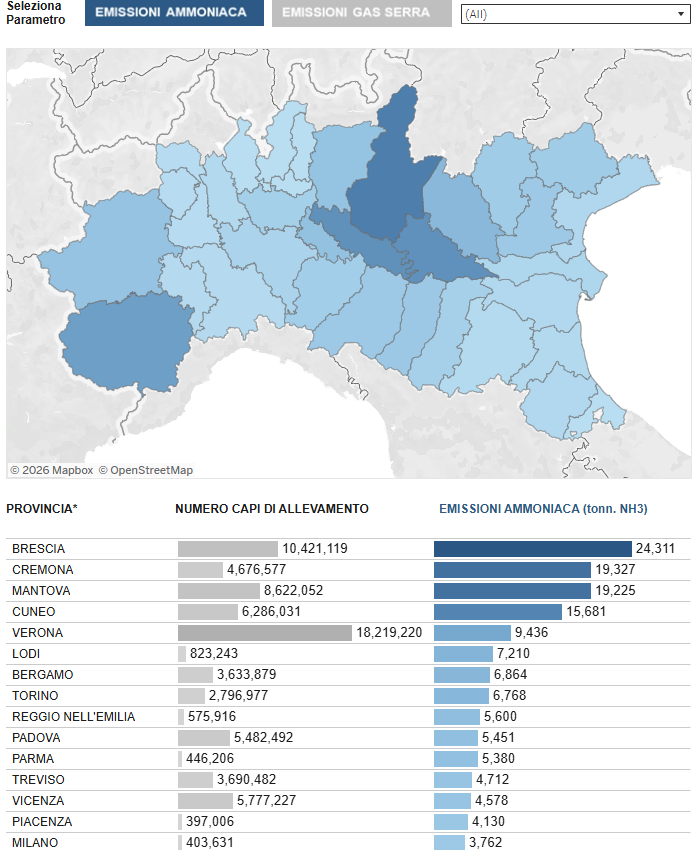
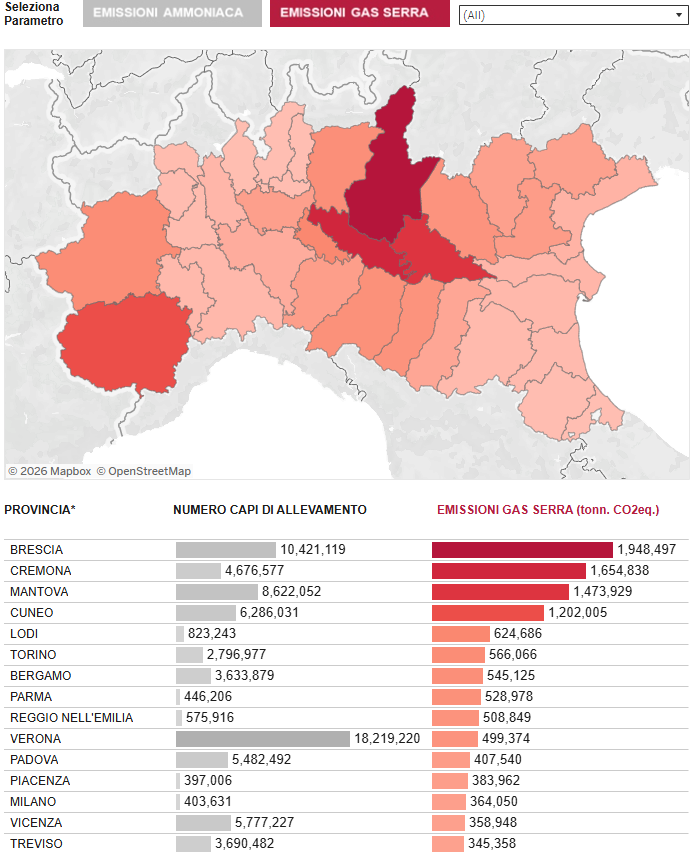
Going down to the municipal level, the report identifies real emission hotspots. Fossano, in the province of Cuneo, is the municipality with the highest ammonia emissions, followed by Reggio Emilia and Montichiari, in the Brescia area. For greenhouse gases, on the other hand, the first place goes to Reggio Emilia, ahead of Fossano and Parma. In many cases, these are territories where the concentration of livestock farms is already compounded by chronic problems related to nitrates in soils and groundwater, a sign of environmental pressure that for years has exceeded the absorption capacity of the territory.
The picture tells of a profound transformation in Italian animal husbandry. The traditional barn is giving way to a highly concentrated system, where thousands of animals are raised in small spaces and produce huge amounts of effluent. This is where much of the ammonia that later ends up in the atmosphere is born.
The smog coming from the stables
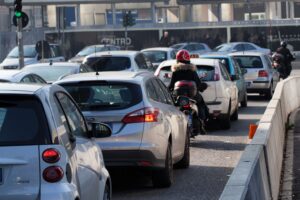
For years the public debate on pollution in the Po Valley has focused almost exclusively on urban traffic. Yet an important share of PM2.5 originates away from the ring roads.
In fact, ammonia produced by livestock farms reacts with other compounds in the atmosphere to form secondary fine particulate matter. According to European research cited in the Greenpeace report, cities close to intensive agricultural areas, such as Milan, record ammonia concentrations three to four times higher than European metropolises further away from farms, such as London or Madrid. Agricultural pollution travels and contributes to the air quality of urban areas.
According to the European Environment Agency, fine particulate matter was associated with more than 43,000 premature deaths in Italy in 2023, the worst figure in Europe.
The burden of cattle breeding
According to the study, cattle farms are responsible for 65 percent of ammonia emissions and as much as 84 percent of greenhouse gases in the entire Po Valley livestock sector. The main reason is methane produced by enteric fermentation and slurry management, a gas that has a much higher climate impact than CO₂ in the first two decades.
Yet it is precisely cattle farms that remain excluded from the stricter obligations of the European Industrial Emissions Directive, which now applies mainly to large pig and poultry farms.
“The exclusion of cattle farms from the Industrial Emissions Directive, the legislation that regulates and limits emissions from the most polluting industrial activities, is a major loophole,” notes Simona Savini, campaigner for Greenpeace Italy, “especially in high-density settings such as the Po Valley.”
A system at the pole
From 2017 to the present, emissions show no significant reductions. Ammonia drops slightly, but greenhouse gases increase along with the overall number of animals raised. “The livestock sector in the Po Valley eco-region continues to exert significant environmental pressure,” write Valentina Niccolucci and Michela Marchi. “Emissions show no signs of substantial reduction.”
And this is the political point that the report puts on the table: the Po Valley is also suffocating because of a production model that continues to concentrate millions of animals in the same area, dumping the real cost of cheap meat on the environment and public health.