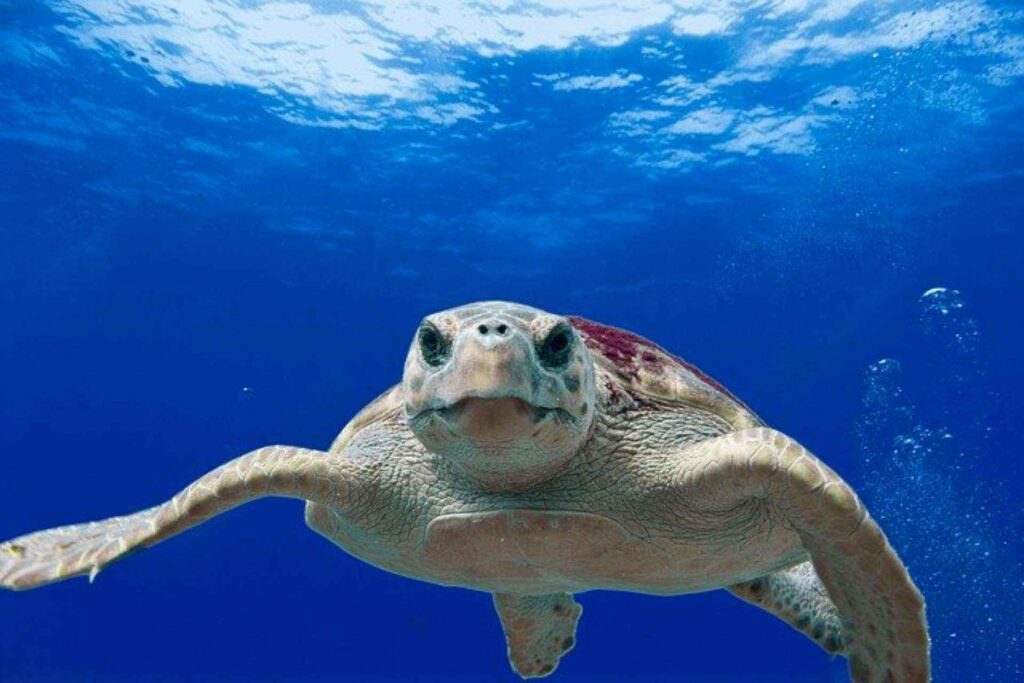
The Mediterranean is warming faster than almost any other sea on the planet. By about 0.4°C every ten years, with projections suggesting that by 2100, temperatures could rise by as much as 3.5°C compared to the 1961–1990 average. For the loggerhead sea turtle ( Caretta caretta ), this is not just a meteorological fact: it is a matter of survival.
In Italy, the signs seem contradictory. On the one hand, the number of daycare centers has grown dramatically: approximately 443 in 2023, rising to 601 in 2024, and exceeding 700 in 2025—the highest figure ever recorded in the country. On the other hand, behind these numbers lies a worrying trend linked precisely to overheating.
The loggerhead sea turtle (Caretta caretta) is a species in which sex determination depends on temperature: eggs incubated in warmer environments produce females, while those in cooler environments produce males. As beaches warm up, there is a real risk of a demographic imbalance between the sexes, with unpredictable consequences for the long-term survival of the populations.
New beaches, new threats
The northward and westward expansion of nesting sites—now also found along the central Tyrrhenian coast and in Liguria, as well as in historically affected regions such as Sicily, Calabria, Campania, and Puglia—is interpreted by experts as the result of coastal warming, which makes areas previously too cold suitable for nesting. Some females are colonizing new beaches, expanding the species’ breeding range in the western Mediterranean.
However, these new nesting areas are often under significant pressure from tourism and human activity. Two threats in particular are putting the species’ reproduction at risk.
The first is the mechanical cleaning of beaches. The bulldozers used to level and clean up the shoreline can destroy dune habitats—formed over decades—in a matter of minutes. The nests of the loggerhead sea turtle (Caretta caretta), laid just a few centimeters below the sand, are invisible to the naked eye: a single pass of the machine can crush the eggs, alter their incubation conditions, or completely destroy the nest.
The second threat is light pollution. Turtles have evolved in dark coastal environments and rely on natural light for navigation. Artificial lights can deter females from laying eggs or cause them to abandon the beach. Instead of heading toward the sea by following the moon’s reflection on the water, newly hatched hatchlings are drawn inland, where they risk dying from dehydration, being run over, or being preyed upon. Legambiente recently published specific guidelines for municipal governments and beach operators to reduce this impact.
June 16 in Acciaroli: a sculpture for the turtles
To mark World Sea Turtle Day on June 16, Legambiente is organizing an event on Spiaggia Grande in Acciaroli, in the municipality of Pollica (SA), where a large sculpture created by the Spanish artists Arenas Posibles will be unveiled at 4:30 p.m . The event, the first stop on the TartaBeach Tour 2026, will feature creative workshops and educational activities for children, families, and the general public.
The TartaBeach Tour will visit several Italian regions. The second stop is scheduled for Elba Island. Every nest counts; every hatching is a small victory. But the real battle is being fought on a larger scale: in climate policy, in coastal management, and in deciding what kind of future to build for the Mediterranean.