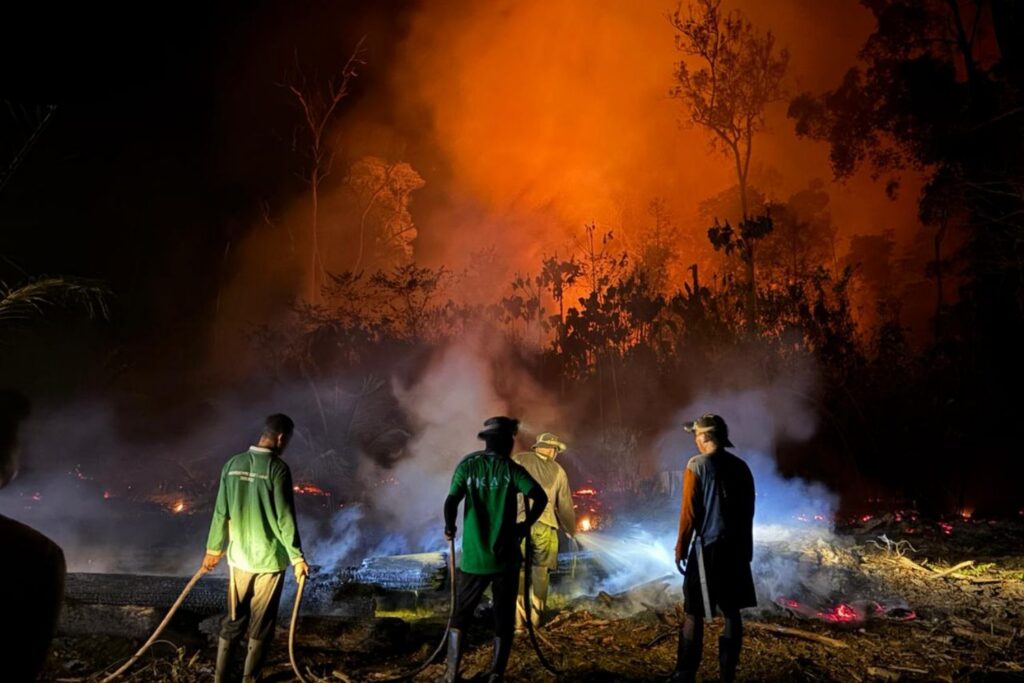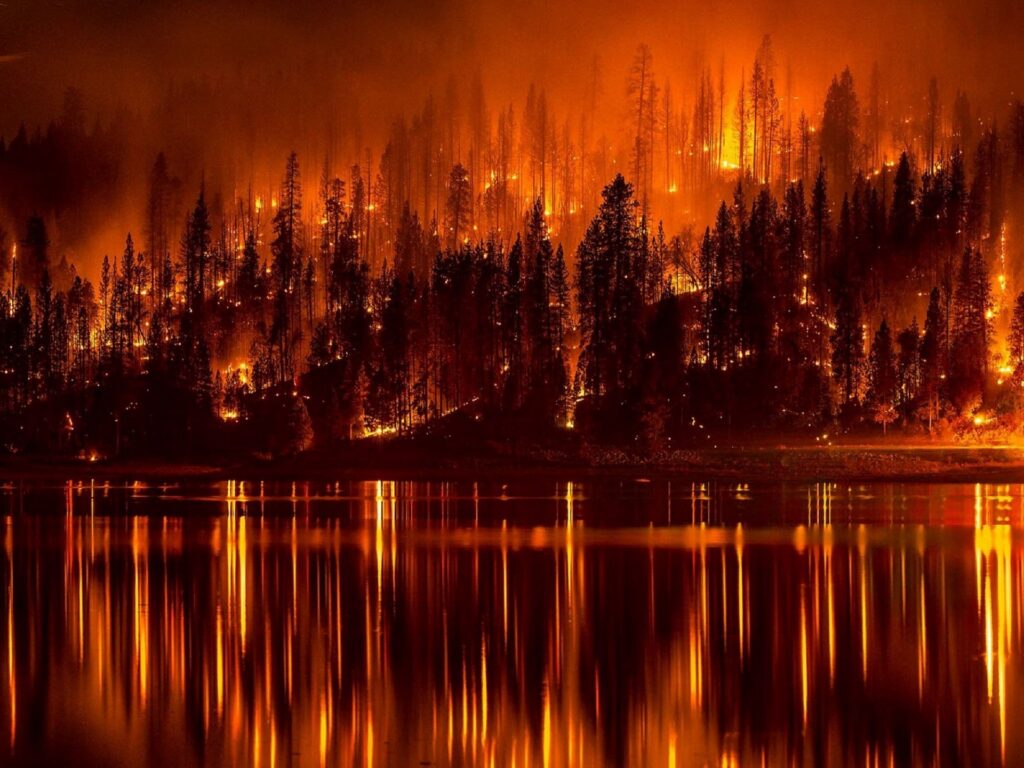
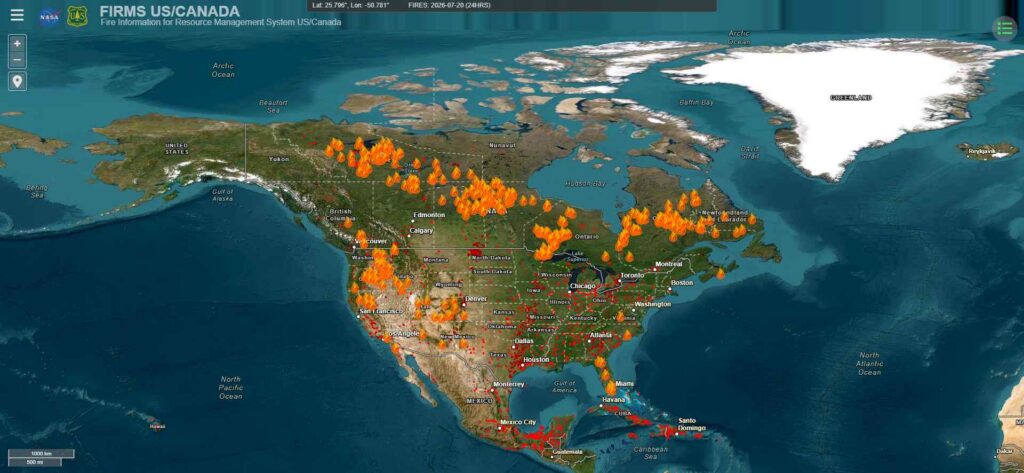
Two hundred wildfires are ravaging Ontario’s forests, and the wind is doing the rest: a blanket of smoke has crossed the border and settled over Chicago, New York, and Washington, worsening the air quality for millions of Americans. That alone was enough to turn an environmental disaster into a diplomatic incident. Some Republican lawmakers have accused Ottawa of neglecting prevention, arguing that Americans’ lungs are paying the price for Canadian inaction. Prime Minister Mark Carney responded by turning the tables: if the United States wants less smoke, it should start doing its part to combat global warming, which, as the scientific community points out, increases the risk of wildfires.
At that point, Donald Trump arrived, right on schedule. On social media, the president threatened new tariffs against Canada, which he accused of “invading” the United States with polluted air and of failing to manage its forests. The incident, highlighted by *Corriere della Sera*, marks a significant shift: smoke from wildfires has become a tool in the trade war.
The Dispute Over Who Should Pay
Behind the back-and-forth accusations lies a concrete question: Who pays the costs of a changing climate? Ottawa claims to have invested the equivalent of 8.5 billion dollars in forest prevention and management since 2020, and points out that in June, Quebec and Northern Ontario received less than 40% of their usual rainfall. Ontario Premier Doug Ford has thrown an uncomfortable fact back in the Americans’ faces: when California was burning, it was the Canadians who sent firefighting planes to the aid of their neighbors—without sending a bill.
The United States, on the other hand, is asking Canada to bear the cost of the health damage caused by the wildfires, but refuses to acknowledge its own share of responsibility for the emissions that fuel droughts and heat waves. The polluter passes the bill on to the victim, and when the consequences come back in the form of smoke, it threatens to impose tariffs.
The Arsonist Who Accuses the Firefighters
The point is that the Trump administration isn’t just denying its responsibility— it’s actively increasing the risk of wildfires, both in the United States and elsewhere. The list of setbacks in climate policy is now long. On Inauguration Day in January 2025, Trump signed the United States’ withdrawal from the Paris Agreement—for the second time. In February 2026 , the EPA rescinded the 2009 “endangerment finding”—the scientific determination that greenhouse gases threaten public health: this was the legal foundation for nearly all federal climate regulations, and with its revocation, regulations on emissions from cars and trucks also fell. The decision is already before the courts.
That’s not all: as the danger grows, the resources needed to combat it are being cut. According to data from the Department of Agriculture’s inspector general’s office, by 2025 the Forest Service—the federal agency that manages forests and oversees much of the wildfire response—had lost 16% of its staff. Six Colorado lawmakers have written to the agency’s leadership, expressing concern that the cuts will compromise the ability to extinguish fires just as the season is shaping up to be scorching. And the list of ways Trump is fueling wildfires goes on: halting large wind energy projects that had already been funded, allowing new drilling in protected areas, and elevating the “drill, baby, drill” rhetoric to the status of national energy policy.
A scenario bound to repeat itself
The pattern is all too familiar: regulations that curb emissions are rolled back, funding for prevention is cut, and when wildfires—made more likely precisely by those decisions—send smoke across the border, the neighbor is blamed and trade retaliation is threatened. Canada is not without fault: Carney is criticized at home by environmentalists for giving the green light to new gas pipelines. But the difference in scale when it comes to responsibility is enormous.
As temperatures rise, seasons like this will become the norm, not the exception. If every plume of smoke leads to a dispute over tariffs and compensation, arguments over responsibility will heighten tensions between nations, with the risk that these tensions could escalate into conflicts.