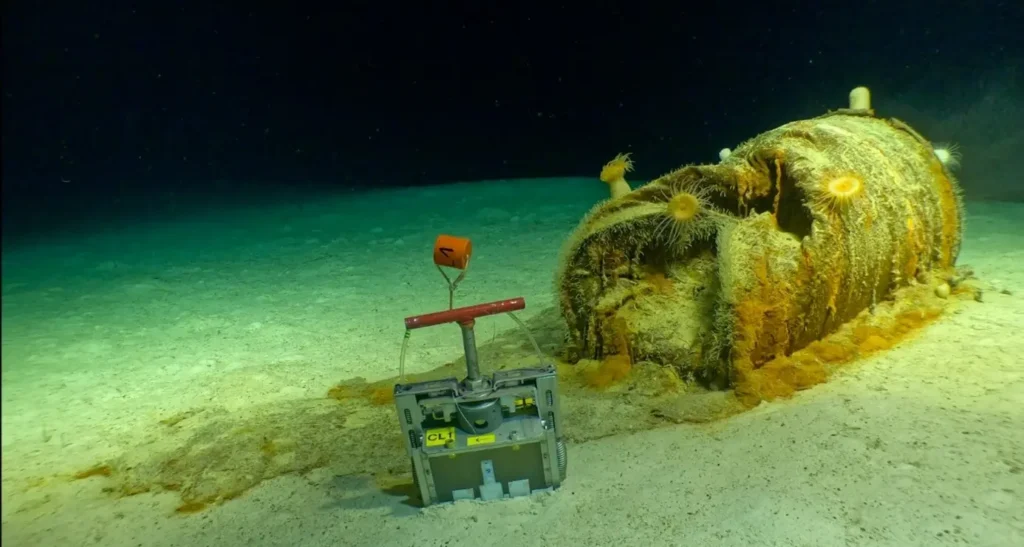
Nearly 5,000 meters below the surface of the northeastern Atlantic lies one of the most burdensome legacies of the atomic age: more than 200,000 drums of radioactive waste, dumped on the seafloor between 1950 and 1990. In the postwar period, disposing of nuclear waste at sea seemed to many to be a reasonable solution—at least for low- and medium-level radioactive materials—and few imagined they would one day have to return to inspect them. That day, however, has arrived: a scientific expedition has traveled down there to see what remains of those drums and what they are releasing into the water.
When the ocean was a dumping ground
Dumping radioactive drums into the sea is more than just a risk—it is certain to cause harm. Many radionuclides remain active for thousands of years, and in some cases, their half-life—the time it takes for radioactivity to decrease by half—can reach hundreds of thousands of years. It is difficult to imagine a container made of metal, asphalt, or concrete that could withstand such a long period of time on the ocean floor.
Other types of waste also pose a significant threat to the marine ecosystem. Those drums had been filled with sewage sludge, metal coatings, components from contaminated facilities, and ion-exchange resins. As doubts mounted about the integrity of the containers, protests against the practice of ocean dumping grew, eventually leading to the international ban on the disposal of radioactive waste at sea, which has been in effect since 1994. The barrels already buried, however, remained where they were, primarily in the abyssal plains of the northeastern Atlantic.
The descent beyond 4,700 meters
The decision to go and see what was happening was made by the NODSSUM project, coordinated by the French research center CNRS in collaboration with the oceanographic institute Ifremer, the National Authority for Nuclear Safety, and a network of international partners. Following an initial mapping campaign in the summer of 2025, between May 27 and June 28, 2026, about thirty researchers boarded the ship Pourquoi Pas? From there, the manned submersible Nautile conducted 20 dives to depths exceeding 4,700 meters, observing the casks up close for the first time.
Corroded drums and higher-than-expected levels of radionuclides
The picture that emerged from the dives is one of advanced deterioration: numerous barrels are severely corroded, and some have already leaked their contents onto the nearby sediments. On-site measurements detected radionuclides typical of this type of waste, with activity levels higher than expected for the area, though still low enough to allow the samples to be handled without special precautions. In addition to the drums, the scientists collected water, sediments, and living organisms, and mapped the fauna that has since colonized the drums and the surrounding seabed.
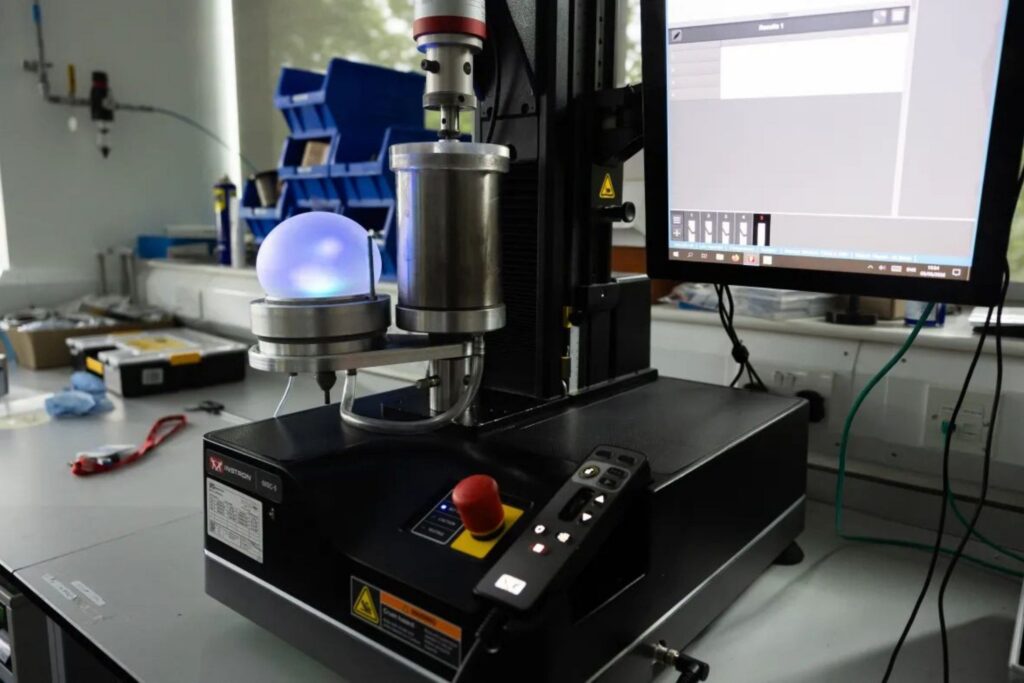
The goal is to reconstruct how radioactivity disperses and moves upward through the deep-sea ecosystem chain. Laboratory analyses, expected in the coming months, will precisely quantify what and how much these containers are still releasing after half a century on the seafloor. This is the first time that this submerged legacy has been observed so closely, and the data collected will help determine whether and how to monitor a problem that the ocean, on its own, has by no means eliminated.