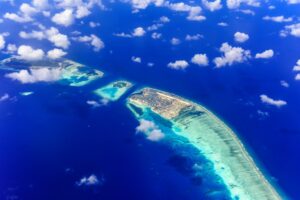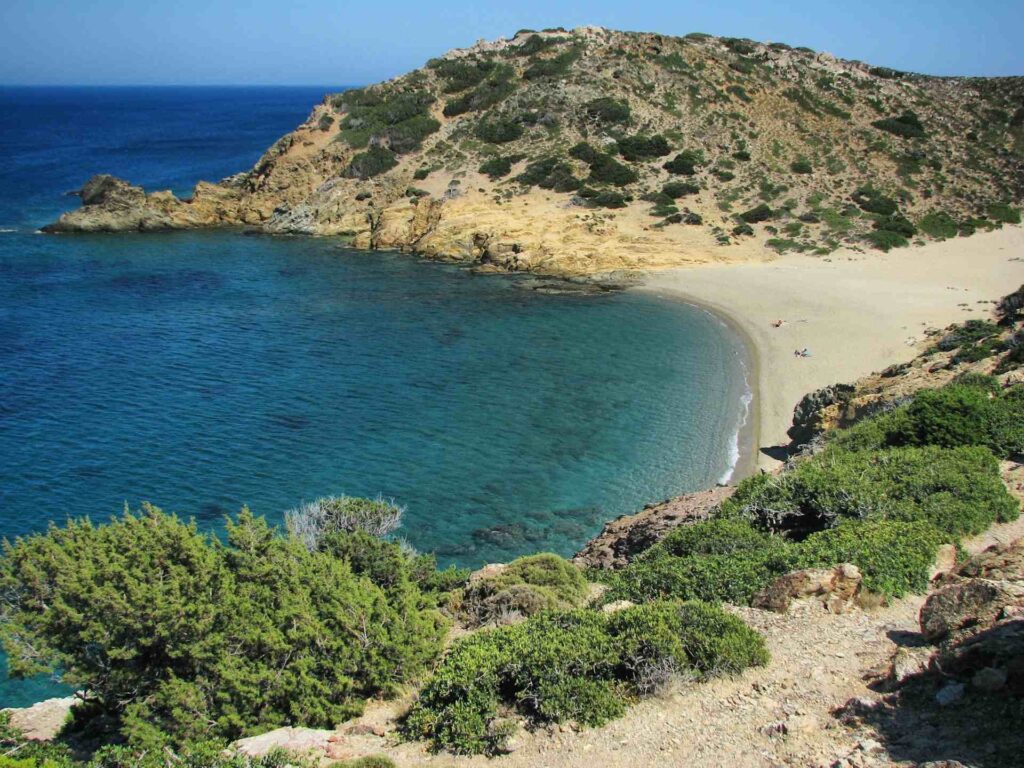
They are called apatites paralies,“pristine beaches,” and this year there are 251 of them. The Greek Ministry of Environment and Energy has updated the list from 238 to 251 shorelines where no sunbeds, umbrellas, kiosks, boardwalks can be installed. No establishments, no beach concessions, no interventions that alter the natural morphology of the coast. Access remains free, commerce does not.
Most of these areas fall under the European Natura 2000 network, the system for protecting the most vulnerable habitats and species. Between the well-known islands of the Cyclades and the Dodecanese and less-traveled ones such as Lefkada or Limnos, the map draws a perimeter of protection that the government in Athens has chosen to expand, despite the fact that tourism is one of the main drivers of the national economy.
The project took shape in 2024 after years of rising tensions. In 2023, so-called towel protests, spontaneous demonstrations widespread across the islands, had denounced the gradual occupation of beaches by private establishments. Concessions were multiplying, free access to the sea was shrinking, and tourist pressure was eroding coastlines. Free beaches functioned as a natural barrier against erosion and storm surges, phenomena that were becoming increasingly frequent due to the climate crisis and the cementing of shorelines.
For beaches that remain open to concessions, the new Greek regulations set clear limits: at least 50 percent of the beach must remain free, installations must leave a buffer area of at least 4 meters from the shoreline, and the area of each concession cannot exceed 500 square meters. Those who violate the rules risk a fine of four times the minimum auction price and exclusion from all concession procedures for five years. Penalties between 2,000 and 60,000 euros are also introduced for the first time – for those who obstruct free public access to the sea.
In Italy the issue has been on the table for years, often stranded between concessionaires’ historical rights, European regulations and political resistance. The Greek choice shows that discontinuity is possible: not all beaches need to be tourism products. Some can, and in the opinion of many must, simply remain nature.
77 butts per 100 meters
While Greece draws boundaries on maps, in Italy Legambiente counts what is left on the sand. The balance of twelve years of monitoring-from 2014 to 2026, in 653 transects along the Italian coasts-is merciless: 50,053 cigarette butts collected and catalogued, with an average of 77 butts per 100 linear meters of beach. It ranks second on the list of the most widespread litter, right after plastic fragments.
Butts make up 87 percent of the 57,099 smoking wastes found during the surveyed period, a category that includes lighters, empty packs, and tobacco boxes. But the real problem is not aesthetic: cigarette filters are composed mainly of cellulose acetate, a plastic that does not readily biodegrade. Over time it breaks down into smaller and smaller particles, feeding that stream of microplastics that leaks into the sea and up the food chain. A study by the University of Naples Federico II showed that the fragmentation process continues even ten years after it is abandoned in the environment.
The most exposed species are those that live where the butts land: the loggerhead turtle Caretta caretta, which is nesting more and more on Italian coasts due to rising temperatures, and the kentish plover, a small bird symbolic of the dune ecosystem that builds its nests right among the sand of natural beaches at this time. Litter pollution and human disturbance are squeezing the spaces where both species still manage to breed.
Penalties already exist in Italy: the 2014 Collegato Ambientale provides for fines of between 30 and 300 euros for those who leave cigarette butts on the ground, in water or in drains. But the lack of effective controls makes the rule almost a dead letter. Something is moving at the local level: a growing number of municipalities are adopting smoke-free waterfront and shoreline ordinances. Rome recently extended the ban to the beaches of Ostia, Castel Porziano and Capocotta, with a perimeter of 5 meters from the shoreline. Pesaro has expanded an ordinance already in effect since 2019, extending it to the entire shoreline. But these are still exceptions.
Balloons and wet wipes
Not just cigarettes. Among the most recent measures trying to reshape summer habits are some that are striking because they intervene in seemingly harmless activities. The Ligurian municipality of Celle Ligure has banned the throwing of balloons in the air. A decision that may seem strange, but one that responds to a real problem: balloons, once released, fall back into the environment. Latex fragments can take up to 4 years to degrade and pose a real threat to seabirds and sea-dwelling creatures, which ingest them mistaking them for food.
On the hygiene products front, Scotland has instead approved (it will be operational in August 2027) a ban on wet wipes containing plastic. This is a step Britain has been waiting for for years: these products are responsible for about 93 percent of clogs in Britain’s sewer systems, and release millions of synthetic fragments into the environment every year. The ban promotes a shift to fully biodegradable alternatives, with expected effects on coastal water quality as well.
These signs, taken together, create a picture in which the beach season is beginning to be evaluated not only from the immediate economic aspect but also for its effects on ecosystems. Pressure on the coast has grown steadily in recent decades, and its effects-erosion, pollution, loss of biodiversity, degradation of dune habitats-are no longer visible only to researchers.
The Greek choice to take 251 shorelines away from commercial logic sends a clear signal: the value of a beach is not measured only in terms of sunbed places. At the same time, Legambiente’s data on Italian coasts show that the problem is not only structural but also cultural: a change in daily habits is needed, from the abandoned cigarette butt to the balloon thrown in celebration.