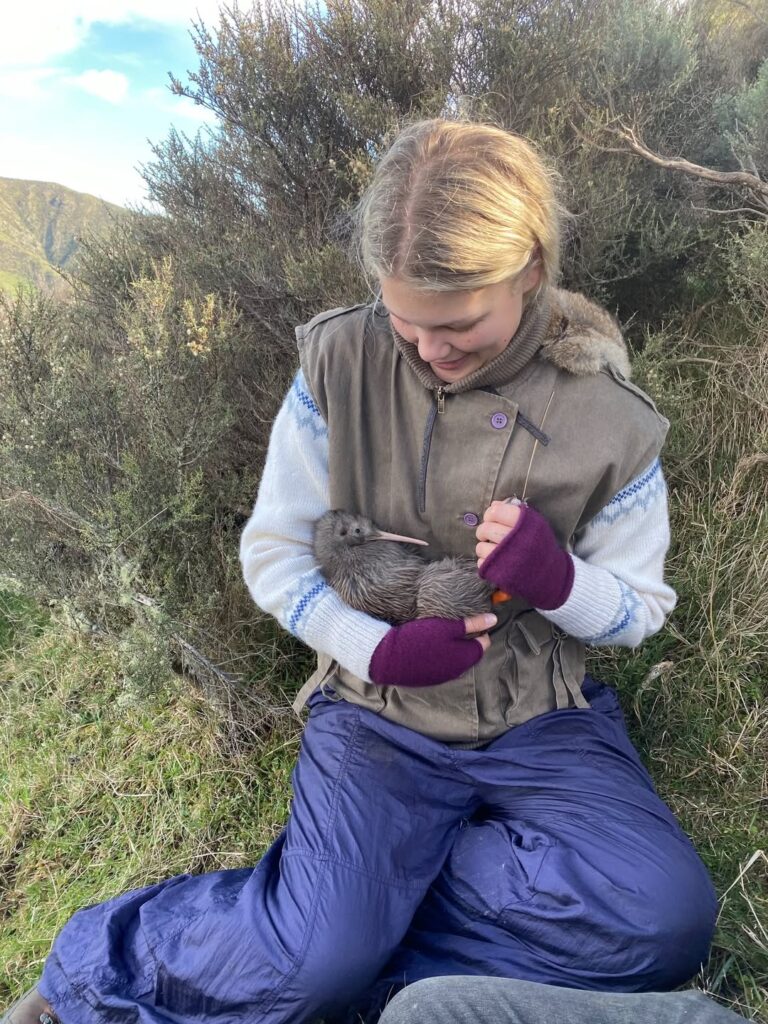
The scene is one that marks an era. On April 28, in the banquet hall of the New Zealand Parliament in Wellington, five Kiwis were presented to an audience of three hundred people. Politicians, citizens, and indigenous leaders all stood in religious silence. When a child picked up a small brown feather that had fallen to the ground, his mother whispered to him to treasure it. For the first time in history, the country’s living symbol crossed the threshold of political power to celebrate an extraordinary ecological achievement.
That evening, the release of the 250th Kiwi into the capital’s wilderness marked the end of an exile that had lasted more than 100 years.
From 12 million to sanctuaries
Before human arrival, New Zealand had about 12 million kiwifruit. Today, 70,000 remain, with a 2 percent annual decline in unmanaged areas. This nocturnal bird, shy and unable to fly, is the perfect target for predators introduced by European settlers: stoats, rats and feral cats wreak havoc on eggs and chicks.
For decades conservation focused on isolation, confining kiwis to remote islands or fenced sanctuaries. It was a strategy that saved the species but hid it from the public eye: the kiwi remained on coins and printed on the tails of airplanes, but disappeared from New Zealanders’ actual experience.
The Capital Kiwi Project revolution
Paul Ward, founder of the Capital Kiwi Project, has decided to reverse course: “The places where people live are also the places where we can bring animals back, because we have the means to protect them,” reads the Guardian. The goal is to make the wild coexist with a metropolis of 400,000 people.
The results exceeded all expectations. To get the green light from the Department of Conservation (DOC), the project had to guarantee a chick survival rate of 30 percent. Thanks to scientific and community management, a, previously unthinkable, 90 percent was achieved. Wellington is now home to the largest urban population of wild kiwifruit in the world.
A network of traps and relationships
The secret of success is technological and, at the same time, social. The project covers 24,000 hectares with 5,300 traps for stoats-the main predators of kiwi chicks-the densest network in the country. More than 100 landowners have opened their farms, while volunteers, cyclists and local tribesmen monitor the land. “It’s a network of traps, but it’s also a network of relationships,” Ward explained. To the Māori, the kiwi is a taonga (precious) species, a gift to be protected. On the evening of the release at Terawhiti Station, amid the fog and the hum of wind turbines, the traditional prayer (karakia) sealed a covenant between humans and nature that goes beyond mere ecology.
Wellington as a model?
Wellington is now the forerunner of the Predator Free 2050 national plan. The capital city’s successful challenge shows that the separation of city and nature is not inevitable. If predators are eliminated, biodiversity comes home. Today, just a few miles from downtown, bicyclists spot kiwis on trails and residents hear their nightly call from the porches of homes.
Critical voices: beyond the Wellington “miracle”
Despite the enthusiasm, part of the scientific community urges caution. A study by researchers Wayne Linklater and Jamie Steer, titled “Predator Free 2050: Aflawed conservation policy” (2018), calls the national plan a“flawed policy choice,” based more on an act of faith than on currently existing technologies or certain finances. Experts say focusing obsessively on predator extermination risks draining resources from more urgent priorities, such as habitat restoration and wetland protection.
In addition, the study highlights how the forced removal of just five predators from complex ecosystems may cause unforeseen “cascading” effects, encouraging the explosion of other invasive species not included in the plan. Finally, Linklater and Steer raise ethical and social concerns: the massive use of poisons and future genetic manipulation of animals could erode public trust, shifting attention to areas where predators are easier to kill rather than where biodiversity is more vulnerable. If biodiversity is the goal, they conclude, total eradication is secondary to the need to ensure intact territories where life can thrive
The lesson of Wellington is clear: conservation is measured by the ability to make the wild coexist with our daily lives. That feather collected in Parliament is a sign that the future of biodiversity also passes through our hands.