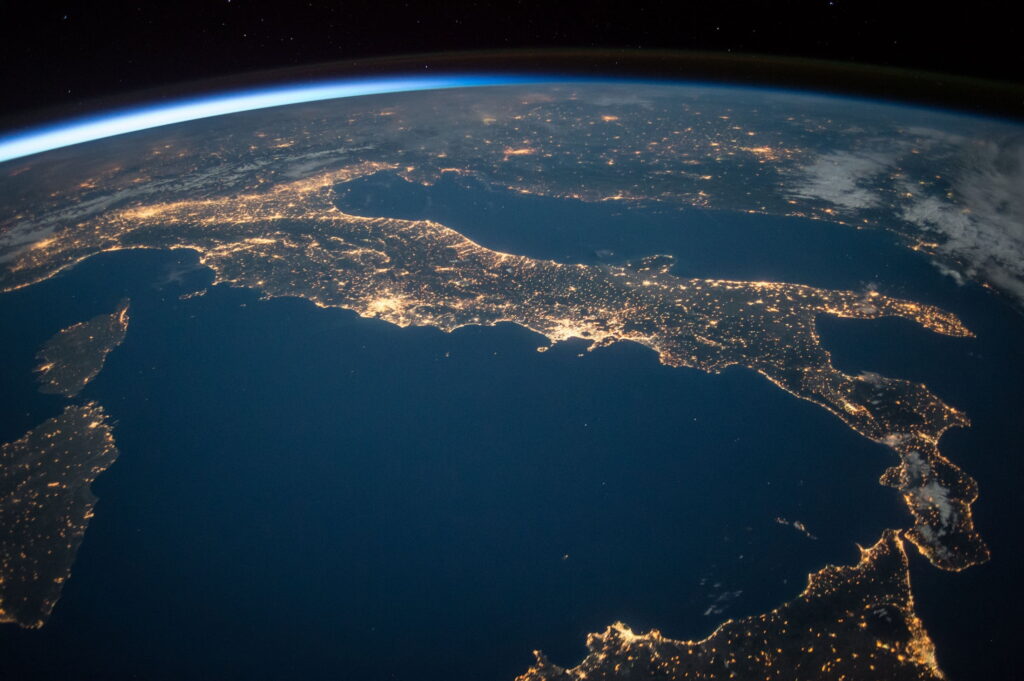
On May 3, Italy exhausted its annual ecological budget. From that morning on, every liter of water consumed, every pound of food eaten, every kilometer driven by car we steal from the future, we take from reserves of natural capital that are eroded and taken away from our children and grandchildren. The share of nature we consume without giving it time to reproduce is lost.
It’s called Overshoot Day, and the Global Footprint Network calculates it annually for each state. The formula is simple: you divide a country’s annual biocapacity (how much it can produce and regenerate) by its ecological footprint (how much it consumes) and calculate how long the available resources are enough. The result, for Italy in 2026, was 123 days. About four months. Then the debt was triggered.
Compared to 2025, we have lost three days. It doesn’t seem like much. But it is a political, economic and cultural signal. It means that the course is going seems to be in the wrong direction.
Three planets for one way of life
The other critical number, the most important one, is 3. If all of humanity adopted the average lifestyle of the Italians, we would need 3 planet Earths to meet the annual demand for resources. 3. And we have only one. What’s more, in deteriorating conditions.
This was not always the case. In 1971, Global Overshoot Day fell on December 25-the ecological accounts were almost in place. By 1990, the date had moved to mid-October. In 2000 to the end of September. In 2019 to July 29.
What has changed in these decades? Almost everything. Meat is perhaps the most emblematic example: in the 1960s each Italian consumed about 20 kilos a year. Today we are around 80 kilos. Four times as much. And every kilo of meat brings with it a chain of consumption that does not appear: water, soil, energy, emissions, transportation.
Then there is soil. In 2024 artificial surfaces in Italy exceeded 21,500 km², more than 7 percent of the national territory. The European average is 4.4 percent. Between 2023 and 2024 we consumed almost 3 square meters of soil every second: the highest rate in the last twelve years. A disappearing soil no longer produces, no longer absorbs, no longer filters.
The debt you can’t see in the bank
We are in a heavy deficit situation. But the problem with ecological debt is that there is no letter coming from the bank. There is no overdraft showing up on the app. There are droughts, floods, loss of biodiversity, desertification of agricultural areas, depletion of the seas. Widespread effects, often attributed to something else, seldom traced back to the source: a development model that consumes more than nature can regenerate and constantly exacerbates the climate crisis.
Not a prophecy, it is a measure
Overshoot Day is not an apocalyptic prophecy. It says that we are living as if limits do not exist, and that limits do exist. It is a measure. And like all measures, there is no point in ignoring it just because it is inconvenient.
The good news, if you can call it that, is that globally, the run-up in ecological debt since 2010 has slowed down: the global Earth Overshoot Day does not continue to advance at the frantic pace of previous years. But stabilization is not a reversal of the trend. We are stuck at an unsustainable level, not on the path to equilibrium.
For Italy, the May 3 message leaves no room for doubt. Fifty years of material growth, urbanization, motorization and transformation of consumption have brought us here. There is no going back with a click. It takes an industrial, agricultural and urban policy that takes seriously the biophysical limits of the Planet. It takes a different consumer culture. We need to revive a healthy economy that allows us to sustain a human well-being in synergy with a natural well-being. Doing it is possible. Not doing it is a choice.