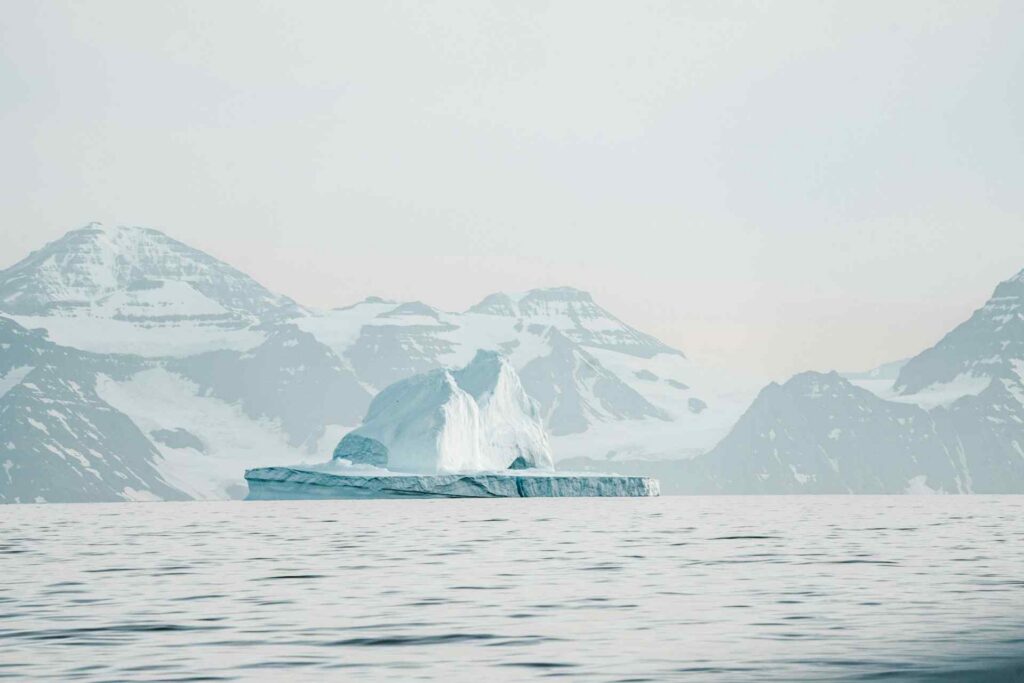
The Arctic Circle is one of the areas of the world most affected by the climate crisis and other forms of pollution. Accelerated ice melt is often thought of, creating a real amplification in the temperature rise, but pollutants produced especially at lower latitudes and carried toward the Pole by atmospheric circulation must also be considered. Specifically, dust contributes to darkening the ice, promoting faster melting, but it can also cause serious health problems if PM10 spikes are recorded.
In this context, having an accurate prediction of dust concentrations in those places has become a priority objective for the international scientific community. And that is exactly what a team of researchers from theNational Research Council’s Institute on Air Pollution (CNR-Iia) in Montelibretti, Rome, has done, in collaboration with the European Commission’s Joint Research Centre (JRC), as part of the European Arctic PASSION project.
A Transformer model to look to the future
The tool developed by the researchers is based on a Large Language Model neural network architecture belonging to the Transformer class of models, the same technology underlying the most advanced generative artificial intelligence systems. The model was trained and optimized for a very specific task: predicting PM10 concentration over the Arctic and Northern Europe 48 hours in advance.
“The model considered data from PM10 measurements in the recent past, CAMS model predictions from the Copernicus system, meteorological data, and geographical information on various stations to predict PM10 concentrations 48 hours apart,” explains Alice Cuzzucoli (CNR-Iia), first author of the study. “Comparing the model predictions with what then actually happened, our results always turned out to be significantly better than those of the classical models used so far, even in the assessment of particularly extreme concentration peaks.”
AI and classical models: synergy, not substitution
One of the most innovative aspects of the research concerns the way artificial intelligence is employed: the CNR-Iia AI model does not replace data from the Copernicus system, but complements it.“We get the best results by using AI synergistically with respect to classical dynamic models, not in an alternative way but using their results as input as well. It is this combined approach that makes the difference: AI is not used to replace existing tools, but to enhance them, taking advantage of what we already know how to do well with traditional models and adding the ability of neural networks to pick up complex patterns in local and temporal data,” points out Antonello Pasini, CNR climatologist and co-author of the study.
Arctic routes and fires: the new emergencies
The study assumes strategic importance at a particularly sensitive time in history. Melting ice in the Arctic is opening up new trade routes for ships with high pollutant emissions, while global warming and climate change favor the extension of fires even to high latitudes.
The consequences do not only affect the ecosystem. Indigenous communities and populations living in the European Arctic are exposed to increasing health risks, related precisely to rising particulate matter concentrations. In this situation of likely higher future emissions, accurate forecasting is essential to protect the environment and the populations of the European Arctic,” Pasini concludes.