The Italian solar power sector is entering a new phase. After years in which the focus was primarily on installing new systems, another challenge is gaining prominence: efficiently managing solar panels that are reaching the end of their lifespan. It is against this backdrop that Pantarei was founded, a joint venture owned equally by New Time and Esaving, with an initial investment of three million euros and the goal of bringing a facility dedicated to the recycling of photovoltaic modules online by the end of 2026.
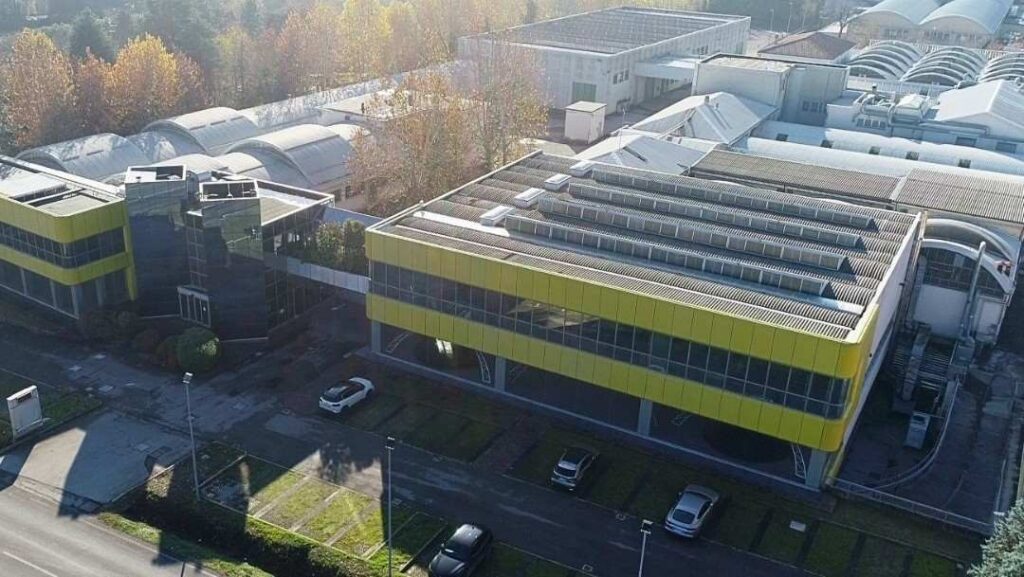
The facility will be built within the New Time production complex in San Lazzaro di Savena, in the Bologna area, and once fully operational, it will be capable of processing approximately 740,000 panels per year, equivalent to about 200 megawatts of original installed capacity.
From Waste to Raw Material
The growth of the photovoltaic industry inevitably brings with it a new category of electronic waste. Pantarei’s stated goal is to separate the various components of the panels with high precision, preventing contamination and enabling the recovery of materials for reuse in production processes. This approach aims to reduce the use of virgin raw materials and, at the same time, dependence on imports of strategic materials.
The Circular Economy Applied to Industry
The project thus seeks to address one of the limitations that have plagued the sector to date. As the companies explain, until now, the recovery of the materials contained in the panels has faced technological challenges that have reduced their economic value.
“The launch of Pantarei stems from a specific environmental responsibility but immediately translates into an extraordinary industrial opportunity,” said Paolo Cimatti, CEO of New Time. “With this investment, we are not only solving a crucial waste disposal problem for the consortia, but we are also creating a self-sufficient ecosystem. The secondary raw materials extracted from the plant will be directly integrated into our industrial processes.”
The goal is to foster an internal production chain in which recovered materials can be used to create new products.
A challenge that affects the entire transition
The project is also part of a broader context. In the coming years, the photovoltaic sector will face a gradual increase in the number of modules to be decommissioned, while the need to reduce Europe’s dependence on imports of critical raw materials is growing.
Alongside recycling, the repowering of existing facilities is also gaining importance, as it allows for the replacement of older panels with new-generation modules without using additional land. Companies cite this as one of the main benefits of the initiative.
Pantarei does not exhaust the topic of the end of life of photovoltaic systems in Italy, but it marks a significant step: the management of end-of-life panels is now considered a component of industrial policy. On the other hand, the energy transition will only truly be complete when it can close the loop, bringing raw materials back into the production cycle instead of letting them go to waste.