Italy’s tourism industry does not rely solely on Rome, Venice, Florence, Milan, and Naples. In the country’s inland areas, there are 2,137 municipalities with a clear potential for tourism, but only 350—16% of the total—are currently able to capitalize on it effectively. This is what emerges from the study“The Tourism Value of Smaller Towns,” conducted by Confturismo-Confcommercio in collaboration with Isfort and presented atthe “Tourism Is Territory” conference, attended by, among others, Minister of Tourism Gianmarco Mazzi, Confcommercio President Carlo Sangalli, and Confturismo President Manfred Pinzger.
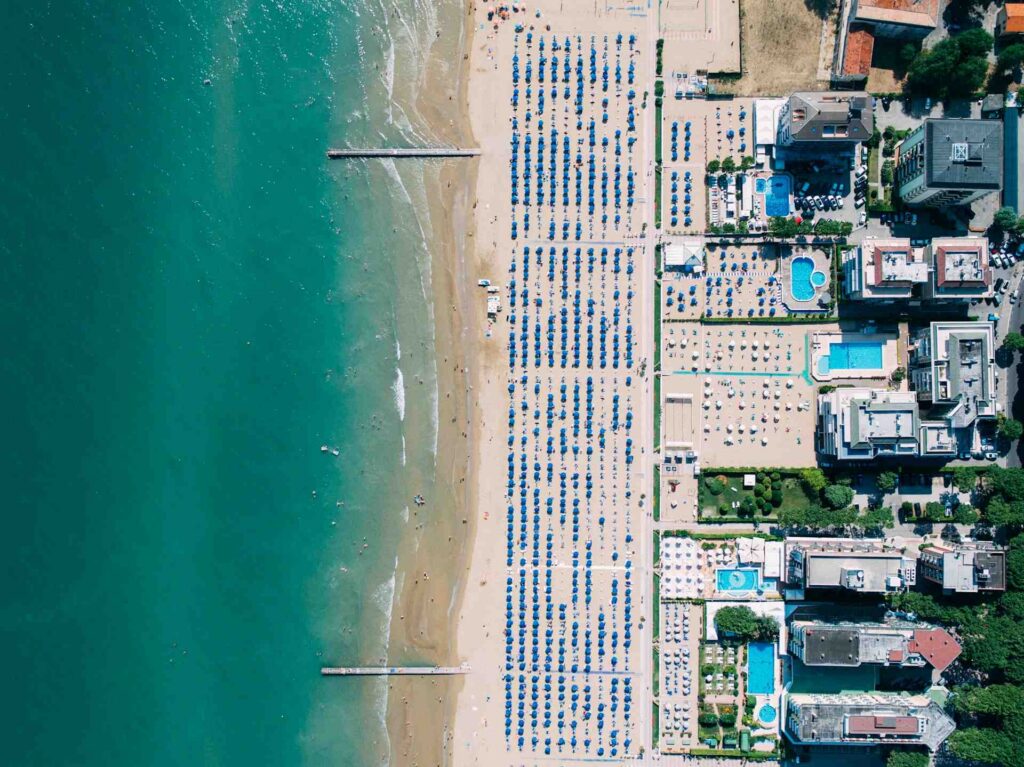
These areas already generate significant numbers: over 128 million overnight stays per year and 25 billion euros in tourism spending. Several municipalities in the Veneto region rank at the top of the national rankings, from Caorle to Jesolo, from Cavallino Treporti to San Michele al Tagliamento and Lazise. The other 1,787 municipalities, accounting for over 80% of the total, remain relatively unattractive: they generate approximately 33 million overnight stays and 6 billion in annual spending, with ample room for growth.
The Transportation and Services Hub
Focusing on smaller towns would not only boost GDP: it would help combat depopulation and distribute tourist flows more evenly, as they are currently concentrated in just a few destinations. Structural challenges, however, remain significant: 84% of the municipalities in question are classified as peripheral and 91% as ultra-peripheral, with obvious difficulties in accessing essential services. For this reason, the study identifies investments in infrastructure and transportation links as a priority. So far, resources from the PNRR and the Complementary Fund have had positive effects mainly in large urban centers, which account for just 22% of national visitor numbers, while the 2023–2027 Strategic Plan for Tourism —which had also identified accessibility and mobility as two key assets—has not yet yielded significant results.
Role Models
In addition to infrastructure, experts are focusing on the digital transition and collaboration among businesses, institutions, and local communities to overcome the fragmentation of the tourism offering and attract visitors and investments. There is no shortage of success stories, and these can serve as a guide for less attractive regions: from the Trentino tourism system—with Val di Fassa at the forefront—to the interregional model of Lake Garda, built on integrated governance and strong coordination between local authorities and regions.