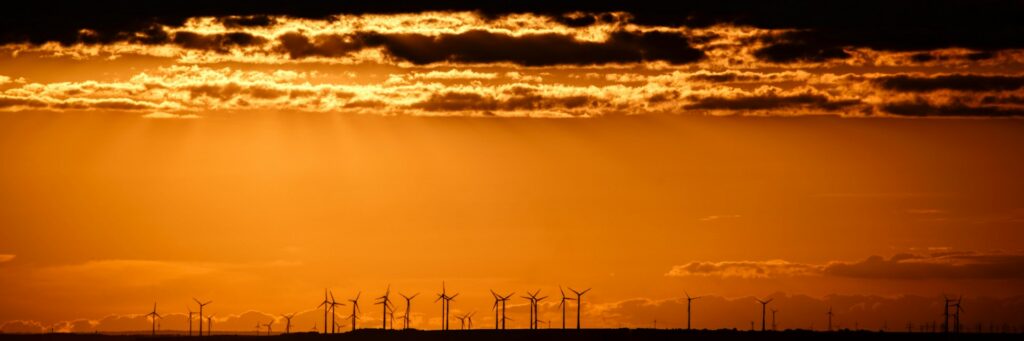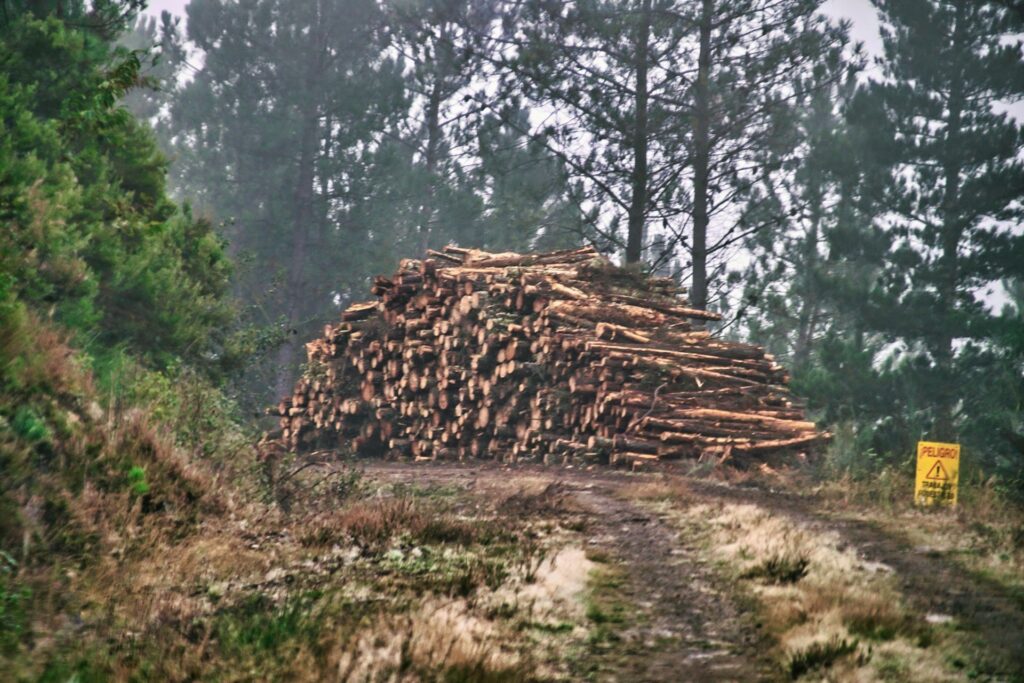
In 2023, half of all energy classified as“renewable” in the European Union came from the combustion of biomass: wood pellets, wood chips, agricultural residues, and organic waste. This data comes fromthe European Environment Agency, which has recorded solid, liquid, and gaseous biomass as the largest category in EU renewable energy consumption since 2021. In 2024, this share remained “nearly half.” The other half consists of wind power (18%), hydropower (12%), solar power (11%), heat pumps (8%), and liquid biofuels (7%). When public communications about the Green Deal mention the growth of renewable energy sources, the implicit reference is to solar panels and wind turbines. The largest category, however, is biomass combustion.
The Renewable Energy Directive (RED III, 2023) classifies biomass as a renewable energy source with zero CO₂ emissions at the point of consumption. The rationale is that the carbon emitted during combustion was previously absorbed by the plant as it grew and will be reabsorbed by new vegetation in the next cycle. The carbon is not “new”—it circulates within the biogenic cycle. In European energy accounting, burning a wood pellet does not emit CO₂ in the energy sector’s balance sheet. Burning methane does.
The problem is the time scale. A tree that is cut down and burned releases all the carbon it has accumulated over decades or centuries of growth. New vegetation will reabsorb that carbon over a period ranging from decades—for short-rotation coniferous forests—to centuries—for deciduous or boreal forests. CO₂ remains in the atmosphere throughout the entire intervening period. For a climate target with a deadline of 2030 or 2050, the “closed-loop” assumption holds true only if the cycle closes within that timeframe. For the majority of European forest species, it does not.
The analogy is with a checking account. An expense incurred today is covered by a deposit expected in thirty years. In accounting, you could record the future deposit as a hedge for the present. The balance in 2055 will be even. The balance in 2035 is in the red.
The European Environment Agency reports that ““the increase in primary demand for forest biomass, including for energy supply, is a factor contributing to the decline in European forest carbon sinks”””. RED III has strengthened the sustainability criteria: it excludes primary forests, requires certification, and lowers the threshold for the application of the criteria from 20 MW to 7.5 MW of installed thermal capacity. For plants that begin operation on or after January 1, 2026, the minimum greenhouse gas savings compared to the reference fossil fuel are 80%; for those that began operation between 2021 and 2025, the savings are 70%. Italy, one of Europe’s leading users of solid biomass for residential heating, falls within the scope of these criteria.
The bioenergy sector disputes this interpretation. Industry associations argue that biomass from sustainably managed forests—where the volume of standing timber does not decrease over time—effectively meets the principle of renewability. The distinction between forest residues (branches, tree tops, and material that would otherwise remain on the ground) and whole logs is significant: residues have a much shorter carbon debt. RED III has attempted to draw this distinction through its sustainability criteria. Whether these criteria are stringent enough to ensure a closed carbon cycle within the relevant climate timeframe is a question that the scientific literature has not yet resolved unanimously.
This column explores climate-related terms whose technical meanings differ from common perceptions. “Renewable” has a well-established technical meaning: a source that regenerates on a human timescale. Biomass meets this definition in principle. But in energy accounting, the “zero-emission renewable” classification relies on a time-based assumption that may not align with the timeframe of climate goals. A solar panel produces electricity without emissions at the very moment it is operating. A biomass plant emits CO₂ now, with a future credit whose maturity depends on the regrowth rate of the forest from which the biomass is sourced.
The next time you read that the EU has increased its share of renewable energy, there’s one question to ask: How much of that share comes from wind and solar, and how much from burning biomass? The answer doesn’t change the goal. It changes the way we measure progress toward it.