Has malaria reached Frankfurt Airport? Following the deaths of two airport employees and the infection of four other people, this question calls for a clear answer: for now, we don’t know. Authorities are trying to determine how six workers contracted a disease that does not normally circulate in Germany and that, according to initial reports, none of them had brought back from a recent trip.
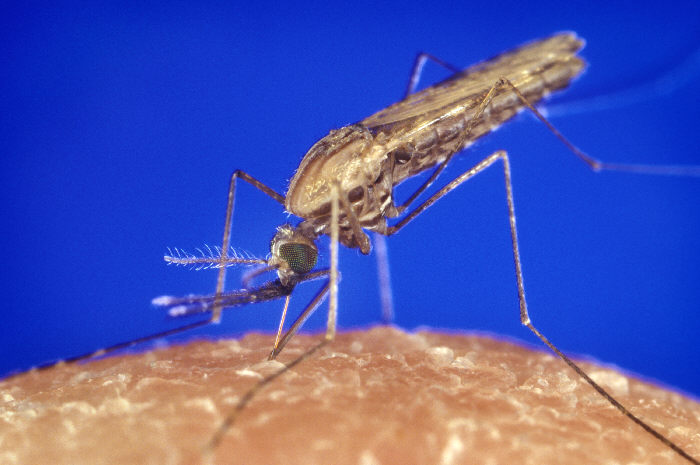
The most likely theory is that of so-called “airport malaria”: a female mosquito of the genus Anopheles, infected with the Plasmodium parasite, may have boarded a plane coming from an area where malaria is endemic—that is, where the disease is routinely transmitted. Once it arrived in Frankfurt, it could have bitten several people.
What Malaria Really Is
Malaria is not an infection that is normally transmitted directly from one person to another. It is transmitted primarily by infected Anopheles mosquitoes. When a mosquito bites an infected person, it can acquire the parasite; after the parasite develops within the insect, a subsequent bite can transmit the parasite to another person.
Symptoms may appear after a week or more and include fever, chills, headache, sweating, vomiting, and diarrhea. The form caused by Plasmodium falciparum is the most dangerous and, without prompt diagnosis and treatment, can lead to serious complications and death.
Malaria is now concentrated primarily in tropical and subtropical areas, with the highest number of cases and deaths occurring in Africa. In non-endemic European countries, cases are generally linked to people who contracted the infection abroad.
Why Frankfurt Is Also of Interest to Italy
The outbreak was identified in July, when the first four cases were reported. The second death was confirmed on August 26. To search for the vector, Fraport, the company that operates the airport, has installed mosquito traps. The captured insects will be identified and analyzed to determine whether they belong to a species capable of transmitting malaria and whether they may be linked to the outbreak.
Frankfurt is also one of Europe’s major airports: in 2025, it handled approximately 63.2 million passengers. Nearly half of the traffic—48.7 percent—consists of transfer passengers. For this reason, any outbreak of “airport malaria” is closely monitored even outside of Germany.
The Italian Ministry of Health was notified throughthe EWRS, which stands for Early Warning and Response System: this is the European rapid alert system that allows health authorities in European Union countries to promptly share information on cross-border health threats and coordinate their responses.
In Italy, the USMAFs—the Ministry of Health’s Maritime, Aviation, and Border Health Offices —have also been placed on alert. These are health facilities located at the country’s main points of entry, such as airports and ports, tasked, among other things, with carrying out health surveillance and prevention activities at the borders.
The Climate Factor
The German case does not justify the conclusion that malaria is returning to circulate on a permanent basis in Europe. The risk to the population is considered low. However, it raises an issue that also directly concerns the environment.
Mosquitoes are cold-blooded animals, and their development depends on external conditions. According to the Italian National Institute of Health, adult Anopheles mosquitoes can reproduce and survive at temperatures generally no lower than 15–18 °C, provided there is sufficient humidity and water for reproduction.
This is the point raised by infectious disease specialist Francesco Castelli in an interview published by *La Repubblica*: “With the extreme heat, Anopheles mosquitoes from Africa and Asia are able to survive longer here.” Global warming does not automatically mean malaria in Europe, but more favorable temperatures can influence the survival and distribution of these vectors.
The ISS also reports the gradual spread of Anopheles stephensi, a mosquito native to South Asia and the Middle East that has been detected in several African countries since 2012. It is particularly well-adapted to urban environments and poses an additional challenge for malaria control.
The Lesson from the German Airport
Further analysis will be needed to understand what happened in Frankfurt. Authorities must identify the mosquitoes present at the airport and compare the results with biological samples from the infected workers.
This case, therefore, should be viewed for what it is: a rare outbreak with serious consequences, but with no evidence at this time to suggest that malaria is spreading among the German or European population. Precisely because the risk is low, surveillance can focus on the most useful question: Which insects are now able to survive, reproduce, and spread in European environments, and how quickly can we detect them?