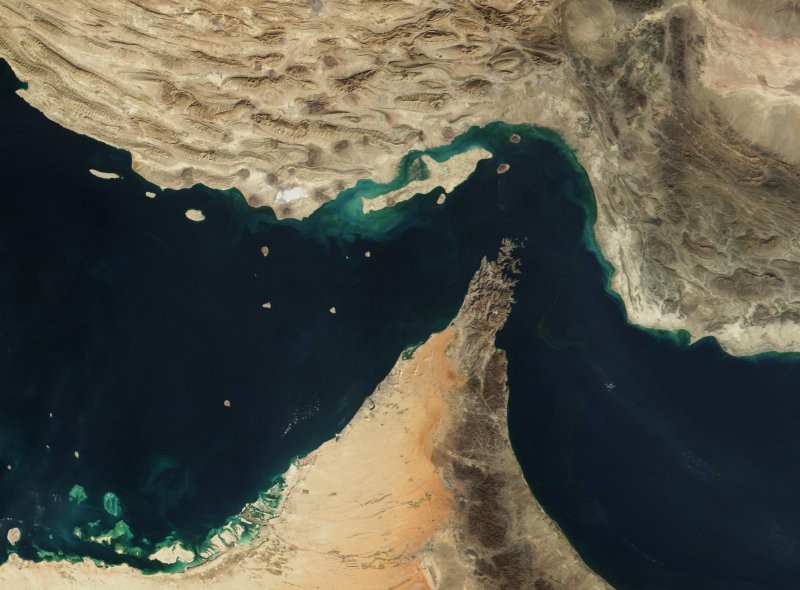
Six months after the start of the war in Iran, the world is grappling with an accelerated energy transition. The Strait of Hormuz—that narrow stretch of sea, just 39 kilometers wide, separating Iran and Oman—has become a naval battleground. As a result, the flow of approximately 20 million barrels of oil per day—one-fifth of global crude oil trade—has been disrupted: the global energy balance is shifting rapidly.
Fossil fuel importers paid over $330 billion in extra costs between March and August. That figure is equivalent to Finland’s GDP in 2025, according to data from the Center for Research on Energy and Clean Air in Helsinki. Crude oil accounted for $164 billion, gasoline and diesel for $74 billion, and liquefied natural gas for $38 billion. Behind these numbers are countries that have been able to capitalize on the crisis and others that have been crushed by the costs.
Beijing has taken out an effective insurance policy
China is emerging as the major beneficiary of this realignment. Investments in renewable energy made in recent years are proving to be an effective safety net: between March and July, clean energy projects added since 2020 enabled Beijing to avoid nearly $8 billion in fossil fuel imports.
But it’s not just a matter of saving money. China dominates global production of green technologies, and the surge in oil and gas prices is making solar panels, batteries, and electric vehicles much more attractive. In July, overseas sales of electric and plug-in hybrid cars reached 1.56 million units, accounting for 60% of the country’s total new vehicle sales. Exports of clean technologies are setting records month after month.
On the other side of the Pacific Ocean, oil and gas producers in the Americas are also reaping windfall profits. As buyers turn away from suppliers in the Persian Gulf, the United States, Canada, and Latin American countries have increased production. North American energy companies have reaped billions of dollars in crisis-driven price premiums. But analysts warn that even if a ceasefire were to cause these extraordinary margins to collapse, some market shifts are here to stay. The acceleration of global electrification—driven precisely by high fuel costs—is increasing demand for critical minerals such as copper and lithium, which benefits Chile and Peru.
The situation in the Persian Gulf is dire
The situation in the Persian Gulf is dire. Drone attacks and explosions have damaged critical infrastructure, including Saudi Arabia’s largest oil refinery and a major liquefied natural gas export terminal in Qatar. Export losses in the region averaged nearly $2 billion a day in March alone, according to an estimate by Rice University. The destroyed infrastructure is valued at $58 billion, according to Rystad Energy. The war has also put the region’s green transition on hold: the cost of debt has skyrocketed, making clean energy projects less viable.
The poorest countries are paying the heaviest price. Developing nations have absorbed additional costs equivalent to 1% of their GDP—more than double the economic burden borne by wealthy countries, according to CREA. In Africa, where many countries are net importers of refined petroleum products, the surge in prices is fueling a broader economic crisis. Ethiopia has had to burn through billions of dollars of its foreign exchange reserves to defend the birr, its national currency, following sell-offs in the currency markets. For Japan and South Korea, which relied on the Strait of Hormuz for most of their oil supplies, there was no alternative: they had to absorb the higher prices.
Rapid Changes
Yet, an unexpected acceleration of the energy transition is emerging from the crisis. Countries that cannot protect their consumers from rising fuel prices are seeing rapid changes in behavior. Africa as a whole imported 37% more solar equipment from China in the first half of 2026 than in the same period last year, according to data from BloombergNEF. The expansion spans the entire continent, from South Africa to Egypt.
The same trend is evident in Asia. In the Philippines, where initial fuel shortages prompted the government to implement a four-day workweek to conserve energy, imports of Chinese solar equipment surged 262% year-over-year in March. Monthly sales of electric vehicles in the Philippines and Indonesia nearly doubled in June and July compared with the same period in 2025. In India, monthly sales of passenger electric vehicles reached 30,000 units in those two months, compared with fewer than 20,000 units last year.
Renewables Are Growing
On the global emissions front, there is some relatively good news. Contrary to initial fears, 2026 did not see a surge in coal use. Global greenhouse gas emissions in the first half of the year rose by only 0.2% compared with the same period last year, according to a preliminary analysis by the nonprofit organization Climate Trace. China and the United States slightly reduced their emissions, while India and Brazil increased theirs. Renewable energy expanded more rapidly than coal.
“Renewables continue to grow. This seems like good news,” says Ting So, senior analyst at Climate Trace. But she adds a note of caution: “The volatility of disruptions in the Strait of Hormuz makes it difficult to predict long-term trends.”
The New Energy Map
The war in Iran is reshaping the global energy landscape in ways that will extend far beyond the duration of the conflict itself. Infrastructure and logistics routes are changing: there is talk of new bypass oil pipelines and alternative routes to reduce dependence on the Strait of Hormuz. Companies are reevaluating their supply chains. Governments are accelerating plans for energy independence. Millions of people are discovering that the energy of the future may be closer than they thought.
It is too early to say whether this transformation will be permanent. But six months of war have already changed the energy landscape. In this new energy landscape, those who have invested in diversification come out on top. Those who have continued to depend on a single strategic bottleneck come out on the losing end.