In the south of the Democratic Republic of the Congo, more than 300,000 solar panels and 120 shipping containers full of batteries power Africa’s largest copper mine day and night. The Kamoa Copper plant, which began operations in August and was featured by Climate Home News, is one of the few on the continent capable of providing continuous electricity from solar power. And it clearly illustrates a trend: in the Congo, the push toward solar power is not being driven by the government or households, but by the mining industry.
Gasoline costs money, but the sun doesn’t
According to the think tank Ember, the country will install 1.7 gigawatts of solar capacity this year— 544% more than in 2025—equivalent to more than 60% of the national grid’s capacity in 2023. The rush to acquire storage systems is even faster: in the twelve months through June, the Congo imported $429 million worth of batteries from China, compared with $249 million worth of solar panels.
The driving force is economic. With diesel prices at record highs due to attacks on oil infrastructure in the Middle East, solar-generated electricity costs less than one-fifth as much as that from generators. In August alone, explains Kamoa Copper Director Annebel Oosthuizen, the plant avoided consuming about 4 million liters of diesel, resulting in an estimated savings of $11 million. The mine—a joint venture between Canada’s Ivanhoe Mines, China’s Zijin, and the Kinshasa government—consumes 235 megawatts, a figure set to nearly double in five years, partly due to the new smelter, the largest on the continent.
A network that doesn’t work
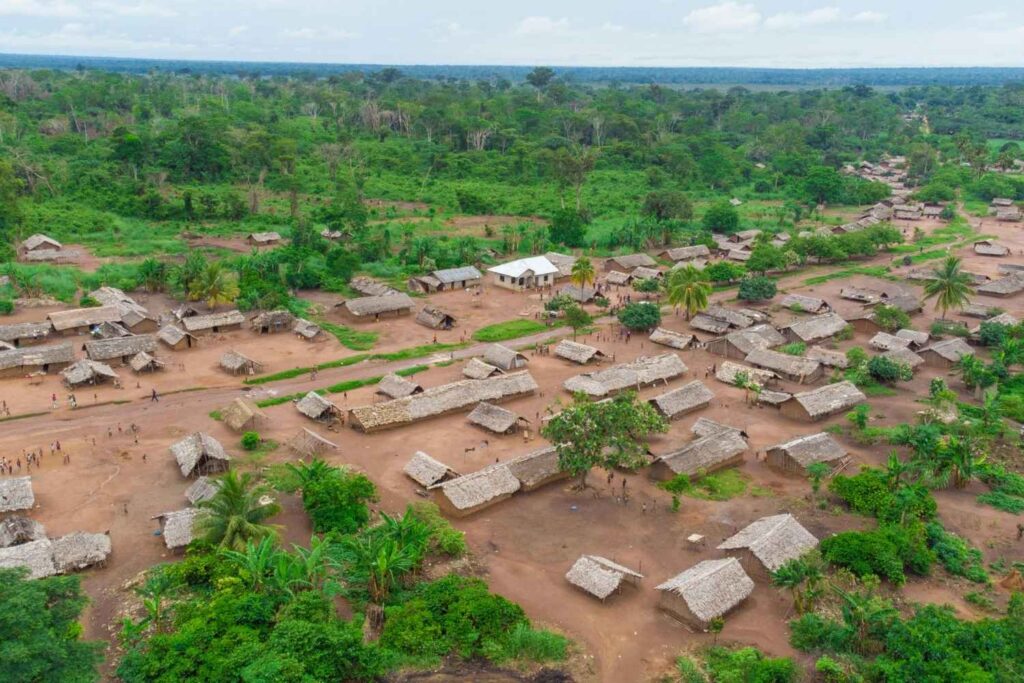
The paradox is clear. The Congo is the world’s leading producer of cobalt and Africa’s leading producer of copper—both transition metals—yet in 2024, only 22.5% of the population had access to electricity, according to the World Bank. Almost all of the electricity on the grid comes from dams operated by the state-owned company Snel and must travel over 1,500 kilometers along aging power lines to reach the Katanga mining belt. The power deficit for the mines alone is estimated at around one gigawatt.
A boom that extends beyond borders
The Congolese case is part of a broader trend. Ember forecasts that by 2026, Africa will install a record 17 gigawatts of solar capacity—45% more than last year—amounting to about 100,000 panels per day, with 36 out of 54 countries reaching unprecedented levels. However, 94% of the modules still come from China. And even in neighboring Zambia, copper is driving the push for solar: in July, President Hakainde Hichilema inaugurated the expansion of the Chisamba power plant, which has been upgraded to 200 megawatts, to support the goal of producing 3 million metric tons of copper per year. Large-scale grids, however, remain difficult to finance: Trafigura has pulled out of a 2,000-megawatt project spanning Angola, the Congo, and Zambia.
The risk of a two-speed approach
Kinshasa requires private producers to set aside at least 10% of their energy for nearby communities. But without mini-grids, rural electrification, and upgrades to the national grid, warns Catherine Mukobo, head of the Congolese Association for Decentralized Renewables (ACERD), the country risks ending up with untapped reserves of clean energy right next to villages still living in the dark.