Europe is entering its third heat wave of the year, and this time the warning comes directly from the World Health Organization. The Regional Director for Europe, Hans Henri Kluge, explained that“the next heat wave is already forming over the Atlantic” and that the European region could face “more deadly weeks” ahead. Forecasts call for temperatures as high as 43 degrees in Portugal and southern Spain, while France and the Benelux countries are bracing for another heat surge, and some areas of Central Asia are already sweltering at 40 degrees.
Italy in the Grip of a High-Pressure System
Our country is no exception. Since Wednesday, July 8, the subtropical high-pressure system has strengthened, pushing temperatures up to 38–39 degrees in the north and in the Po Valley, with tropical nights above 25 degrees. Starting Thursday, the heart of the heat wave will shift toward central and southern Italy and Sardinia, which could become one of the hottest areas on the continent by the weekend, with highs exceeding 40 degrees.
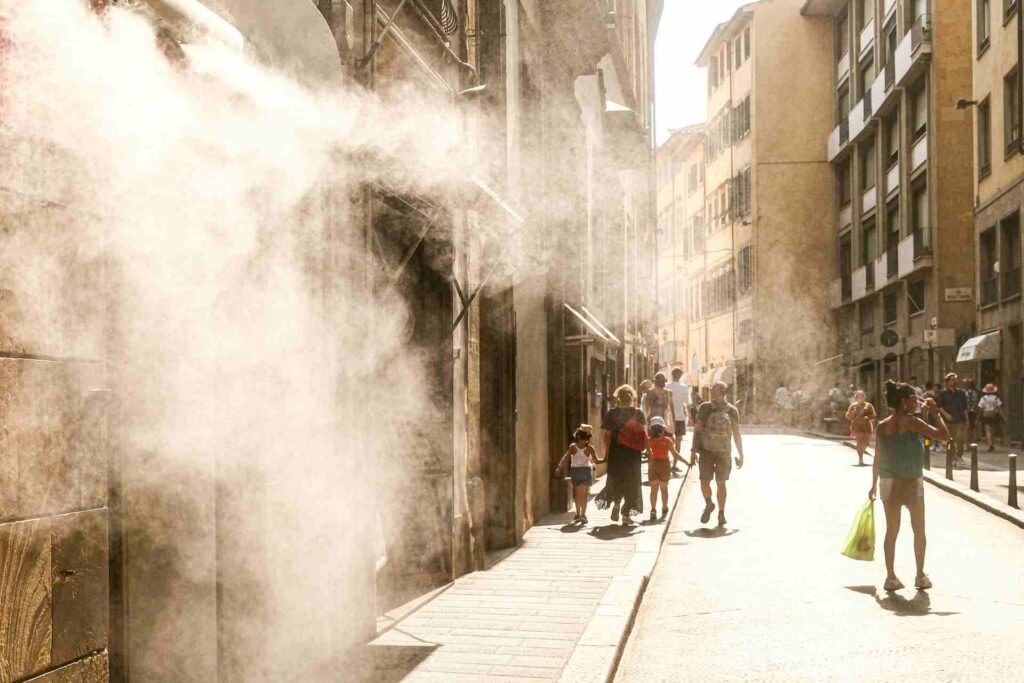
The Ministry of Health’s bulletin illustrates the escalation: ten orange alerts— the level indicating risk for the most vulnerable people—out of 27 monitored cities, and one red alert in Florence, where the city government forecasts heat index temperatures of up to 37 degrees. According to meteorologists, the peak of the heat is expected between July 15 and 20, when a new heat wave from Africa could make this the most severe heat wave of the summer of 2026.
A Continent in Turmoil
The situation across Europe is no less concerning. In Spain, the national weather agency recorded temperatures of 44 degrees in Aragon, Catalonia, and the Valencian Community, with temperatures exceeding 42 degrees in several cities in Andalusia. In France, where an orange alert had been issued for 72 departments during the previous heat wave, home delivery platforms have introduced mandatory breaks for delivery riders during the hottest hours of the day.
The European ECMWF model forecasts a heat dome over the continent at least through July 14, sustained by an Omega anticyclone—a particularly stable and persistent high-pressure system. Meanwhile, the Mediterranean ended June with sea surface temperatures up to 2.6 degrees above average—an unprecedented figure for this time of year—which is heating up the atmosphere and prolonging the nighttime heat.
It’s not just about the weather
Behind the news reports lies an underlying trend. In Emilia-Romagna, where June 2026 was the second-hottest on record after June 2003, the regional environmental agency notes that before the year 2000, there was, on average, one day per year with widespread highs above 35 degrees: in the last four years, that number has risen to thirteen. In short, this extreme heat is a consequence of the climate crisis and affects people unequally: especially the elderly, those with chronic illnesses, outdoor workers, and those who cannot afford to cool their homes. This “cooling poverty” is something that aid organizations see increasing every summer.
That is why the WHO’s appeal is not limited to the coming days: it is calling on European countries to develop long-term plans to combat the heat, because these “deadly weeks” are at risk of becoming the norm for our summers.