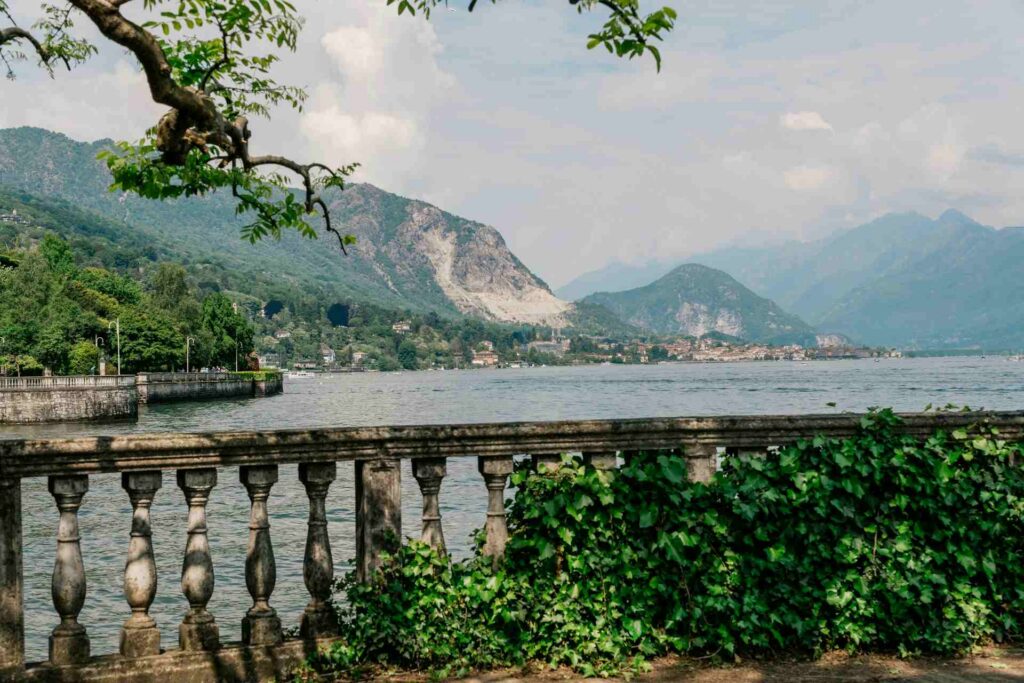
Italy’s lakes are changing at an alarming rate: their water levels are dropping, they’re warming, and they’re losing their ability to self-regulate. Legambiente’s report “Lakes Under Pressure, ” presented alongside the Goletta dei Laghi campaign, captures this crisis. Ten lakes are under observation, ranging from Lake Maggiore to Lake Trasimeno, and from the Lazio lakes of Albano and Nemi to Lake Pergusa in Sicily. The situation is worst in the north, followed by central and southern Italy.
The most critical case
In the north, the hardest-hit lakes are Maggiore, Lario , and Iseo: regulated lakes used for irrigation in the summer. Lake Maggiore has lost 43 million cubic meters of water since the end of June, with a fill level of 40% as of July 5. Lake Lario has dropped by more than 22 cm, standing at 41%, while Lake Iseo is at 35%. Temperatures are also on the rise: according to Copernicus, in 2025 the water temperature in Lake Maggiore was 0.75°C above the 1995–2020 average, with anomalies also observed for Lake Como (0.64°C) and Lake Iseo (0.3°C). Warmer waters mean less oxygen and greater imbalances in ecosystems.
The most critical situation is in Lake Trasimeno, where the water level has dropped 169 cm below the hydrometric zero, leading to restrictions on navigation. Shallow and lacking outflows, the lake depends on a fragile water balance: the decline in water volume promotes salinization and eutrophication. Water quality is also a concern: PFAS, the “forever chemicals,” have been detected in Lake Maggiore, Lake Trasimeno, and Lake Como, and since May, they have been included among the substances to be monitored under a new EU directive.
A Long-Standing Crisis
The volcanic lakes of Albano and Nemi, in Lazio, also tell the story of a long-standing crisis: over the past forty years, they have lost more than 54 million cubic meters of water, with water levels dropping by more than 6 meters and deep aquifers now depleted. In the south, the alert remains high for Lake Pergusa, which has come close to drying up several times in the past. However, there are also examples of best practices: on Lake Maggiore, water treatment systems cover 90% of the basin, while Lake Orta—once among the most acidified lakes in the world—has been revitalized thanks to constant monitoring.
This is a precious resource: in Italy, 119 lakes are linked to Natura 2000 sites, 93 to drinking water areas, and 43 to bathing waters. Yet, according to ISPRA, about two-thirds of Italy’s lakes are heavily modified, a sign of what has now become structural human pressure. High-altitude lakes, above 1,500 meters, are also a cause for concern: in the Aosta Valley, between 2006 and 2015, the number of glacial lakes nearly doubled, with about 170 new lakes forming—a direct result of glacial retreat.
“Climate adaptation and pressure mitigation are two central and interconnected pillars for the protection of lakes,” explains Andrea Minutolo, scientific director of Legambiente. The association is calling on the government to take eleven actions, including: funding to implement the National Adaptation Plan; unified oversight of the river basin authorities; increased wastewater treatment; water reuse; a halt to land consumption; and reduced pesticide use. The association also points out that the infringement procedure initiated in January 2026 for failure to transpose the Water Framework Directive is a significant concern. Because a healthy lake is the best insurance a region can have against a changing climate.