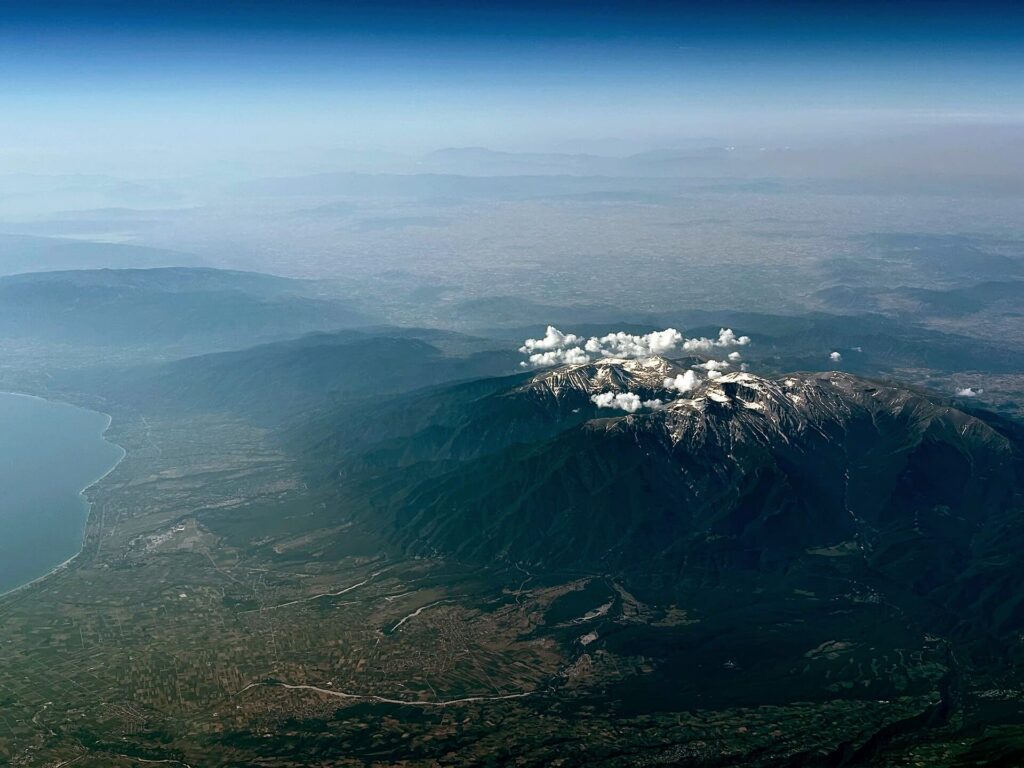
At 2,918 meters, Mount Olympus is the highest peak in Greece and, for centuries, has been much more than just a geographical feature: legend places the palace of Zeus and the twelve gods of antiquity there. Rare species of flora and fauna thrive around the mountain, and monuments that intertwine its history with myth still stand. This dual value—environmental and cultural—forms the basis of the application for inclusion on the UNESCO list, submitted by Greece as early as 2014 and set to be reviewed at the World Heritage Committee session scheduled to take place in Seoul from July 19 to 29.
The process, however, has not been straightforward. UNESCO’s advisory bodies (IUCN for natural heritage and ICOMOS for cultural heritage) have requested additional information for the nomination file: more solid evidence is needed regarding the area’s geological significance, biodiversity, and ecological processes. On the cultural front, the experts suggested expanding the nomination to include the archaeological site of Dion, at the foot of the massif.
“Olympus is our life”
For those who live in those valleys, the connection to the mountain is a daily one. “Mount Olympus is our life. It’s the place where we grew up, the place we see every day”! says the mayor of Dio-Olimpo, Evangelos Geroliolios, who notes that the mountain preserves “myth, history, biodiversity, and immense cultural significance.” Any such recognition, he adds, would extend beyond national borders to encompass the entire world, but it would also entail greater responsibilities for environmental protection.
The Issue of Tourism
Protecting the ecosystem is precisely the most sensitive issue. Inclusion on the list could attract new visitors, but it would also require stricter management. “The question is how many people this mountain and this ecosystem can sustain,” warns Babis Marinidis, a mountaineer and president of the Litochoro Hiking Club, who points out that even today, rules—from bans on camping to those on swimming in sensitive areas—are often ignored.
Every year, Mount Olympus draws thousands of hikers from all over the world, attracted by a landscape as spectacular as it is treacherous, with sudden changes in weather and challenging trails. For the residents of Litochoro, however, the verdict from Seoul would have primarily symbolic significance. “Mount Olympus isn’t something we’re just discovering now. It has always been the lifeblood of our town,” says Stavroula Vourou, owner of a local hotel.