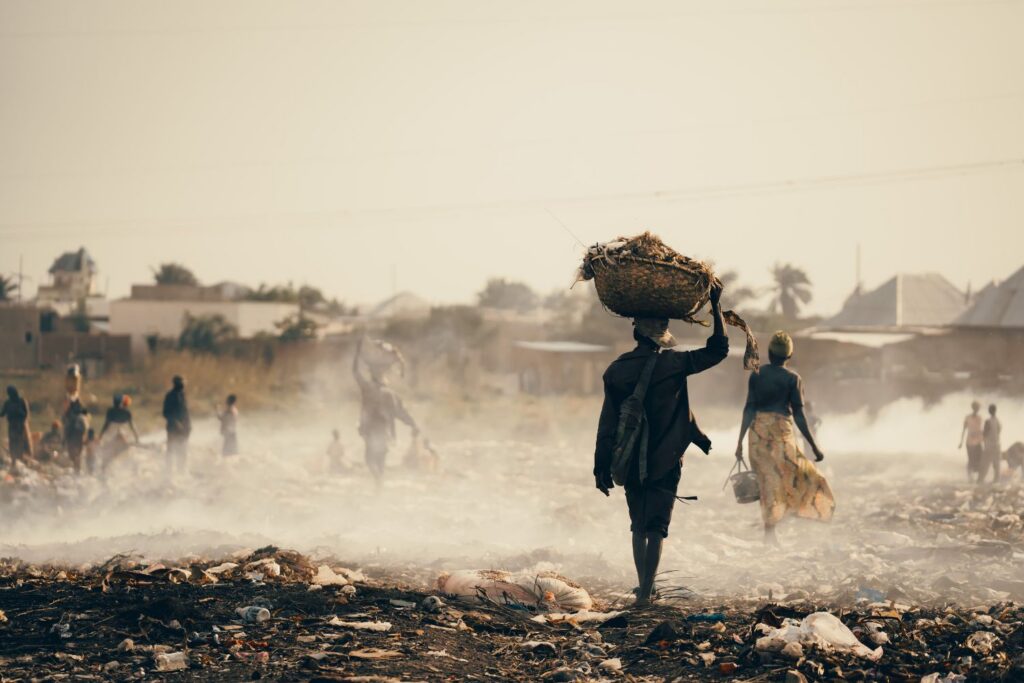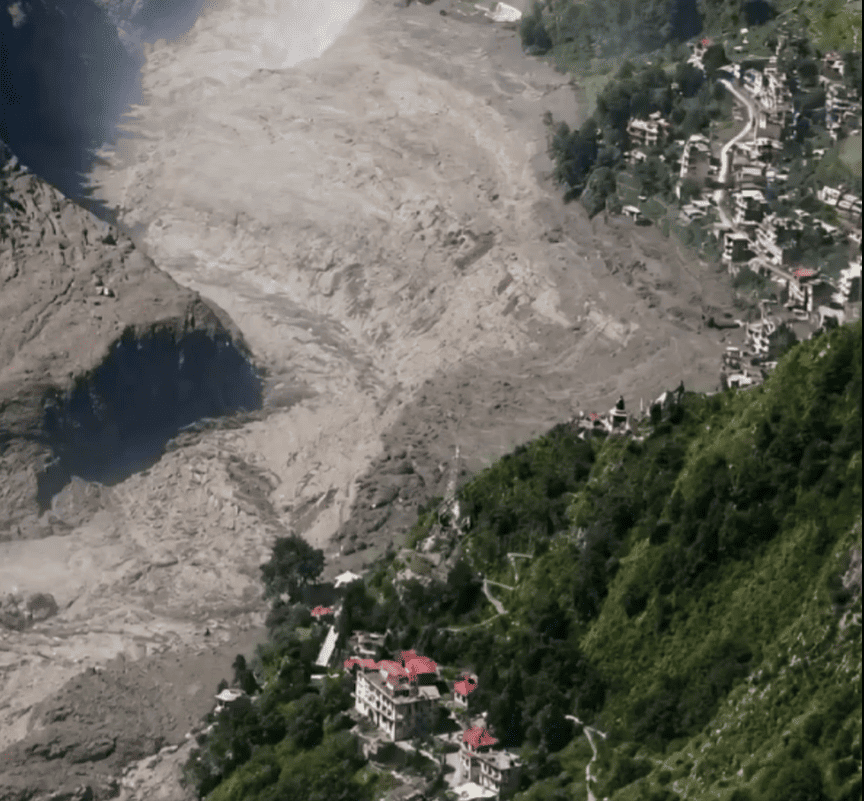
Five days after the devastating flooding of the Bhotekoshi River, Nepal still does not have a final tally of the disaster. The latest update from the National Disaster Risk Reduction and Management Authority (NDRRMA), released today, reports 903 bodies recovered and 4,247 people still missing. These numbers are likely to change as search teams continue to work their way upstream and follow the course of the rivers in search of victims.
‼️‼️ Hasta el 30 de agosto, se contabilizan 788 fallecidos y más de 2,500 desaparecidos solo en Nepal, con 16 muertes adicionales en el #Tíbet. Las autoridades siguen emitiendo alertas debido a la inestabilidad de las laderas y lagos formados tras el desastre. La fuerza de esta… pic.twitter.com/pXLGLsENLC
— Cristian Crespo F. 🇨🇺 (@cristiancrespoj) August 31, 2026
The flooding has affected several districts, from Rasuwa and Nuwakot to Gorkha and Chitwan. Chitwan has recorded the highest number of bodies recovered—272—followed by East Nawalparasi with 207 and West Nawalparasi with 151. In Nuwakot, 1,558 people are missing, and in Rasuwa, 865. Among those who have not yet been located are 933 workers involved in a hydroelectric project, 592 foreign nationals, and 127 Nepalis who were traveling with foreign tourists.
The geography of the tragedy makes the search even more complex. The floodwaters carried people and debris hundreds of kilometers away: some bodies were found far from the areas where they had been swept away.
Rescue efforts amid destroyed roads and washed-away bridges
A total of 20,819 personnel from Nepal’s three main security forces are on the ground: 8,722 military personnel, 7,894 police officers, and 4,203 members of the armed police. So far, according to the NDRRMA, 10,451 people have been rescued.
Helicopters remain essential for reaching isolated areas. Air operations have already reached 411 flights, 17 of which were carried out on Monday alone. The Nepalese Army has evacuated 3,344 Nepalese citizens and 252 foreigners, including 15 Chinese and seven Indians who were rescued on Sunday from a hydroelectric plant.
The problem is that many connecting routes are impassable. The head of the NDRRMA, Dharmaraj Upreti, explained to the Kathmandu Post that helicopters are often the only option, but they can carry only limited amounts of aid and require landing areas. For this reason, the distribution system has been organized through Kathmandu, Tribhuvan International Airport, and Nuwakot: supplies arrive in the capital, are transferred to Nuwakot, and from there reach remote areas by air.
Among the priorities are food, medicine, and oxygen. Meanwhile, essential infrastructure is also being restored: electricity has been restored in Nuwakot, and work is underway on the telephone networks.
The Issue of Early Warning
The most sensitive issue concerns the time available to warn populations downstream. According to Upreti, the early warning system helped save many lives: the Department of Hydrology and Meteorology sent a text message within five minutes of the floodwaters entering Nepalese territory, while the NDRRMA sent targeted messages to the authorities in the affected districts and to security forces.
But it was the impact of the wave itself that destroyed some of the main monitoring stations. The hydrological team lost data from the border stations and other downstream facilities; at least four monitoring systems were swept away, according to Reuters’ account. The public alert was therefore issued at 9:13 a.m., following verifications by local authorities.
The time window was extremely narrow, however. According to Nepalese officials quoted by Reuters, it took between four and ten minutes for the water to reach certain areas after crossing the border. Under such conditions, even a few minutes can make all the difference.
The Data Frontier
The disaster thus brings back into focus an issue that Nepal and China have long been discussing: the exchange of information on hydrological and glacial risks in the Himalayas.
On May 27, officials and scientists from the two countries met in Kathmandu to discuss floods, extreme weather events, and risks related to glaciers. According to Reuters, Nepalese representatives requested greater access to data on water levels and glacial phenomena. Beijing, however, maintains that it provided the available information in a timely manner and that it maintains “strong” cooperation with Kathmandu.Twelve days before the disaster, the Chinese World Meteorological Center had in fact alerted Nepalese officials to a monsoon low-pressure system and the possibility of increased rainfall, also drawing attention to the risk of landslides and flash floods. The key issue today is to determine what operational information can be shared before an event turns into a force that is impossible to stop.
According to experts cited by Reuters, monitoring high-altitude mountain regions remains extremely difficult: many of the potentially dangerous areas are located above 5,000 meters, where field observations are complicated and even satellites can face limitations due to snow, ice, and terrain.
A Complex Catastrophe
Initial Nepalese assessments point to a complex sequence of events: a landslide or avalanche is believed to have formed a temporary dam, which then suddenly collapsed. Upreti reported that the event may also have been exacerbated by the weakening of the permafrost and a 4.4-magnitude earthquake. The breach of the barrier is believed to have released an enormous amount of water and debris. In any case, the fragility of the high-altitude ice system stems from the accelerating climate crisis, which is eroding glaciers and weakening the permafrost.
Reuters reports that the flood traveled about 168 kilometers from the Nepal-China border, carrying approximately 57.4 million cubic meters of water. Nineteen bridges and about 40 kilometers of highway were damaged; according to an assessment cited by the agency, more than 10% of Nepal’s electricity generation capacity was also knocked out.
Climate change makes the situation even more difficult. A 2023 study by the International Centre for Integrated Mountain Development found an acceleration in ice loss in the Hindu Kush-Himalaya, accompanied by changes in snow cover and precipitation. For Nepal, this means greater exposure to a chain of interconnected phenomena: glacial melt, slope instability, landslides, and flash floods.
For now, however, the priority remains finding those who are still missing. The unidentified bodies are being held at 21 hospitals. The police are collecting fingerprints, and search dogs are also being deployed. The high temperatures make it urgent to recover and preserve the bodies, in part to limit health risks. Six specialized surgical teams have been sent to the hardest-hit areas.
The NDRRMA is also preparing damage and needs assessments, which are expected to be completed within 15 days. Initial estimates indicate that approximately 9,000 families have been affected. The destroyed settlements should not be rebuilt in the same vulnerable locations: according to Upreti, relocation must be preceded by geological studies.
Meanwhile, Kathmandu aims to strengthen the cross-border early warning system. It is a technical request, but it stems from a reality that is now hard to ignore: when a risk travels along a river that crosses a border, information must also be able to cross that border at the same speed.