Between 402 and 433 million cases of acute pesticide poisoning occur worldwide each year. This estimate was published on September 2 in Frontiers in Public Health by a group of researchers from the Pesticide Action Network, who combed through 214 scientific studies and World Health Organization mortality data from 139 countries, covering the period from 2006 to 2023.
Of the world’s agricultural population of approximately 934 million people, 46% suffer from food poisoning each year. That’s nearly one in two.
A Country, a Continent, an Emergency
Researchers have documented enormous differences from country to country. The highest rate is found in Burkina Faso, where 84% of farmers and farmworkers reported having been poisoned. Other countries in West and East Africa follow closely behind, but South Asia accounts for the highest absolute number of non-fatal cases, ahead of Southeast Asia and East Africa.
In terms of deaths, there are approximately 11,000 deaths per year, nearly 60% of which occur in India, where a government report cites 7,805 deaths in 2021 alone—a figure that the country, however, has never reported to the WHO, suggesting an even more significant underestimation on a global scale.
Agriculture That Relies Increasingly on Chemicals
While evidence of harmful effects has been accumulating for decades, global pesticide use has continued to rise: 3.8 million metric tons in 2023, double the amount in 1990. This increase has been driven primarily by the Americas (+210%) and Africa (+185%), while Europe has reduced its consumption by only 5%.
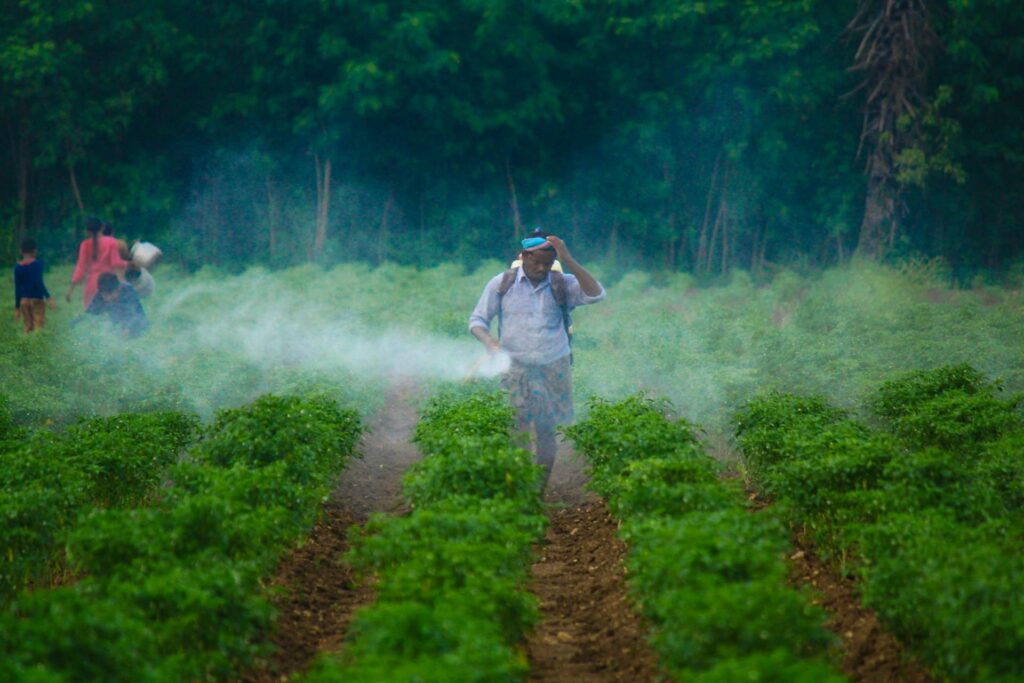
The authors of the study highlight a point often overlooked in public debate: political and media attention almost always focuses on fatalities, ignoring the vast number of non-fatal poisonings that primarily affect those who work in the fields while preparing and applying pesticides, or simply by coming into contact with contaminated crops, equipment, and clothing.
A problem that affects Italy as well
The link between chronic exposure to pesticides and neurodegenerative diseases is no longer just a suspicion. France, Germany, and Italy have already recognized Parkinson’s disease as an occupational illness for farmers, and researchers cite “overwhelming evidence” supporting the environmental origin of the disease.
Fragile Data, a Real Urgency
The authors themselves acknowledge the limitations of their estimate: the available information remains fragmentary, with surveillance protocols that vary from country to country and a high risk of underestimation due to people who do not seek care for economic, cultural, or distance-related reasons. For this reason, they call for the adoption of standardized monitoring systems.
The most concrete call concerns the implementation of the FAO’s recommendation for the phased elimination of highly hazardous pesticides, a goal set for 2035 by the United Nations Global Framework on Chemicals. Several studies cited in the report show that phasing out these substances would not lead to a decline in agricultural productivity. What remains, then, is to shift entrenched industrial interests and deeply rooted agricultural practices in every corner of the globe.