Colorful and lightweight, balloons have been a part of birthdays and celebrations for two centuries: the first rubber balloon dates back to 1824. Behind their carefree image, however, lies a serious environmental problem. Every year, between 20 and 25 billion balloons are purchased worldwide, and a large portion ends up in the environment. A study by the University of Tasmania published in 2019 in the journal *Scientific Reports* identified balloons as the most dangerous type of plastic waste for seabirds: for a seabird that ingests one, the risk of death is 32 times higher than that associated with hard plastic.
Most balloons are made of a natural material: latex derived from the sap of the rubber tree. The critical issue comes next. To make them elastic and durable, the latex undergoes a process called sulfur vulcanization, which requires the addition of accelerators, activators, and other substances. These often include heavy metal salts and nitrosamines—compounds that can leach into the environment as the balloon breaks down. This is why many products labeled as biodegradable are, in fact, not: they can take years to decompose.
The Imperial College Recipe
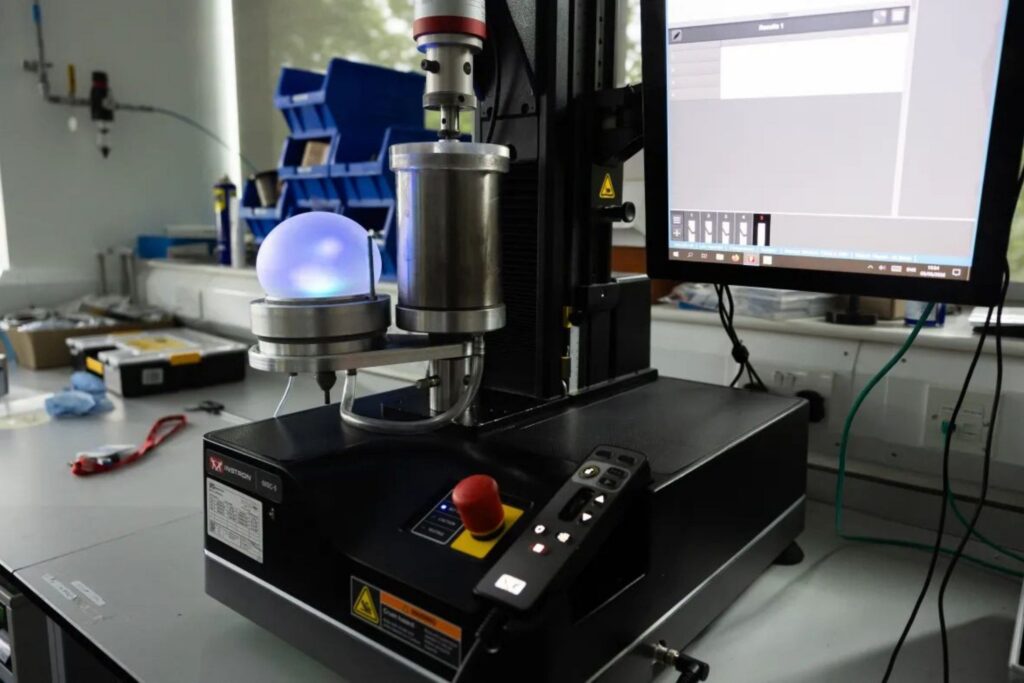
The Bioloon group, founded in the Department of Chemical Engineering at Imperial College London, has taken a different approach: rather than inventing a new material, it aims to improve one that already exists. The balloon is still made of natural latex, but it is mixed with a second biodegradable polymer and is free of harmful additives. The molecular chains are bonded together using an alternative, already patented method that preserves the material’s ability to decompose. The result, tested in soil, seawater, and deionized water, degrades—according to the study’s authors—in about nine months under all conditions. And it doesn’t compromise on performance: it inflates easily—in fact, more easily than traditional models—can be reused, and doesn’t cost any more.
Toward the Market
The project is led by Professor Jason Hallett and developed by Ph.D. candidate Juliana Cumming in collaboration with entrepreneurs Charlotte Melia and Christie Molgaard; the goal is to get the product on store shelves within a couple of years. However, as the researchers explain, their ambitions go beyond party supplies. The same technique could remove disposable latex from the waste stream in many other everyday items as well, transforming a small act of sustainability into a change on an industrial scale.