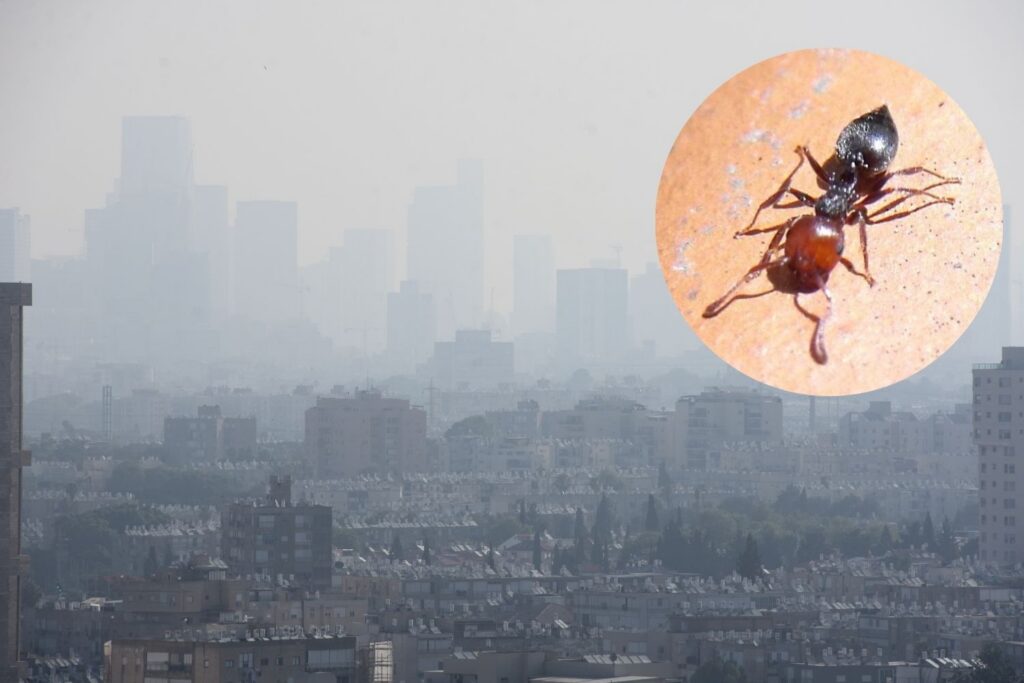
There should be a limit to everything—even to pretending not to understand what causes problems and what can solve them. The climate crisis is taking its toll, with several percentage points of GDP vanishing. And what is Italy doing? It’s cutting funding for national parks to hand it over to the fossil fuel industry that’s creating the problem. In Europe, the Meloni government is working to slow down the ecological transition, with the result plain for all to see: we’re gambling away the automotive sector by handing it over to Beijing. And in Italy, it’s slashing the budgets of local governments whose goal is to combat the climate crisis.
The figures come from an authoritative source: the CMCC, the Euro-Mediterranean Center on Climate Change, which—together with Deloitte and the European University Institute—has quantified for the first time the link between climate risk and Italian public finances. Without adequate mitigation and adaptation policies, Italy’s GDP could be up to 6% lower by 2050 compared to a scenario without climate-related damage.
The Climate Spread
The CMCC study introduces a concept that is bound to enter the debate: the “climate spread.” The mechanism is familiar to anyone who has followed the debt crises. Weaker growth reduces the tax base and inflates the debt-to-GDP ratio. Debt perceived as riskier forces the government to pay higher interest rates. Higher interest rates divert resources and are passed on to households and businesses in the form of higher borrowing costs. Climate change, the researchers explain, feeds into this vicious cycle by amplifying a vulnerability that Italy already faces, to the point of doubling the risks associated with debt refinancing.
And the costs we’re talking about aren’t some distant projection.Between 1980 and 2024, extreme weather events caused losses of 822 billion euros in the European Union, of which more than 208 billionwere concentrated in the four-year period from 2021 to 2024 alone. Heat waves are already costing between 0.3% and 0.5% of Europe’s GDP due to lost labor productivity, and drought-related damages could rise from 9 to over 65 billion per year in a Europe that is 4 degrees warmer. The southern part of the continent, led by Italy, is among the most vulnerable areas.
Is it hot? Let’s cut funding for the parks
It is in this context that the second news item should be viewed. The Ministry of the Environment is informing national parks, state reserves, and marine protected areas of a funding cut of approximately 23% compared to last year. While science quantifies the cost of inaction, the government is weakening the safeguards that could limit that cost.
The cuts to protected areas—which vary from agency to agency, with some national parks facing cuts of over 700,000 euros—stem from the 2026 Budget Law and, according to Federparchi, are also intended to offset the reduction in fuel excise taxes, as reported by the newspaper Domani. Nine organizations, from the WWF to Greenpeace, are denouncing “yet another severe blow to Italy’s natural environment”: the severe financial strain on monitoring, conservation, environmental education, and fire prevention. Compounding the problem is the timing: the notifications arrived after the fiscal year had begun, when the agencies had already committed the funds.
It’s time to stop thinking of these cuts as ones that affect only the environment. They target the environment, but the impact is felt throughout the entire fabric of our society. We’re not just losing environmental quality—we’re losing health, income, social cohesion, and peace of mind in our homes. We are under attack from the climate crisis triggered by the burning of fossil fuels and the clearing of forests, and Italy is responding by accelerating the very process that caused this disaster.
We still have time
Protected areas are, quite literally, adaptation infrastructure: they absorb water and carbon, curb land degradation, and prevent wildfires that result in millions in damages every summer. The CMCC study states that mitigation and adaptation are not environmental expenses but drivers of macroeconomic and financial stability. Protected areas are one of the main tools for our physical and psychological well-being. Weakening them means leaving ourselves defenseless.
What if, in the endless election campaign that’s just getting underway, we talked about this? Because this article highlights two figures (the GDP cut and the cut in funding for parks), but many others could be added. The tens of thousands of deaths from extreme heat in Europe each year. The jobs lost when governments put the brakes on innovation to score political points with anti-green fake news. Businesses and families strangled by soaring energy bills because renewable energy is being held back. These are intertwined issues with their own complexities, yet they can be explained simply and represent the tangible interests that matter most to the vast majority of Italians. We could have started talking about them sooner. But it’s not too late.