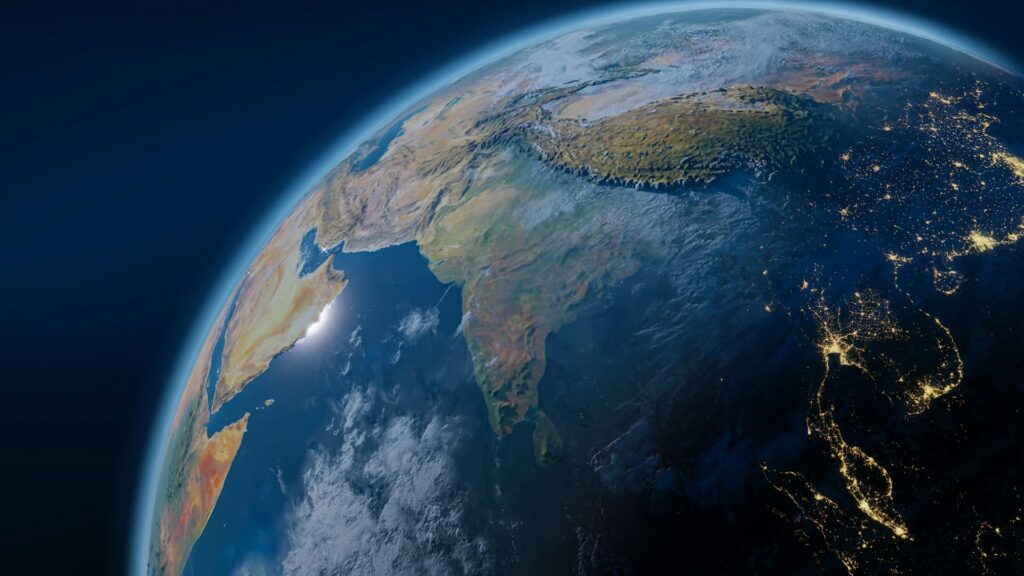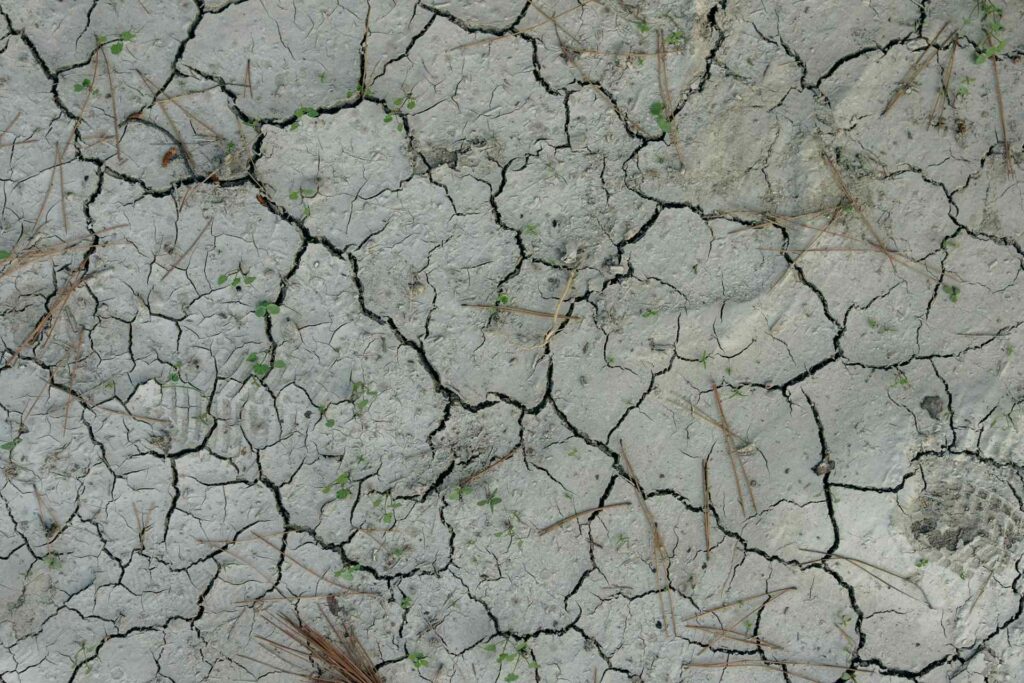
By the end of the century, approximately 40% of the world’s land area will be classified as arid. This estimate is at the heart of a new study, which suggests that the figure will range between 39.31% and 40.28% of the world’s land area. The areas set to expand the most are the so-called “hyper-arid” zones, characterized by almost no rainfall and extremely high atmospheric evaporation rates. Today, arid lands cover 38.58% of the planet: an increase that, in the worst-case scenario, would amount to nearly 2.4 million square kilometers more—an area comparable to that of Algeria or Kazakhstan.
The figure, while alarming, is lower than previously estimated. In 2015, another study published in *Nature Climate Change* predicted that arid areas would expand to cover 56% of the Earth’s land surface. Why is the new projection less dramatic, if the climate crisis continues to worsen? The surprising answer points to carbon dioxide itself: its rising concentrations in the atmosphere are slowing the advance of aridity, even if they cannot stop it entirely.
What Happens to the Leaves
This is a physiological mechanism related to plant behavior. With more CO₂ available, the stomata— the tiny openings on leaves through which the carbon needed for photosynthesis enters and water vapor exits— tend to remain more closed. The result is lower transpiration and thus reduced water loss: photosynthesis becomes more efficient, and vegetation retains its water resources more effectively. In this way, the excess carbon dioxide counteracts potential evapotranspiration, the parameter that measures how much water the environment would tend to draw from the soil and plants. This is how the expansion of arid lands slowed down between 1960 and 2023.
The authors estimate a 1.7 percentage point increase for the period 2070–2100 under the most severe warming scenario, known as SSP585. This figure should be viewed without illusions: CO₂’s “mitigating” role does not negate the devastating effects that the gas itself has on the global climate, from increasingly prolonged heat waves to rising sea levels, from biodiversity loss to wildfires. Extreme heat continues to kill vegetation and pave the way for desertification. Simply put, aridity is advancing at a slightly slower rate than previously feared.
The Geography of Drought
Not all regions will face the same fate. Australia, Brazil, and North Africa will remain the major areas of aridification, while northeastern China will continue to become greener. The most dramatic change is expected in central Australia, which is set to transition from a green area to a dry one.
The study was conducted by a group of Chinese scientists led by Professor Yifei Cai of the Institute for Ecological Conservation and Restoration at the Chinese Academy of Forestry Sciences in Beijing, in collaboration with the Institute of Desertification Studies and the Great Green Wall Institute. By cross-referencing the aridity index with potential evapotranspiration, the study provides a more accurate picture of the planet’s future.