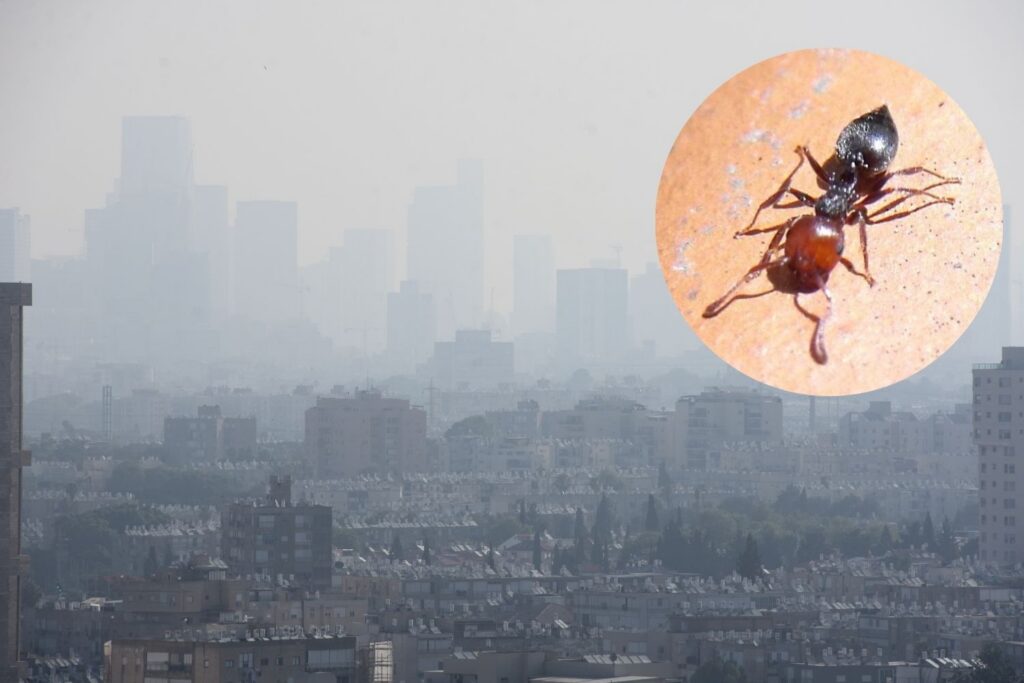
A cockroach that squeezes through the rubble of a collapsed building while carrying a syringe of life-saving medication is the result of a study by the University of Queensland, conducted in collaboration with the University of New South Wales and published in *Advanced Science*. The team transformed giant burrowing cockroaches from North Queensland into remote-controlled insects for search-and-rescue operations.
How Steering Works
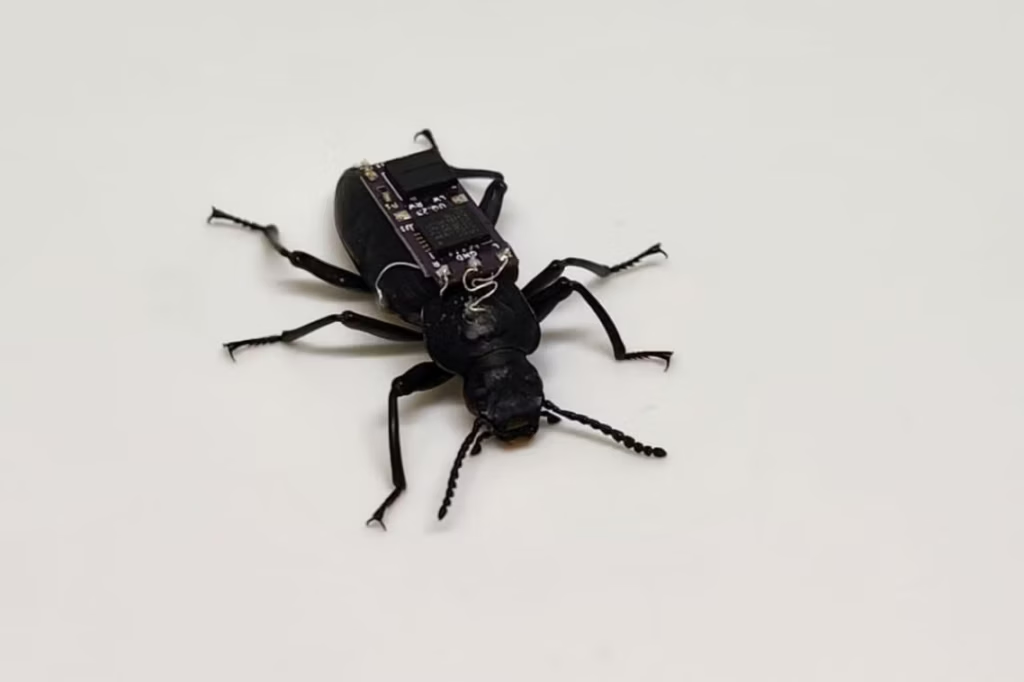
The cockroaches selected are among the largest in the world, measuring up to 8.5 centimeters in length. They carry a removable backpack on their backs that contains surgically implanted electrodes. Bioengineer Thang Vo-Doan, a co-author of the study, told Reuters that the insect is first anesthetized and immobilized for the implant, then controlled using electrical impulses that stimulate the nervous system and trigger precise motor responses, “so that it can respond to our commands”. The same principle had already been demonstrated in 2025 by the team using the darkling beetle *Zophobas morio*, which is capable of moving even on vertical walls thanks to electrodes placed on its antennae and elytra.
From Explorers to Paramedics
The novelty of this phase of the project is the leap from simple localization to first aid. The insects operate in pairs: one, the “observer,” is equipped with a microcamera and locates the target; the second carries a cylinder connected to a syringe and administers the medication, on command, remotely. In laboratory tests, the scout cockroach reached the designated point in 100% of attempts. The overall success rate for injections was 72%, but it rose to 95% when the distance to the target was less than 15 centimeters.
Why Real Insects, Not Robots
The team chose real animals, not mechanical miniatures, because micro-robots still cannot replicate the agility, endurance, and minimal energy consumption of a living insect in irregular environments such as dense rubble. This is the same principle that guided the experiments on beetles: leveraging natural climbing and infiltration abilities that no robot of that size can yet replicate, while adding only directional control.
Limitations Before Real-World Use
For now, the experimentation remains confined to the laboratory. Concrete problems remain to be solved: radio signal reception inside collapsed buildings, the safety of injection into a real human body, and reliability on uneven and unstable terrain. Reuters also points out a regulatory gap: there are still no shared ethical guidelines for experimenting with insects used in this way, an issue that is unlikely to remain marginal if the technology moves closer to field deployment.
Ph.D. candidate Hai Nhan Le, a co-author of the study, summarizes the project’s challenge as follows: “Many people might not like the sight of a giant cockroach running toward them, but if you’re trapped under rubble or in a cave and need help, it could really mean the difference between life and death.”