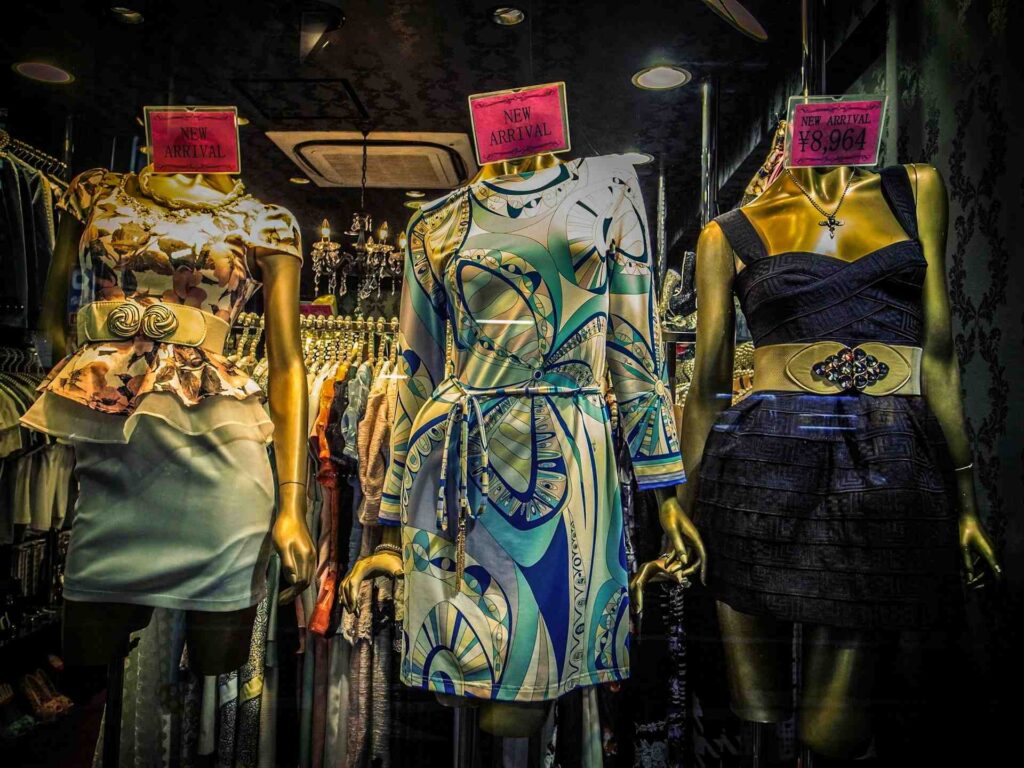
Five million tons of textiles and clothing are discarded each year in the European Union alone. Translated into individual figures, this means about twelve kilograms per head. Of this, barely 1 percent is recycled into new products. The rest ends up in landfills or is incinerated, often after a useful life of a few months, sometimes a few weeks. These are numbers that should weigh heavily on the shopping cart, yet this is not always the case.
Photographing this paradox is a study conducted by Legambiente as part of the VERDEinMED project, an initiative co-funded with nearly three million euros from the Interreg Euro-MED program. The survey involved hundreds of participants in Italy, Spain and Greece, and the results draw a complex portrait of consumers who, at least in words, would like to do better.
The gap between intention and action
In 42.4 percent of the interviews, participants say they pay little or no attention to sustainability when purchasing textiles. Yet most of these same people say they are in favor of buying sustainable fibers and willing to change their habits to protect the environment. How can the two be reconciled? The answer, probably, is that they do not reconcile: and therein lies the central problem.
It is as if there are two consumers within the same person: the one who responds to surveys – thoughtful, careful, ecologically aware – and the one who walks into a store and buys yet another T-shirt for five euros without wondering where it came from. The problem is not hypocrisy, or at least not only: it is that the fast fashion system is built to turn buying into an automatic, almost Pavlovian gesture.
The labels no one reads
Another striking statistic: 69 percent of respondents say they read labels. A seemingly encouraging percentage, which, however, plummets dramatically among younger people. And here a generational problem opens up that deserves attention, since it is precisely the younger generations that are the most active consumers of fast fashion. Moreover, 34.6 percent of the sample believe that the information on labels is often incomplete or opaque.
Consumers demand clear data: the origin of raw materials, production processes, and working conditions. More than legitimate demands, given that Eurostat data show that more than 30 percent of non-EU textile and clothing imports come from China, followed by Bangladesh, Turkey, India and Cambodia. Yet about a quarter of respondents (25.4 percent) have no idea where their clothes come from. A significant share of the sample, by the way, is composed of under-18s: about 50 percent.
The node of waste
Then there is the issue of end-of-life of garments. 41.1 percent of participants say they do not know how textile waste is managed in their city or region. This uncertainty reflects fragmented governance and still insufficient institutional communication. Knowing where to take an old sweater, how to sort a synthetic garment from an organic cotton one, what happens to clothes deposited in bins: this basic information is missing for too many people.
Yet we are talking about important numbers. In the European Union, the fashion industry ranks third in water and land consumption and fifth in raw material use and greenhouse gas emissions, according to data from the European Environment Agency. In 2020 alone, the average per capita consumption of textiles in Europe required 9 cubic meters of water, 400 square meters of land and 391 kilograms of raw materials. Figures that put every single impulse purchase in perspective.
The study identifies two key tools for turning the tide. The first is the Digital Product Passport (DPP), provided for in the European Ecodesign Regulation. It will function as a kind ofgarment ID card: it will standardize data on traceability, environmental impact, regulatory compliance and end-of-life management, counteracting greenwashing.
The second is Extended Producer Responsibility (EPR): a regulatory tool that obliges those who manufacture, import and sell textile products to take responsibility for the entire life cycle of the product, including the costs of waste management.